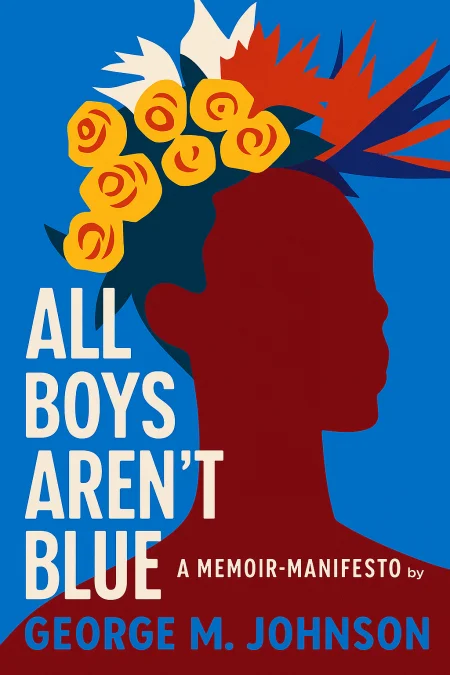
All Boys Aren't Blue
A Memoir-Manifesto
Book Edition Details
Summary
In a tapestry of vivid memories and raw truths, George M. Johnson's "All Boys Aren't Blue" unfolds as a stirring memoir-manifesto that dares to voice the often-unheard stories of Black queer boys. Through the lens of personal experience, Johnson bravely confronts the bruises of bullying, the warmth of familial bonds, and the nuanced exploration of identity. This book is a beacon for young queer men of color seeking affirmation and for allies eager to understand. Johnson's narrative, both tender and unflinchingly honest, dances between moments of pain and joy, tackling themes of toxic masculinity, consent, and the vibrant tapestry of Black joy. A resonant call to awareness and empathy, this work speaks directly to the heart of young adults, inviting them to witness, reflect, and grow.
Introduction
In the landscape of American coming-of-age stories, few voices capture the intricate dance between identity, family, and belonging quite like this powerful memoir. George M. Johnson's journey unfolds against the backdrop of late 20th and early 21st century America, where a young Black boy in New Jersey navigates the complex terrain of growing up different in a world that demands conformity. His story illuminates the particular challenges faced by those who exist at the intersection of multiple marginalized identities, yet it radiates with the warmth of unconditional family love and the strength found in authentic self-expression. Through his experiences, readers will discover the profound impact of chosen family and community support, the ongoing process of self-discovery that extends well beyond adolescence, and the courage required to live truthfully in a society that often punishes difference. This narrative serves as both mirror and beacon for those seeking their own path to acceptance, while offering insight into the resilience of the human spirit when nurtured by love and understanding.
Growing Up Different: Childhood and Identity Formation
From his earliest memories, Johnson recognized something fundamental about himself that set him apart from societal expectations. As a young child in Plainfield, New Jersey, he gravitated toward activities and expressions that didn't align with traditional masculine norms, finding joy in jumping double Dutch while other boys played football, and feeling more comfortable in the company of girls than boys. These early experiences of difference weren't met with shame within his family circle, but the outside world proved less accepting. The playground became a testing ground where Johnson learned to navigate the complex social dynamics of childhood while managing his own internal questions about identity. His natural sassiness and effeminate mannerisms drew attention that wasn't always welcome, forcing him to develop coping mechanisms that would serve him throughout his youth. Despite the challenges, these formative years also revealed glimpses of the supportive community that would later prove crucial to his development. Perhaps most significantly, this period established the foundation for Johnson's understanding that identity isn't fixed or simple. His childhood experiences of feeling different, of not fitting neatly into prescribed categories, would later inform his broader understanding of how society constructs and enforces norms. The seeds of his future advocacy were planted in these early moments of recognition that the world might not always have space for who he truly was.
Family Love and Protection: The Village That Raised Him
Central to Johnson's story is the remarkable family structure that surrounded him with love, even when they didn't fully understand what he was experiencing. His grandmother, affectionately called "Nanny," emerges as a particularly powerful figure who provided unconditional acceptance and practical wisdom. She created spaces where Johnson could simply be himself, teaching him life skills while never demanding that he conform to expectations that felt foreign to his nature. His parents, while navigating their own learning curves about raising a child who didn't fit conventional molds, consistently chose love over fear. His mother's protective instincts and his father's evolving understanding created a home environment where Johnson could explore his identity without the threat of rejection that haunts many queer youth. The extended family network of aunts, uncles, and cousins formed what Johnson describes as "the village," a support system that demonstrated how families can adapt and grow to embrace all their members. This family dynamic stands in stark contrast to statistics about LGBTQ+ youth homelessness and family rejection. Johnson's experience illustrates what becomes possible when families choose love and acceptance over conformity to social expectations. The village didn't just tolerate his differences; they celebrated his achievements and protected him from external threats while allowing him the space to discover who he was meant to become. The strength of these family bonds would prove crucial as Johnson encountered less accepting environments outside the home. Having a foundation of unconditional love provided him with the resilience necessary to navigate discrimination and misunderstanding in other contexts, while also establishing his understanding of what healthy relationships and communities should look like.
Finding Brotherhood: College Years and Coming of Age
The transition to college represented both liberation and new challenges for Johnson as he sought to reinvent himself in an environment far from home. Virginia Union University offered him his first taste of independence and the possibility of living more authentically, yet he discovered that geographic distance couldn't automatically resolve internal struggles with identity and self-acceptance. The predominantly Black university environment provided cultural affirmation while presenting new questions about masculinity and belonging. Johnson's decision to join Alpha Phi Alpha fraternity initially seemed motivated by a desire to claim traditional masculine space, but the experience ultimately taught him more nuanced lessons about brotherhood and identity. The fraternity process, with its emphasis on brotherhood and shared struggle, created bonds that transcended surface-level differences. Within this context, Johnson found men who could accept him fully, including his sexuality, challenging his assumptions about Black masculinity and homophobia. The college years also brought Johnson's first experiences with romantic and sexual relationships, marking crucial steps in his journey toward self-acceptance. These experiences, both positive and challenging, helped him understand that his identity wasn't something to be hidden or overcome, but rather integrated into a full and authentic life. The supportive environment he found among his line brothers provided a model for the kind of chosen family that would become increasingly important in his adult life. This period established patterns that would define Johnson's approach to community building and advocacy in later years. The experience of finding acceptance within traditionally masculine spaces while maintaining his authentic self would inform his understanding of how change happens and how barriers can be broken down through relationship and shared humanity.
Embracing Truth: Living Authentically as Black and Queer
Johnson's journey toward full self-acceptance required grappling with the intersection of his Black and queer identities, recognizing that neither could be separated from the other or addressed in isolation. This integration process challenged him to reject the false choice between racial and sexual identity that society often imposes on people with multiple marginalized identities. His experiences revealed how these identities could strengthen rather than compete with each other. The memoir traces Johnson's evolution from a young person hiding essential parts of himself to an adult capable of living openly and advocating for others. This transformation wasn't sudden or simple; it required continuous courage and the ongoing work of building communities that could embrace complexity. His story demonstrates that coming out isn't a single event but a lifelong process of choosing authenticity in new situations and relationships. Through his experiences, Johnson learned to challenge the respectability politics that often pressure marginalized people to downplay their differences in exchange for conditional acceptance. His journey illustrates the power of refusing to minimize any aspect of identity and instead demanding that the world expand its definitions of what's acceptable and valuable. Johnson's path to authentic living also involved recognizing his responsibility to future generations. His memoir serves as both personal testimony and public service, offering representation that he himself lacked during his formative years. By sharing his story openly, including its difficulties and traumas alongside its joys and triumphs, he provides a roadmap for others navigating similar journeys while contributing to broader cultural conversations about identity, acceptance, and belonging.
Summary
Johnson's life story ultimately delivers a profound message about the transformative power of love, authenticity, and community in overcoming systems designed to diminish and divide. His journey from a young boy who felt different to an adult who celebrates that difference illustrates that our greatest challenges often contain the seeds of our greatest contributions to the world. From his experiences, readers can learn the importance of building chosen families that celebrate rather than merely tolerate difference, and the courage required to live truthfully even when the world pressures conformity. This memoir will resonate particularly with young people navigating questions of identity, families seeking to better support LGBTQ+ members, and anyone interested in understanding how individual stories of resilience contribute to broader movements for social justice and acceptance.
Related Books
Download PDF & EPUB
To save this Black List summary for later, download the free PDF and EPUB. You can print it out, or read offline at your convenience.

By George M. Johnson
