
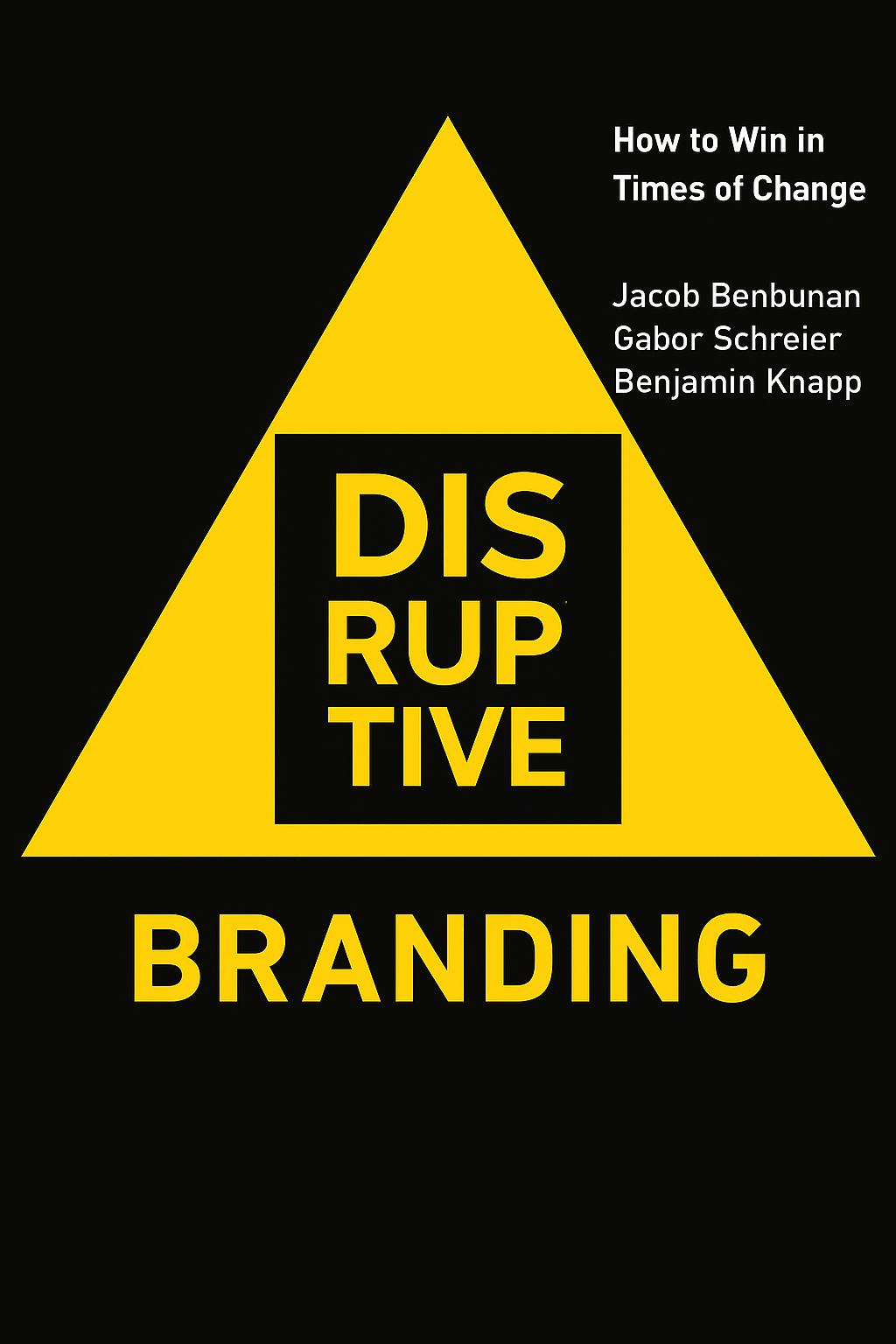
Disruptive Branding
How to Win in Times of Change
byJacob Benbunan, Gabor Schreier, Benjamin Knapp
Book Edition Details
Summary
In a world where the ground beneath businesses shifts with relentless change, "Disruptive Branding" emerges as an essential compass. This invigorating guide doesn't just chart the tumultuous waters of modern commerce but empowers visionaries to ride the waves and redefine success. Imagine brands not just surviving disruption, but wielding it like a master sculptor, chiseling away at the status quo to reveal unprecedented potential. With riveting tales of transformation—like Nintendo's gaming revolution and Airbnb's travel renaissance—this book is a beacon for bold enterprises ready to design compelling brand experiences and innovate beyond boundaries. For those daring enough to redefine their narrative in a technology-driven era, this is your blueprint for resilience and growth, a manifesto for becoming the disruptor in a disruptible world.
Introduction
In today's rapidly evolving marketplace, traditional branding approaches are being challenged by forces of disruption that demand entirely new ways of thinking about brand strategy and execution. This theoretical framework for disruptive branding emerges from the recognition that brands must now navigate convergent forces of globalization, digitalization, and changing consumer expectations while maintaining authenticity and relevance. The concept of disruptive branding represents a fundamental shift from static brand management to dynamic brand evolution, where organizations must continuously reinvent themselves to stay ahead of change rather than simply respond to it. This approach encompasses four core theoretical domains that work in synergy: the development of authentic brand strategy rooted in organizational purpose, the creation of holistic experiences that span all customer touchpoints, the engagement of internal stakeholders as brand ambassadors, and the implementation of continuous measurement and evolution cycles. These interconnected elements form a comprehensive framework that enables brands to not merely survive disruption, but to become disruptors themselves by consistently delivering on their promises while adapting to changing circumstances.
Building Authentic Brand Strategy and Identity
The foundation of disruptive branding rests upon the development of what can be termed an "authentic brand architecture" - a strategic framework that encompasses brand idea, values, and personality as interconnected elements. This theoretical model positions brand strategy as fundamentally different from traditional marketing approaches by establishing the brand idea as the central organizing principle that drives all organizational decisions. The brand idea serves as both compass and catalyst, articulating why an organization exists beyond profit generation and what unique value it brings to the world. The architecture consists of three primary components that work in dynamic relationship with each other. The brand idea represents the core purpose and differentiating proposition, answering the essential question of why the organization matters. Brand values define the behavioral principles and decision-making criteria that guide how the organization operates across all functions. Brand personality establishes the consistent voice, tone, and character through which the organization communicates with all stakeholders. These elements must achieve perfect alignment to create what theorists call "strategic authenticity." Consider how companies like Amazon have built their entire operational philosophy around their brand idea of being "Earth's most customer-centric company." This central organizing principle has guided decisions ranging from warehouse automation to customer service protocols, creating a coherent system where every touchpoint reinforces the core promise. The theoretical power of authentic brand architecture lies in its ability to provide clear direction during times of uncertainty while maintaining flexibility for adaptation. When organizations ground their strategy in authentic purpose rather than market trends alone, they create sustainable competitive advantages that resist commoditization and enable continuous innovation.
Creating Holistic Brand Experience Through Design
The holistic experience design framework represents a comprehensive approach to translating brand strategy into tangible, multi-sensory encounters that audiences have with an organization. This theoretical model recognizes that in our interconnected world, brands exist as complex ecosystems of touchpoints rather than isolated products or services. The framework encompasses four primary experience vectors: product and service design, behavioral interactions, environmental spaces, and digital systems, all of which must work in harmony to deliver consistent brand promises. The theoretical foundation rests on the principle that every interaction point becomes a "moment of truth" where the brand either fulfills or fails to meet expectations. These moments accumulate to create overall brand equity and emotional connection. Design thinking in this context extends far beyond visual aesthetics to encompass the entire journey architecture that guides how audiences move through and experience the brand ecosystem. The framework emphasizes that physical and digital realms must converge seamlessly, creating what researchers term "omnichannel coherence." Successful application of this model can be observed in brands like LEGO, which has created perfectly aligned experiences across physical products, digital platforms, retail environments, and theme parks. Every touchpoint reinforces their brand idea of "inspiring and developing the builders of tomorrow" through carefully orchestrated design elements that encourage creativity and imagination. The theoretical significance of holistic experience design lies in its recognition that modern consumers evaluate brands not on individual interactions but on the cumulative quality and consistency of their entire relationship with the organization. This approach transforms brand management from a marketing function into a comprehensive organizational capability.
Engaging Employees and Delivering Customer Service Excellence
The internal engagement theory posits that sustainable brand success requires transforming employees from passive implementers into active brand ambassadors who embody organizational values in their daily interactions. This framework challenges traditional top-down communication models by establishing brand engagement as a participatory process where employees contribute to brand evolution while delivering consistent experiences to external audiences. The theoretical model emphasizes that internal brand alignment directly correlates with external brand performance, creating what experts call the "inside-out brand effect." The engagement framework operates through several interconnected mechanisms. The employer value proposition creates internal differentiation that attracts and retains talent aligned with brand values. Employee journey mapping ensures that brand touchpoints extend throughout the entire employment lifecycle, from recruitment through alumni relationships. Brand activation programs provide tools and training that enable employees to make brand-consistent decisions autonomously. Most critically, the framework establishes measurement systems that track both employee engagement levels and their impact on customer experience outcomes. The practical application of this theory can be seen in organizations like The Four Seasons, where the "Golden Rule" principle of treating employees well translates directly into exceptional customer service delivery. Their systematic approach to employee empowerment, recognition, and brand education creates a self-reinforcing cycle where satisfied employees naturally deliver experiences that strengthen brand reputation. The theoretical importance of internal engagement lies in its recognition that in service-driven economies, human interactions often define brand perception more powerfully than traditional marketing communications. This framework transforms human resources from an operational function into a strategic brand-building capability.
Measuring Performance and Continuous Brand Evolution
The continuous evolution framework establishes brand management as an ongoing measurement and optimization process rather than a periodic rebranding exercise. This theoretical model recognizes that in rapidly changing environments, brands must develop dynamic capabilities for sensing market shifts, measuring performance across multiple dimensions, and implementing iterative improvements while maintaining core authenticity. The framework introduces the concept of "adaptive consistency" - the ability to evolve surface expressions while preserving fundamental brand essence. The measurement architecture encompasses both quantitative and qualitative indicators across five key dimensions: brand awareness, perceived quality and leadership, emotional associations and differentiation, customer loyalty behaviors, and financial performance metrics. These indicators work together to create what theorists term "brand equity assessment," providing comprehensive visibility into brand health and trajectory. The framework emphasizes real-time monitoring capabilities that enable rapid response to emerging challenges or opportunities. The evolution component of this model operates through systematic evaluation cycles that assess whether the brand remains authentic to its core purpose, relevant to target audiences, and differentiated from competitive alternatives. This three-dimensional evaluation framework provides clear criteria for determining when incremental adjustments suffice versus when more fundamental changes become necessary. Organizations like Rostelecom demonstrate this principle by successfully transforming from traditional telecommunications providers into comprehensive digital service ecosystems while maintaining core brand equity. The theoretical significance of continuous evolution lies in its recognition that brand longevity requires balancing stability with adaptation, creating organizations that can thrive through multiple cycles of disruption while maintaining stakeholder trust and engagement.
Summary
Disruptive branding ultimately represents a fundamental shift from reactive brand management to proactive brand leadership, where organizations become architects of change rather than victims of disruption. The comprehensive framework presented here demonstrates that sustainable competitive advantage emerges not from any single brand element, but from the systematic integration of authentic strategy, holistic experience design, internal engagement, and continuous evolution capabilities that work together to create brands capable of both driving and responding to market transformation. This approach offers organizations a pathway to transcend traditional industry boundaries and create lasting value for all stakeholders while continuously adapting to an ever-changing world.
Related Books
Download PDF & EPUB
To save this Black List summary for later, download the free PDF and EPUB. You can print it out, or read offline at your convenience.
By Jacob Benbunan
