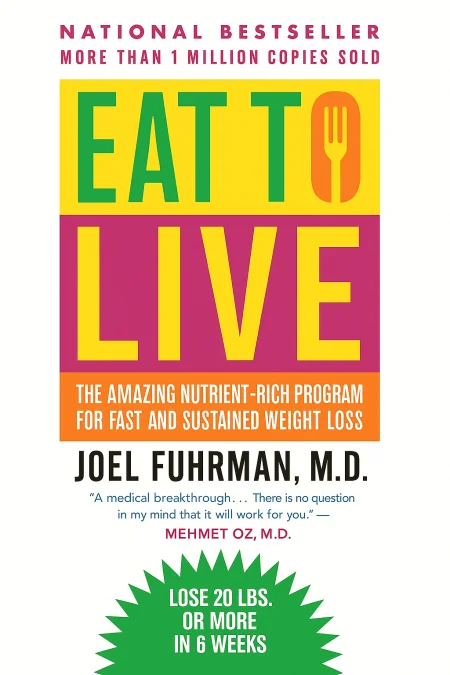
Eat to Live
The Amazing Nutrient-Rich Program for Fast and Sustained Weight Loss
Book Edition Details
Summary
Nutrition meets innovation in Dr. Joel Fuhrman’s Eat to Live, a trailblazing guide lauded by Dr. Mehmet Oz as a "medical breakthrough." This isn’t just another diet book; it’s a manifesto for a healthier life. By recalibrating the balance of nutrients to calories, Fuhrman’s six-week plan reveals a stunning truth: the path to weight loss and health restoration lies in embracing nutrient-rich foods. As you journey through its pages, encounter inspiring testimonies of individuals who shed astonishing pounds and triumphed over severe health challenges. Updated with the latest scientific insights, revamped recipes, and a comprehensive nutrient density index, this book promises a revolution in the way you perceive nutrition. It’s not just about losing weight—it’s about reclaiming your life, one nutritious bite at a time.
Introduction
Imagine discovering that the most powerful medicine for preventing heart disease, diabetes, and cancer isn't found in a pharmacy, but in the produce aisle of your local grocery store. What if the secret to effortless weight loss wasn't about counting calories or restricting portions, but about eating more of the right foods than you've ever eaten before? This revolutionary understanding of nutrition challenges everything we've been taught about healthy eating and reveals why millions of people struggle with weight and chronic disease despite following conventional dietary advice. The breakthrough lies in recognizing that our bodies don't simply count calories—they seek nutrients. When we provide our cells with the thousands of protective compounds found in nature's most nutrient-dense foods, something remarkable happens: cravings disappear, energy soars, and excess weight melts away naturally. You'll discover how certain foods act like switches in your body, turning on genes that promote health and longevity while turning off those that accelerate aging and disease. Most surprising of all, you'll learn that the path to your ideal weight is exactly the same path that leads to optimal health, making this approach both sustainable and transformative in ways that extend far beyond the number on your scale.
The Micronutrient Revolution: Why Nutrient Density Matters More Than Calories
The greatest misconception in modern nutrition is the belief that all calories are created equal. This oversimplified view has trapped millions in a cycle of calorie counting, portion control, and inevitable weight regain. The real breakthrough comes when we understand nutrient density—the amount of beneficial nutrients a food provides relative to its caloric content. Think of it as nutritional efficiency: getting the maximum health benefits for every calorie consumed. A calorie from a donut and a calorie from spinach may provide the same energy, but they trigger completely different responses in your body. When you eat foods high in nutrient density, your body receives a flood of vitamins, minerals, antioxidants, and thousands of protective plant compounds called phytochemicals. These micronutrients act like molecular switches, activating genes that promote fat burning, reduce inflammation, and optimize cellular function. Your brain receives clear signals that your nutritional needs have been met, naturally suppressing appetite and eliminating cravings. This explains why you can eat a massive salad and feel completely satisfied, while a small serving of processed food leaves you hungry within hours. The foods with the highest nutrient density are leafy greens, colorful vegetables, fresh fruits, beans, nuts, and seeds. These nutritional powerhouses contain so many beneficial compounds that they actually require more energy to digest than they provide, creating what scientists call a negative caloric effect. A pound of vegetables might contain only 100 calories but delivers thousands of different protective substances that work together to optimize your metabolism and prevent disease. This micronutrient revolution explains why traditional dieting fails so consistently. When you restrict calories without ensuring adequate nutrient intake, your body interprets this as starvation and responds by slowing metabolism and intensifying hunger. But when you eat for nutrient density, you can consume larger volumes of food while naturally reducing calories, leading to effortless weight loss without the misery of traditional dieting. Your body finally receives what it truly needs, and the constant battle with food becomes a thing of the past.
Plant Power vs Animal Products: What Science Reveals About Optimal Nutrition
The scientific evidence surrounding plant-based nutrition has reached a critical mass that fundamentally challenges our assumptions about protein, calcium, and optimal health. Large-scale population studies consistently demonstrate that societies consuming predominantly plant foods have dramatically lower rates of heart disease, diabetes, cancer, and obesity. The landmark China Study, following hundreds of thousands of people across different regions, revealed a direct correlation between animal protein consumption and chronic disease rates. As animal product intake increased, so did the incidence of Western diseases, even when controlling for other lifestyle factors. The biological mechanisms behind these findings become clear when we examine what happens at the cellular level. Animal products, particularly those high in saturated fat and cholesterol, trigger inflammatory responses throughout the body and promote the production of insulin-like growth factor, which accelerates aging and increases cancer risk. In contrast, plants provide an arsenal of protective compounds that simply don't exist in animal foods. These phytochemicals act as natural medicines, fighting inflammation, neutralizing cancer-causing free radicals, and supporting optimal immune function. Consider the nutritional reality that challenges conventional wisdom: leafy greens contain more calcium per calorie than dairy products, more iron than red meat, and provide powerful antioxidants that animal foods completely lack. Beans and legumes offer complete proteins along with fiber, folate, and resistant starches that nourish beneficial gut bacteria. The protein myth, perpetuated by decades of marketing, has convinced people they need far more protein than their bodies actually require, while ignoring the fact that excess animal protein creates an acidic environment that actually leaches calcium from bones. The transformation that occurs when people shift toward plant-predominant eating is often rapid and dramatic. Blood pressure normalizes within days, cholesterol levels plummet within weeks, and excess weight disappears without conscious effort. This isn't about becoming a strict vegetarian overnight, but understanding that every meal represents an opportunity to either promote health or accelerate disease. The more plant foods you include and the fewer animal products you consume, the more profound the benefits become, creating a clear pathway to optimal health that's supported by decades of scientific research.
Breaking Food Addiction: The Psychology and Physiology of Healthy Eating
Food addiction represents a genuine physiological phenomenon that affects millions of people, yet it's rarely addressed in conventional approaches to weight loss. Understanding the science behind cravings and food addiction is essential for achieving lasting change. When we consume processed foods engineered with precise combinations of sugar, salt, and fat, they hijack the same reward pathways in our brains as addictive drugs, releasing dopamine and creating an escalating cycle of craving and consumption that becomes increasingly difficult to break through willpower alone. The modern food environment has been deliberately designed to exploit our biological vulnerabilities. Food manufacturers invest billions in research to discover the exact "bliss point"—the precise ratio of sugar, salt, and fat that makes foods irresistible and keeps consumers coming back for more. These hyperpalatable foods overwhelm our natural satiety signals and create what scientists call "hedonic hunger"—the desire to eat for pleasure rather than nutritional need. This explains why people can effortlessly consume an entire bag of chips or pint of ice cream but struggle to overeat natural foods like apples or carrots. Breaking free from food addiction requires understanding that the uncomfortable sensations we interpret as hunger are often withdrawal symptoms from toxic food habits. During the initial weeks of eating nutrient-dense foods, people commonly experience headaches, fatigue, irritability, and intense cravings. Rather than signs of failure, these symptoms indicate that the body is detoxifying and readjusting its biochemistry. The liver works to process stored toxins while taste buds reset to appreciate the subtle, complex flavors of natural foods. The remarkable discovery is that food preferences are learned behaviors that can be completely transformed. After several weeks of consistent nutrient-dense eating, people report that their cravings for processed foods disappear entirely. Foods they once found irresistible now taste artificially sweet, overly salty, or unpleasantly greasy. Meanwhile, they develop genuine appreciation for the satisfying textures and nuanced flavors of whole foods. This transformation isn't about developing superhuman willpower—it's about allowing your body's natural wisdom to reassert itself once the artificial stimulation of processed foods is removed, creating lasting freedom from the cycle of craving and guilt.
Disease Prevention Through Diet: Evidence-Based Nutritional Medicine
The power of nutrition to prevent and reverse chronic disease represents the most underutilized tool in modern healthcare. Heart disease, which claims more lives than any other condition in developed countries, is almost entirely preventable through proper nutrition. Populations following nutrient-dense, plant-rich diets show heart disease rates approaching zero, even among elderly individuals. The Framingham Heart Study and other landmark research have established that communities consuming traditional diets rich in unprocessed plant foods remain virtually free of cardiovascular disease throughout their lifespans. The mechanisms by which superior nutrition prevents heart disease are well understood and remarkably straightforward. Foods high in saturated fat and cholesterol damage the delicate endothelial lining of arteries, triggering chronic inflammation and the formation of atherosclerotic plaques that eventually block blood flow. Conversely, foods rich in antioxidants, nitrates, and protective plant compounds actively repair arterial damage, reduce inflammation, and maintain healthy circulation. Clinical studies have documented complete reversal of advanced heart disease through nutrition alone, with patients showing measurable improvement in arterial function within weeks of dietary changes. Type 2 diabetes presents an even more dramatic example of nutrition's therapeutic power. This condition, affecting hundreds of millions worldwide, is fundamentally a dietary disease caused by overconsumption of processed foods and the resulting insulin resistance. When patients adopt nutrient-dense eating patterns and achieve healthy body weight, their blood sugar levels often normalize completely, allowing them to discontinue medications entirely. The key insight is understanding that diabetes isn't simply about blood sugar management—it's about reducing the total inflammatory burden placed on the body by poor nutrition. Cancer prevention through nutrition operates on multiple sophisticated levels that showcase the elegance of natural protection systems. Plant foods contain thousands of compounds that inhibit cancer cell growth, promote the death of abnormal cells, and strengthen immune surveillance. Cruciferous vegetables provide sulforaphane, which activates the body's natural detoxification enzymes. Berries deliver anthocyanins that protect DNA from damage. Mushrooms contain beta-glucans that enhance immune function. The synergistic effect of consuming diverse plant foods creates a powerful, multi-layered defense system that addresses cancer at every stage of development, from initial DNA damage through tumor growth and metastasis.
Summary
The most revolutionary insight from nutritional science is elegantly simple yet profound: when we eat foods that are naturally high in nutrients and low in calories, our bodies automatically regulate weight, eliminate cravings, and prevent disease without conscious effort or struggle. This represents a complete paradigm shift from the failed approach of calorie restriction and willpower-based dieting to a sustainable lifestyle founded on nutritional excellence. The human body possesses an innate wisdom that guides us toward optimal health when provided with the right raw materials, but this ancient programming has been disrupted by the modern food environment filled with processed, nutrient-poor options designed to override our natural satiety signals. By understanding that permanent weight control and disease prevention are achieved through the same mechanism—consuming foods with the highest nutrient-to-calorie ratios—we can escape the exhausting cycle of temporary fixes and embrace a way of eating that becomes increasingly enjoyable and satisfying over time. What would happen to our healthcare crisis if doctors prescribed specific vegetables instead of medications, and how might our entire relationship with aging transform if everyone understood that the path to their ideal weight is simultaneously the path to their optimal health? For anyone ready to move beyond the confusion of conflicting dietary advice and discover an evidence-based approach that addresses the root causes of weight gain and chronic disease, this nutritional framework offers not merely hope, but a scientifically validated roadmap to lasting transformation that extends far beyond physical appearance to encompass energy, longevity, and quality of life.
Related Books
Download PDF & EPUB
To save this Black List summary for later, download the free PDF and EPUB. You can print it out, or read offline at your convenience.
By Joel Fuhrman
