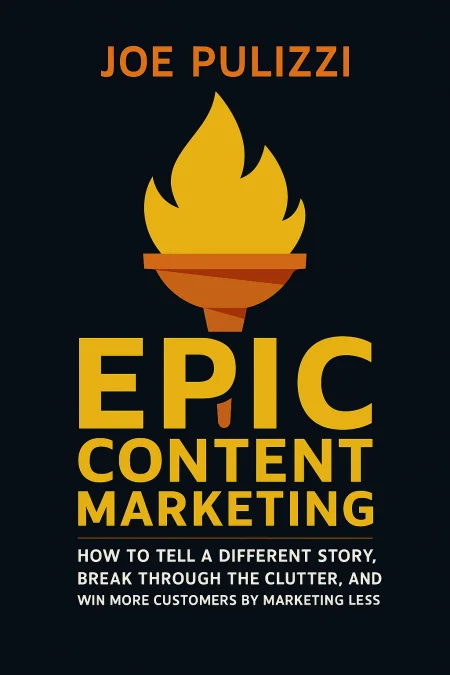
Epic Content Marketing
How to Tell a Different Story, Break Through the Clutter, and Win More Customers by Marketing Less
Book Edition Details
Summary
In the bustling digital landscape where every click vies for attention, Joe Pulizzi emerges as the beacon of transformation with "Epic Content Marketing." Here lies a masterclass in capturing hearts and minds, not through interruption, but through irresistible storytelling. Pulizzi, a venerated authority in the realm of content marketing, dismantles the conventional, paving a path where value-driven content reigns supreme. This guide arms marketers—be it the savvy entrepreneur or the CMO of a Fortune 500—with the prowess to craft narratives that engage, entertain, and ultimately, drive action. Featuring insightful case studies from giants like LEGO and Coca-Cola, this book is your blueprint to not only join the conversation but to become its orchestrator. Prepare to revolutionize your approach and witness your audience become fervent ambassadors of your brand. Here, content is not just king—it's epic.
Introduction
In today's overcrowded digital landscape, every business faces the same fundamental challenge: how to cut through the noise and genuinely connect with customers who are bombarded by over 5,000 marketing messages daily. Traditional advertising methods are losing their effectiveness as consumers become increasingly skilled at filtering out promotional content. The answer lies not in shouting louder, but in fundamentally transforming how we approach marketing itself. Instead of interrupting customers with messages about how wonderful our products are, we must shift our focus to creating valuable, compelling content that serves their needs first. This transformation requires us to think like publishers, to become storytellers, and to build genuine relationships through consistent, helpful communication that positions us as trusted experts in our fields.
Building Your Content Marketing Foundation
Content marketing represents a fundamental shift from traditional advertising to a more sophisticated approach that prioritizes audience needs over product promotion. At its core, content marketing is the art of communicating with customers without selling, providing value before asking for anything in return. Marcus Sheridan discovered this truth during the 2008 recession when his pool company, River Pools and Spas, faced potential bankruptcy. Instead of increasing advertising spend, Marcus made a counterintuitive decision: he began writing detailed blog posts answering every conceivable question potential customers might have about fiberglass pools. One post titled "What Does a Fiberglass Pool Cost?" became so valuable that it ranked number one in Google searches nationwide. The transformation was remarkable. Within two years, River Pools went from struggling to survive to becoming the leading fiberglass pool installer in North America. Marcus reduced marketing costs from $250,000 to $40,000 annually while increasing sales to over $5 million. The secret wasn't selling harder but serving better through content that genuinely helped customers make informed decisions. To establish your content marketing foundation, start by asking three critical questions: Who is your audience? What problems keep them awake at night? How can your expertise help solve those problems? Create detailed audience personas, develop a clear content mission statement, and commit to consistency above perfection. Remember, your customers don't care about you or your products initially; they care about themselves and their challenges. The foundation of epic content marketing rests on this simple truth: when you consistently provide value without immediate expectation of return, you build trust that eventually converts into business. Start where you are, use what you know, and focus relentlessly on serving your audience's needs.
Creating and Managing Epic Content
Epic content marketing requires moving beyond basic content creation to establishing professional publishing processes that rival traditional media companies. This means developing editorial standards, maintaining consistent quality, and creating systems that scale with your ambitions. The Content Marketing Institute exemplifies this approach. When founder Joe Pulizzi launched CMI in 2007 with limited resources, he couldn't afford to hire full-time writers for daily content production. Instead, he built relationships with industry influencers, offering them a platform to share their expertise in exchange for high-quality content. CMI's managing editor worked closely with each contributor, heavily editing submissions to ensure they met strict editorial standards. This collaborative approach paid extraordinary dividends. By treating contributors as partners rather than suppliers, CMI created content that influencers eagerly shared with their own audiences. The strategy transformed a startup with minimal reach into the leading authority in content marketing, attracting over 130,000 unique monthly visitors and generating millions in revenue directly traceable to blog content. The key lies in treating content as a valuable asset rather than a disposable expense. Develop an editorial calendar that maps content to your audience's buying journey. Establish clear style guidelines and quality standards. Create workflows that include proper editing, fact-checking, and optimization for search engines and social sharing. Most importantly, plan for content repurposing from the beginning. One substantial piece of content should generate multiple formats: a white paper becomes several blog posts, an infographic, a SlideShare presentation, and video snippets. This multiplier effect maximizes your investment while serving different audience preferences and consumption patterns.
Promoting Your Content Across Channels
Creating exceptional content is only half the battle; without strategic promotion, even the most valuable content remains invisible. Successful content marketing requires treating distribution with the same importance as creation itself. The secret lies in understanding that your owned audience is just the beginning of your reach potential. Consider the "three circles" of content sharing: your direct connections who share because they know you, their networks who discover you through trusted sources, and the ultimate prize of third-circle sharing where strangers share your content based purely on its value. Dollar Shave Club's viral launch video perfectly illustrates this progression. Their humorous, irreverent approach to explaining razor subscriptions resonated so powerfully that it spread far beyond their initial network, generating over 10 million views and transforming a startup into a major brand. However, such viral success typically follows consistent publication of quality content that gradually builds audience trust and sharing behavior. Focus on building genuine relationships with industry influencers through the "4-1-1 rule": for every six pieces of content you share on social media, four should highlight others' valuable work, one should be your own educational content, and one can be promotional. This generous approach to content curation builds goodwill that pays dividends when you need support. Additionally, optimize every piece of content for search engines by targeting specific keyword phrases your customers actually use. Include compelling images in every post, as visual content performs 91 percent better than text alone. Create content with sharing in mind: develop tweetable quotes, design easily embeddable infographics, and always include clear calls to action that guide readers toward deeper engagement. Remember, great content without strategic promotion is like hosting a party and forgetting to send invitations. Develop systematic approaches to content distribution that amplify your message across multiple channels while maintaining authentic relationships with your audience and industry peers.
Measuring Success and Continuous Growth
Measuring content marketing success requires moving beyond vanity metrics to focus on business outcomes that matter to organizational leadership. The most sophisticated measurement approaches combine immediate indicators with long-term relationship building metrics. Marcus Sheridan's pool company provides a compelling measurement model. By implementing marketing automation systems, he discovered that customers who consumed 30 pages of website content before sales appointments converted at an 80 percent rate, compared to the industry average of 10 percent. Some customers engaged with hundreds of pages of content, and these highly engaged prospects consistently closed faster and became better long-term customers. This insight reveals content marketing's true power: it doesn't just generate leads but creates better customers. Subscribers who engage deeply with your content often demonstrate higher lifetime value, shorter sales cycles, and increased referral rates. The key is tracking these relationships through systems that connect content consumption to business outcomes. Implement a pyramid measurement approach with three levels: primary indicators that matter to executives (sales, cost savings, customer retention), secondary indicators that drive those outcomes (lead quality, conversion rates, sales cycle length), and user indicators that help optimize content performance (page views, social shares, search rankings). At the Content Marketing Institute, email subscribers generate significantly more revenue than non-subscribers, attend more events, and close three times faster in sales processes. This insight shaped their entire content strategy around building and nurturing subscriber relationships rather than chasing broader but less valuable metrics. Start by defining specific business objectives for your content marketing, then work backward to identify the metrics that truly predict success. Focus on behaviors that indicate genuine engagement and eventual business value, not just attention. Remember, the goal isn't to create content that gets noticed but content that creates lasting business relationships that drive growth.
Summary
The transformation from traditional marketing to content marketing represents more than a tactical shift; it's a fundamental reimagining of how businesses build relationships with customers. As the landscape becomes increasingly crowded with promotional messages, the companies that will thrive are those that master the art of serving before selling, of becoming genuinely useful to their audiences rather than simply trying to capture attention. "Your customers don't care about you, your products, or your services. They care about themselves, their wants, and their needs. Content marketing is about creating interesting information your customers are passionate about so they actually pay attention to you." This truth demands that we approach marketing with humility and generosity, consistently providing value that helps our customers succeed in their own endeavors. The businesses that embrace this philosophy and execute it with professional discipline will not just survive the attention economy—they will define it. Begin today by identifying one problem your customers face, create content that genuinely helps solve it, and commit to serving their needs with the same passion you bring to developing your products.
Related Books
Download PDF & EPUB
To save this Black List summary for later, download the free PDF and EPUB. You can print it out, or read offline at your convenience.
By Joe Pulizzi
