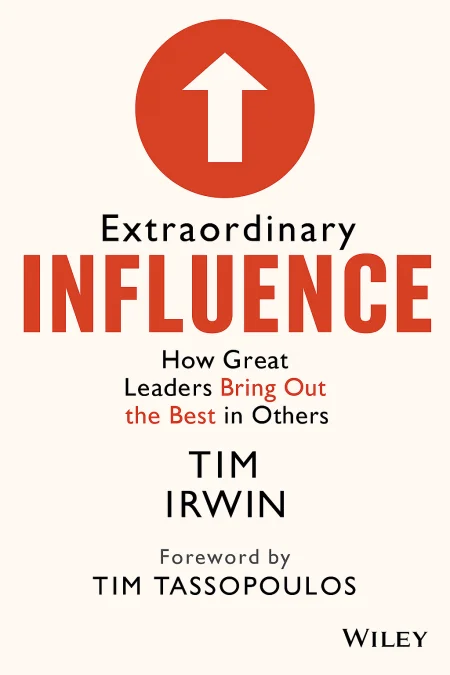
Extraordinary Influence
How Great Leaders Bring Out the Best in Others
Book Edition Details
Summary
Can the power of words ignite a transformative spark? Dr. Tim Irwin's "Extraordinary Influence" reveals a revolutionary approach to leadership that challenges the status quo. By tapping into the latest brain science and insights from top executives, Irwin dismantles the traditional reliance on criticism. Instead, he champions a radical shift towards communication that breathes life into teams, fostering purpose and passion. This book is a clarion call for leaders to replace destructive feedback with affirmations that align aspirations with organizational goals. Dive into a narrative that unveils how the right words can not only enhance performance but also unlock the intrinsic motivation that fuels success. Let your influence be the catalyst for extraordinary change.
Introduction
Imagine standing at a crossroads where your words could either launch someone into their greatest potential or quietly dim their inner light. Every day, leaders, parents, teachers, and coaches face this profound choice. The difference between extraordinary influence and ordinary management lies not in authority or position, but in understanding a revolutionary truth that neuroscience has only recently confirmed: the human brain responds dramatically differently to affirmation than to criticism. Most of us learned to lead, teach, or parent through methods that actually work against human nature. We believe that pointing out flaws and demanding improvement will motivate change, yet research reveals this approach triggers defensive responses that shut down creativity, problem-solving, and genuine growth. The leaders who truly transform others have discovered something remarkable: when we affirm people's core character while addressing their potential, we unlock extraordinary performance and lasting change. This isn't about lowering standards or avoiding difficult conversations. It's about accessing the most powerful part of the human brain to create transformation from the inside out.
The Science of Affirmation: Why Words Transform Performance
At its heart, extraordinary influence rests on a neurological foundation that reveals why some leaders consistently bring out the best in others while others struggle to inspire even basic compliance. The secret lies in understanding how our brains process different types of feedback and why affirmation creates dramatically different results than criticism. Consider the story of William, whose football season ended in heartbreaking defeat during the state playoffs. As steam rose from his overheated body in the cold night air, the opposing team's coach walked across the field directly toward him. Instead of celebrating his own team's victory, this coach looked into William's eyes and spoke words that would echo through decades: "Son, tonight you played an outstanding game, and you left nothing on the field. You displayed great character and courage in the way that you led your teammates, and it was an honor to play against you." These words didn't just comfort a disappointed teenager; they lodged deep in William's core and became beliefs that guided him through four years at the Naval Academy, submarine warfare training, and eventually into business leadership. The coach's affirmation planted seeds of resilience, character, and determination that continued growing long after that Friday night under the lights. When we affirm others authentically, we activate neural pathways associated with positive emotions, creativity, and higher-order thinking. The brain releases neurochemicals that improve problem-solving abilities, reduce stress, and increase openness to new ideas. Conversely, criticism triggers the amygdala's threat-detection system, shutting down precisely the mental resources we want to engage. To harness this power, start by identifying moments when people demonstrate character, not just competence. Look beyond what they accomplished to who they were in the process. Practice speaking to their integrity, courage, wisdom, or resilience using specific examples of how these qualities showed up in their actions.
Words of Life vs Words of Death
The ancient proverb reminds us that "words can bring death or life," and modern neuroscience confirms this profound truth with startling precision. The words we choose as leaders don't merely convey information; they literally reshape the neural pathways of those we influence, either opening channels for growth or triggering defensive responses that shut down potential. Anne's story perfectly illustrates this principle. At six years old, her creative spirit led her to experiment with paint in ways that resembled Jackson Pollock's revolutionary techniques. Instead of recognizing budding artistic talent, her teacher Ms. Caldwell publicly shamed her for making a mess, leaving emotional scars that persisted for decades. That single moment of criticism nearly extinguished what would later become a successful career as a fine art gallery owner. Ms. Caldwell could have transformed that moment by saying, "Oh Anne, what a different and creative way to apply paint. I am so proud of you for exploring new ways to make interesting shapes and colors. Class, look at what Anne painted. Isn't this creative?" Then privately, she could have kindly asked Anne to clean up the spattered paint. This approach would have affirmed Anne's creativity while still addressing the practical issue. Words of Death share common characteristics: they focus on what's wrong with the person rather than the behavior, they create shame rather than learning opportunities, and they engage our brain's threat-detection systems. The "dirty dozen" research findings reveal that criticism leads to decreased creativity, reduced productivity, increased depression and anxiety, and compromised immune system function. Instead, choose Words of Life that speak to a person's character and potential. When you must address problems, focus on specific behaviors while affirming the person's capacity for growth. Transform "You always interrupt people" into "I've noticed you have passionate ideas that you're eager to share. When you let others finish their thoughts first, your contributions will have even greater impact because people will feel heard." Practice catching people doing things right, especially when they demonstrate character qualities like integrity, courage, or wisdom. These affirmations create lasting change because they speak to who people are becoming, not just what they're doing.
Alliance Feedback: The Power of Purpose-Driven Growth
Traditional criticism often fails because it positions the leader as judge and the follower as defendant. Alliance Feedback transforms this dynamic by creating partnership around shared goals and the person's own aspirations. Instead of demanding compliance, we invite collaboration toward outcomes that matter deeply to everyone involved. The story of Mr. Benson and the cafeteria incident demonstrates Alliance Feedback perfectly. When a college student's thoughtless comments about "pig cannibalism" upset local farmers who collected food scraps, Mr. Benson could have simply fired him. Instead, he created an alliance around the cafeteria's mission and the young man's own values. He began by affirming the student's character: "As I have come to know you, I believe you care about people and you care about our cafeteria's mission." Then he connected the needed behavior change to those shared values and the student's personal growth. This approach worked because Mr. Benson didn't lecture about what was wrong; he reminded the student of what he stood for and how his actions could align with those deeper values. The transformation was immediate and lasting, creating not just compliance but genuine learning and relationship building with the farmers. Alliance Feedback works in two forms: Aspirational connects needed changes to a person's hopes and dreams, while Missional links improvements to shared organizational goals. Both approaches engage the brain's reward centers and intrinsic motivation systems rather than triggering defensive responses. To implement Alliance Feedback, first establish trust by clearly communicating that you're genuinely invested in the person's success. Then identify specific behaviors that need adjustment and connect those changes to outcomes the person genuinely cares about. Frame the conversation as collaborative problem-solving rather than top-down correction. Remember that Alliance Feedback requires authentic care for the person's wellbeing and future. When people know you're truly for them, they can hear almost anything you need to communicate. This approach doesn't eliminate accountability; it makes accountability more effective by engaging the person's own motivation for change.
Building High-Performance Cultures Through Influence
Extraordinary influence extends beyond individual relationships to shape entire organizational cultures. The most effective leaders understand that sustainable high performance emerges when affirmation becomes woven into the fabric of daily interactions, creating environments where people naturally bring their best selves to work. The story of Pat and the landscape crew illustrates this principle beautifully. When Pat impulsively pulled an unmarked red lever on a crane and dropped a massive boulder through a newly paved sidewalk, he expected immediate termination. Instead, his supervisor chose a different path: "Your mistake yesterday was highly uncharacteristic of you. You are an excellent employee, and we greatly value your membership on our installation team and the positive influence you have on the other team members." This grace didn't just save Pat's job; it transformed the entire team culture. When Pat shared what happened at their Monday morning meeting, the usual banter stopped. Everyone understood that this was a workplace where people were valued beyond their mistakes, where growth was possible, and where their contributions truly mattered. The mission itself took on deeper meaning as the team experienced firsthand what it meant to work in an environment that renewed people's lives. High-performance cultures balance three essential elements: individual recognition (the "I"), team cohesion (the "We"), and shared purpose (the "It"). Leaders must skillfully attend to all three dimensions, knowing when to focus on personal development, when to strengthen team bonds, and when to reconnect everyone with their larger mission. Creating such cultures requires intentional practices: regular affirmation of character qualities, Alliance Feedback that connects improvements to meaningful goals, and consistent modeling of the behaviors you want to see throughout the organization. Most importantly, it demands that leaders maintain strong cores themselves, because authentic influence flows only from integrity. Begin building this culture by establishing regular rhythms of affirmation in your team meetings, performance conversations, and informal interactions. Train your managers to recognize and speak to character qualities, not just task completion. Create systems that celebrate both individual achievements and collaborative successes while keeping everyone connected to the larger purpose that makes their work meaningful.
Summary
The journey toward extraordinary influence begins with a fundamental shift in perspective: from seeing our role as pointing out what's wrong to becoming someone who consistently brings out what's right in others. As this exploration has revealed, "We gain an extraordinary ability to transform others when we affirm them versus when we apply what might euphemistically be called constructive criticism." The neuroscience is clear and the practical applications are proven. When we choose affirmation over criticism, when we speak Words of Life rather than Words of Death, and when we create alliances for growth rather than adversarial corrections, we unlock human potential in ways that traditional management approaches never could. This isn't about lowering standards or avoiding difficult conversations; it's about accessing the most powerful mechanisms for lasting change that exist within every person we lead. Your next conversation is an opportunity to practice extraordinary influence. Choose one person in your sphere of influence and look for a chance to affirm their character, not just their competence. Speak to their integrity, courage, wisdom, or resilience with specific examples. Watch how this simple shift creates openness, builds trust, and unleashes potential you might never have imagined possible.
Related Books
Download PDF & EPUB
To save this Black List summary for later, download the free PDF and EPUB. You can print it out, or read offline at your convenience.
By Tim Irwin
