
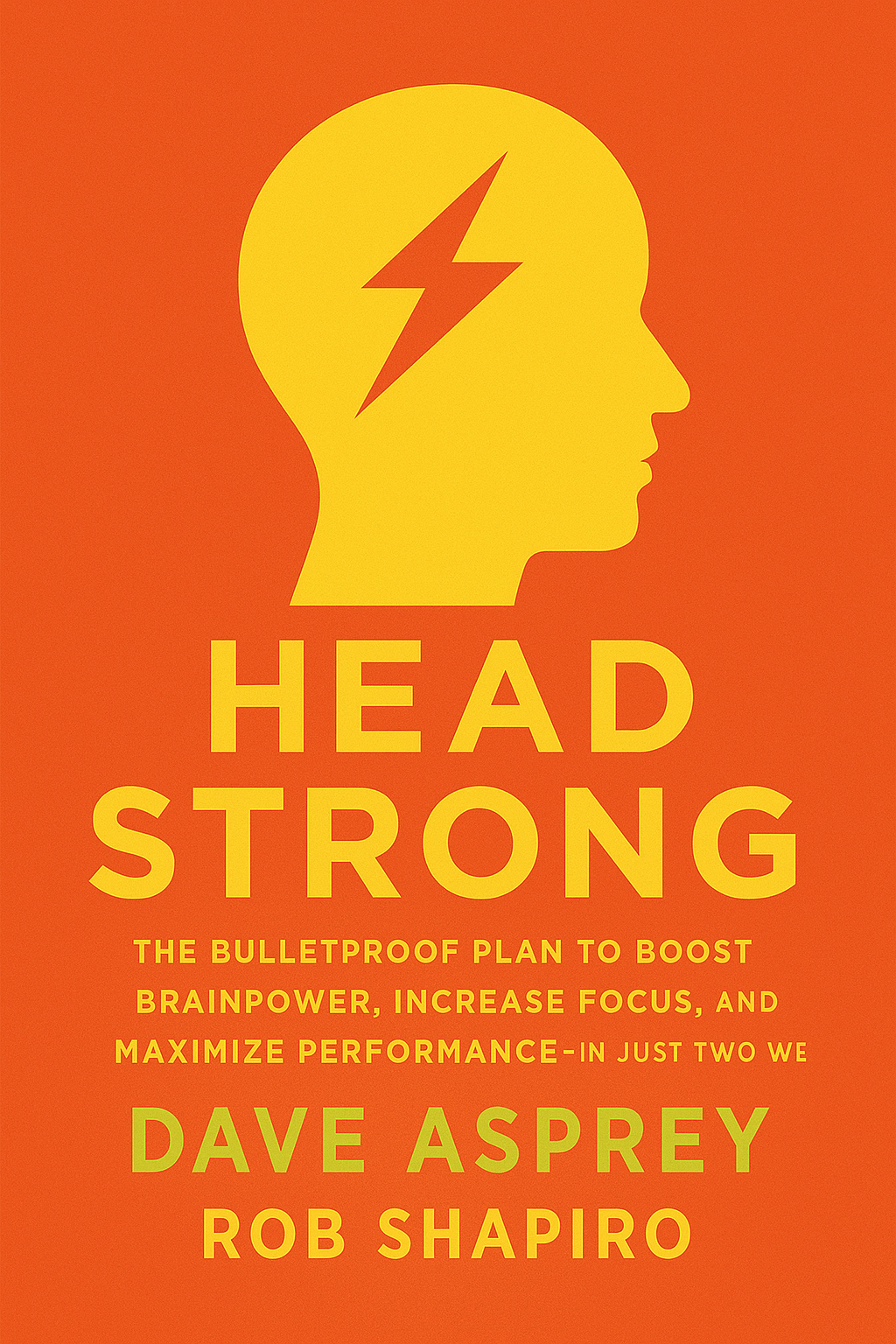
Head Strong
The Bulletproof Plan to Boost Brainpower, Increase Focus, and Maximize Performance – in Just Two Weeks
Book Edition Details
Summary
In a world where mental prowess determines success, "Head Strong" emerges as a beacon for those eager to unlock their brain's full potential. Dave Asprey, the visionary mind behind the Bulletproof movement, distills a decade of groundbreaking research into the art of neuroplasticity. Imagine boosting your IQ by twenty points or dialing back your biological clock through simple lifestyle tweaks—this book lays out the blueprint. Asprey’s insights delve into the alchemy of diet, sleep, exercise, and lighting, transforming them into powerful catalysts for brain enhancement. Whether you're navigating the demands of a high-stakes career or seeking personal growth, this guide illuminates a path to unparalleled cognitive clarity and energy, setting the stage for extraordinary mental acuity.
Introduction
Have you ever wondered why some days your brain feels razor-sharp while other days you struggle to remember where you left your phone? The answer isn't found in your genes, your age, or even how much sleep you got last night. Instead, it lies within microscopic powerhouses called mitochondria that live inside every cell of your brain. These tiny structures, which were once independent bacteria billions of years ago, now serve as your brain's personal energy factories, determining whether you experience mental clarity or brain fog, sustained focus or scattered attention, emotional stability or mood swings. What's truly remarkable is that you have far more control over these cellular engines than you might imagine. Through specific changes to your diet, environment, and daily habits, you can dramatically boost your brain's energy production in as little as two weeks. You'll discover why certain foods act like premium fuel for your mind while others function like toxic sludge, how simple adjustments to light exposure and temperature can enhance your cognitive performance, and why understanding your brain's energy systems is the key to unlocking mental capabilities you never knew you possessed.
Mitochondria: The Ancient Bacteria Powering Your Brain
Deep within every cell of your brain live thousands of microscopic structures that hold the key to your mental performance. Mitochondria are essentially ancient bacteria that, over a billion years ago, made a deal with our primitive cells that changed the course of evolution forever. These bacterial partners moved in permanently, bringing with them the ability to produce enormous amounts of energy in exchange for a safe place to live. Today, they retain their own DNA separate from yours and reproduce independently, making them more like symbiotic roommates than typical cellular components. Your brain is particularly packed with mitochondria because thinking requires tremendous amounts of energy. While your brain represents only about two percent of your body weight, it consumes roughly twenty percent of your total energy supply. Every time you form a memory, solve a problem, or even maintain consciousness, your mitochondria are working overtime to produce ATP, the universal energy currency that powers all cellular processes. When these energy factories are running efficiently, you experience the mental sharpness and sustained focus that characterize peak cognitive performance. The fascinating aspect of mitochondria is their responsiveness to your lifestyle choices. Unlike your nuclear DNA, which remains relatively fixed, mitochondrial function can change dramatically based on what you eat, how you exercise, your sleep patterns, and even the light you're exposed to. When treated well, your brain can actually grow new mitochondria through a process called mitochondrial biogenesis, essentially building more power plants to meet increased energy demands. Conversely, exposure to toxins, chronic stress, or poor nutrition can damage these cellular engines, leading to the mental fatigue and cognitive decline that many people accept as normal aging. Understanding mitochondria fundamentally changes how we approach brain health. Instead of viewing mental performance as fixed or slowly declining, we can see it as dynamic and improvable. Your afternoon brain fog isn't a character flaw or inevitable consequence of a busy life, but rather a signal that your cellular power plants need better fuel, maintenance, or working conditions. This perspective opens up entirely new possibilities for enhancing cognitive function through targeted interventions that support mitochondrial health.
Brain Fuel vs Brain Kryptonite: What Feeds Your Mind
Just as a Ferrari requires premium gasoline to perform optimally, your brain's mitochondria need specific nutrients to generate maximum energy efficiently. The highest quality brain fuel comes from healthy fats, particularly medium-chain triglycerides found in coconut oil, grass-fed butter, and MCT oil. These special fats can be rapidly converted into ketones, an alternative fuel source that mitochondria actually prefer over glucose. When burning ketones, your brain's energy factories produce up to thirty-eight percent more ATP while generating fewer toxic waste products, resulting in cleaner, more sustained mental energy. Polyphenols represent another category of premium brain fuel. These colorful compounds, abundant in foods like wild blueberries, dark chocolate, and properly sourced coffee, don't just provide antioxidant protection. They actually signal your brain cells to manufacture new mitochondria and improve the efficiency of existing ones. This explains why many people experience enhanced mental clarity and focus after consuming high-quality coffee or eating polyphenol-rich foods. These molecules essentially act as upgrade signals for your brain's energy infrastructure. On the opposite end of the spectrum lie what we might call "brain kryptonite" foods that actively damage mitochondrial function. Processed vegetable oils, when heated during cooking, create toxic compounds called aldehydes that directly attack mitochondrial membranes. Sugar, while providing quick energy, can overwhelm your mitochondria's processing capacity and lead to the formation of harmful advanced glycation end products. Perhaps most insidiously, mycotoxins from mold-contaminated foods can severely impair mitochondrial function for months or even years after exposure. The key insight is that your brain doesn't simply need calories; it requires specific molecular building blocks to maintain and repair its energy-producing machinery. Many people unknowingly consume foods that force their mitochondria to work harder while producing less energy, creating a vicious cycle of mental fatigue and poor cognitive performance. By choosing foods that support mitochondrial health while eliminating those that damage these cellular powerhouses, you can experience dramatic improvements in mental clarity, focus, and sustained energy within days of making these changes.
Light, Air, and Cold: Environmental Factors That Shape Cognition
Your mitochondria evolved over millions of years to respond to natural environmental signals, making them exquisitely sensitive to factors like light quality, air composition, and temperature fluctuations. Modern indoor environments, however, expose us to artificial conditions that can significantly impair mitochondrial function. The LED and fluorescent lights that illuminate most offices and homes emit excessive blue light while lacking the red and infrared wavelengths that mitochondria use as signals for optimal energy production. This "junk light" forces your brain to work harder to process visual information while disrupting the cellular signals that regulate energy metabolism. Natural sunlight provides the full spectrum of wavelengths that your mitochondria expect, including infrared light that helps structure water molecules within your cells and enables more efficient energy transfer. When you spend most of your time under artificial lighting, your mitochondria receive confused signals that can lead to decreased energy production, disrupted sleep patterns, and increased oxidative stress. The solution involves both reducing exposure to harmful artificial light and strategically increasing exposure to beneficial natural light spectra through sunlight, red light therapy, or full-spectrum lighting systems. The air you breathe directly impacts mitochondrial function since these cellular engines require oxygen as the final component in energy production. Poor indoor air quality, common in many modern buildings, forces your brain to operate with suboptimal oxygen levels while dealing with increased carbon dioxide and chemical pollutants. Interestingly, brief periods of controlled oxygen restriction, similar to high-altitude training, can actually strengthen mitochondria by forcing them to become more efficient. Specific breathing techniques can help optimize oxygen delivery while training your cellular energy systems to perform better under challenging conditions. Temperature exposure represents another powerful tool for mitochondrial enhancement. When exposed to cold temperatures, your body must generate heat through thermogenesis, a process that requires mitochondria to work harder and become more efficient. Regular cold exposure, even as simple as ending showers with thirty seconds of cold water, can stimulate the growth of new mitochondria and improve their overall function. This hormetic stress, where brief challenges make systems stronger, explains why people who regularly practice cold therapy often report increased mental clarity and sustained energy levels that persist throughout the day.
The Two-Week Protocol: Optimizing Your Mental Performance
The remarkable responsiveness of mitochondria means that significant improvements in brain function can be achieved much faster than most people imagine. Unlike genetic changes that take generations or muscle building that requires months, mitochondrial enhancements can be felt within days and become substantial within two weeks of implementing targeted protocols. This rapid timeline makes it possible to quickly test and experience the dramatic difference that optimized cellular energy production can make in your daily mental performance. The nutritional foundation focuses on providing premium fuel while eliminating mitochondrial toxins. This means emphasizing healthy fats like grass-fed butter, coconut oil, and wild-caught fish while incorporating polyphenol-rich foods such as organic berries and properly sourced coffee. Simultaneously, you'll remove processed foods, industrial seed oils, and potentially mold-contaminated items that can damage mitochondrial function. The approach isn't about caloric restriction but rather fuel optimization, ensuring your brain receives the molecular building blocks it needs for peak energy production. Environmental modifications involve strategically managing light exposure to support natural circadian rhythms and mitochondrial signaling. This includes using blue light blocking glasses in the evening, seeking natural sunlight exposure in the morning, and incorporating red light therapy when possible. Simple changes like dimming lights two hours before bedtime and avoiding screens can dramatically improve sleep quality, which is when your brain's mitochondria perform crucial repair and maintenance functions. Cold exposure protocols and specific breathing techniques provide additional controlled stresses that promote mitochondrial adaptation and improved efficiency. The exercise component emphasizes brief, intense activities that challenge mitochondria to adapt and grow stronger, combined with gentle movement that promotes circulation and cellular waste removal. Rather than long, exhausting workouts that can actually stress mitochondria beyond their adaptive capacity, the focus is on strategic stress followed by adequate recovery. This approach recognizes that mitochondrial health is interconnected with every aspect of physiology, creating positive feedback loops where improvements in energy production enhance sleep quality, reduce stress responses, and decrease inflammation, all of which further support mitochondrial function and cognitive performance.
Summary
The revolutionary insight at the heart of optimizing brain function lies in understanding that your mental performance is fundamentally controlled by ancient bacterial partners living within your neurons, and these microscopic allies respond rapidly and dramatically to the environmental and nutritional signals you provide them. Rather than accepting cognitive decline, mental fatigue, or poor focus as inevitable consequences of modern life, stress, or aging, you can take direct action to enhance the cellular powerhouses that fuel every thought, memory, and decision you make. This perspective transforms brain health from a passive hope into an active practice, where simple changes to diet, light exposure, breathing, and temperature can produce profound improvements in mental clarity and sustained cognitive performance within days. What possibilities might open up in your personal and professional life if you could reliably access the full energy potential of your brain, and how might this understanding of cellular energy systems change the way we design our homes, workplaces, and daily routines to support optimal human cognitive function?
Related Books
Download PDF & EPUB
To save this Black List summary for later, download the free PDF and EPUB. You can print it out, or read offline at your convenience.
By Dave Asprey
