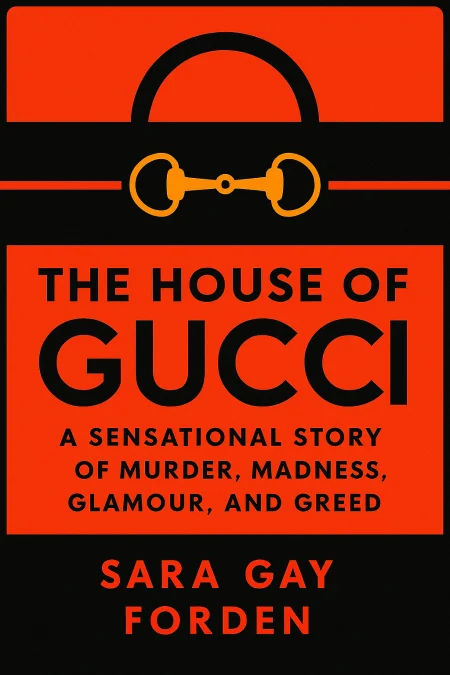
House of Gucci
A Sensational Story of Murder, Madness, Glamour, and Greed
Book Edition Details
Summary
Amidst the opulence of Milan's fashion scene, the Gucci dynasty's legacy is shattered by a gunshot. On a fateful morning in 1995, Maurizio Gucci, poised to inherit an empire of luxury, falls victim to an assassin's bullets, leaving behind a world of chaos and intrigue. Two years later, the spotlight turns to his enigmatic ex-wife, Patrizia Reggiani, dubbed "the Black Widow" by the media. Accusations fly—was it revenge for a tarnished love, or a desperate act driven by financial ruin? As the glamour of haute couture masks a dark tale of ambition and betrayal, "The House of Gucci" unravels the tangled threads of a family's rise and near ruin, exposing the shimmering facade for what it truly is. This riveting narrative of power, passion, and peril keeps you on the edge, daring you to question who really wears the crown in this high-stakes game.
Introduction
On a crisp March morning in 1995, the heir to one of fashion's most prestigious dynasties lay dead on the marble steps of his Milan office building, victim of a calculated assassination that would shock the luxury goods world. Maurizio Gucci, the last family member to control the legendary Italian fashion house, had lived a life that embodied both the intoxicating heights of inherited privilege and the devastating consequences of unchecked ambition. His story unfolds against the backdrop of post-war Italy's economic miracle, when family-owned businesses transformed from local artisan workshops into global luxury empires, yet remained trapped by the very traditions that had made them successful. Born into the third generation of the Gucci dynasty, Maurizio inherited not just extraordinary wealth and a world-renowned name, but also the burden of family expectations and the curse of internecine warfare that would ultimately consume him. His journey from sheltered heir to visionary leader to tragic victim reveals the complex dynamics of power, loyalty, and betrayal that can tear apart even the most successful family enterprises. Through Maurizio's rise and fall, readers will discover the intoxicating allure of absolute power, the price of breaking free from family constraints, and the timeless lessons about the fragility of success when personal relationships become casualties of business ambition.
From Heir to Rebel: Breaking Free from Family Control
Maurizio Gucci entered the world on September 26, 1948, as the only son of Rodolfo Gucci, a former silent film actor who had traded Hollywood dreams for leather goods reality. The Gucci name already carried weight in Italy's luxury circles, built on the foundation laid by Maurizio's grandfather Guccio, who had transformed observations from his days as a hotel porter in London into a thriving Florentine leather business. By the time of Maurizio's birth, the family had established itself as synonymous with Italian craftsmanship and elegance, their signature bamboo-handled bags and horse-bit loafers becoming symbols of refined taste across Europe and America. The young Maurizio grew up in the shadow of both privilege and tragedy. When he was just five years old, his mother Alessandra died of cancer, leaving him to be raised by his possessive and domineering father. Rodolfo, haunted by his wife's deathbed plea that no other woman should ever be called "Mamma" by their son, refused to remarry and instead channeled his protective instincts into an obsessive control over Maurizio's life. The boy was shuttled between Milan's exclusive social circles and the family's luxurious Swiss estate in Saint Moritz, always under the watchful eye of his father and a retinue of loyal servants who treated him like precious cargo. This gilded cage began to chafe as Maurizio reached adulthood. Despite his law degree and apprenticeship in the family business, he remained financially dependent on his father and subject to strict curfews and constant supervision. The breaking point came in 1970 when Maurizio fell in love with Patrizia Reggiani, a striking young woman whose violet eyes and ambitious nature immediately captivated him. Patrizia represented everything Rodolfo feared: a social climber from a modest background who saw in the Gucci name her ticket to the heights of Milanese society. When Rodolfo forbade the relationship and threatened disinheritance, Maurizio made the first truly independent decision of his life. He packed his bags, moved in with Patrizia's family, and took a job in her stepfather's trucking business, trading his inheritance for love and autonomy. This act of rebellion, shocking in its decisiveness, revealed a strength of character that few had suspected in the sheltered young heir. For two years, he lived as an ordinary working man, discovering capabilities and confidence he never knew he possessed while his father brooded in isolation, unable to accept that his carefully controlled son had chosen his own path.
Corporate Warfare: The Battle for the Gucci Empire
The reconciliation between father and son in 1973 marked the beginning of Maurizio's education in the complexities of family business dynamics. Rodolfo, recognizing that his brother Aldo's sons lacked the vision and capability to lead Gucci into the future, began grooming Maurizio as his successor. This meant navigating the treacherous waters of a company divided between Aldo's American expansion ambitions and Rodolfo's Italian manufacturing base, while also managing the explosive personality of cousin Paolo, whose creative talents were matched only by his capacity for destructive family warfare. When Rodolfo died in 1983, leaving Maurizio his 50 percent stake in the company, the young heir found himself thrust into a power struggle that would define the rest of his life. His cousins viewed him as an inexperienced interloper, while Aldo saw him as a threat to the American operation that had become his life's work. The family board meetings devolved into shouting matches, with Paolo's increasingly erratic behavior culminating in physical violence and his eventual betrayal of family secrets to American tax authorities. Maurizio realized that his vision of modernizing Gucci and returning it to its luxury roots could never be achieved while the company remained fractured among competing family factions. The solution came through a brilliant but ruthless maneuver that demonstrated Maurizio had inherited more than just his grandfather's business acumen. By secretly allying with Paolo and using the cousin's shares to gain control of the board, Maurizio executed a corporate coup that removed Aldo from power and consolidated his own authority. The move shocked the family and the business world, revealing that the quiet, scholarly heir possessed a streak of Machiavellian cunning that his relatives had fatally underestimated. Within months, Maurizio had transformed from powerless minority shareholder to undisputed leader of the Gucci empire. However, victory came at a devastating cost. The family unity that had been Gucci's foundation for decades was shattered, replaced by bitter legal battles, public accusations, and a level of animosity that would poison relationships for years to come. Maurizio had won control of his inheritance, but in doing so, he had also inherited a company divided against itself and a family that would never forgive his betrayal of their patriarch.
Vision and Downfall: Leadership, Exile, and Lost Dreams
Maurizio's consolidation of power came at a devastating personal cost that would haunt him for the remainder of his life. His family's retaliatory accusations of document forgery and tax evasion forced him to flee Italy in 1987, beginning a period of Swiss exile that lasted over a year. From his base in Saint Moritz and Lugano's luxury hotels, he watched helplessly as court-appointed administrators took control of his company while prosecutors prepared criminal charges that could have resulted in decades in prison. During this dark period, Maurizio's marriage to Patrizia finally collapsed under the weight of his obsession with business and her resentment at being marginalized in his new life. Their separation became a bitter war of attrition, with Patrizia using their two young daughters as weapons while Maurizio retaliated by cutting off her access to the family properties and yacht. The man who had once risked everything for love now found himself isolated from both his family and his business, sustained only by his unwavering belief in his vision for Gucci's future and the support of a small circle of advisors who shared his dreams. It was during this lowest point that Maurizio forged the partnership that would define his legacy. Through a series of clandestine meetings orchestrated by Morgan Stanley investment bankers, he connected with Investcorp, a Bahrain-based investment firm that specialized in acquiring and revitalizing luxury brands. The chemistry between Maurizio and Investcorp's leadership was immediate and electric, based on their shared conviction that Gucci represented one of the world's great underexploited luxury assets. With control of Gucci finally in his hands, Maurizio embarked on an ambitious transformation that reflected both his sophisticated vision for luxury retail and his fundamental misunderstanding of business realities. He envisioned Gucci not merely as a leather goods manufacturer, but as a lifestyle brand that could compete with the emerging luxury conglomerates. His plans were breathtaking in scope: eliminate the cheap canvas products that had diluted the brand's prestige, hire top American talent like Dawn Mello from Bergdorf Goodman, create stunning new headquarters in Milan's Piazza San Fedele, and reposition Gucci as the ultimate symbol of Italian elegance and craftsmanship. However, his complete disregard for financial discipline and operational realities created a perfect storm of mounting losses and cash flow crises that would ultimately force him to sell his stake in 1993, ending the Gucci family's control over the company that bore their name.
Love, Betrayal, and Murder: The Final Tragedy
The loss of Gucci marked not an ending but a transformation for Maurizio, who discovered in his final years a capacity for happiness and personal fulfillment that had eluded him during his corporate struggles. His relationship with Paola Franchi represented a new chapter of genuine contentment, free from the manipulative dynamics that had characterized his marriage to Patrizia Reggiani. Living in their magnificent Corso Venezia apartment, pursuing new business ventures in tourism and hospitality, Maurizio seemed to have found peace with his decision to sell the family company and embrace a simpler, more authentic existence. However, this personal renaissance was shadowed by the growing rage of his ex-wife Patrizia, who viewed his happiness as a personal affront and his financial independence as a betrayal of their shared history. Patrizia's descent into obsessive hatred was fueled by multiple factors: her brain tumor and subsequent surgery, her sense that she had been instrumental in Gucci's success and deserved a larger share of Maurizio's wealth, and her inability to accept that he had genuinely moved on from their relationship. Her threats escalated from verbal abuse to actual attempts to hire assassins, creating a climate of menace that those around Maurizio took increasingly seriously. The murder itself, carried out on March 27, 1995, as Maurizio walked to his office on Via Palestro, represented the culmination of a conspiracy that revealed the dark underbelly of Milan's criminal networks. Patrizia had enlisted her friend Pina Auriemma to arrange the killing, which was carried out by a team of small-time criminals motivated more by financial desperation than professional expertise. The assassination shocked Italy and the international fashion world, transforming Maurizio from a controversial business figure into a tragic victim of domestic violence taken to its ultimate extreme. The investigation and subsequent trial exposed the full extent of Patrizia's obsession and the web of relationships that had made the murder possible. Her arrest in 1997, conducted with the theatrical flair that had always characterized her public appearances, marked the beginning of a legal process that would ultimately see her convicted and sentenced to twenty-six years in prison. The case became a sensation in Italy, combining elements of high fashion, family drama, and criminal conspiracy that captured the public imagination and cemented the Gucci name's association with both glamour and tragedy in the popular consciousness.
Summary
Maurizio Gucci's life stands as a complex meditation on the burdens of inherited privilege and the dangerous intersection of personal ambition with family legacy. His story reveals how the very qualities that can inspire great vision—passion, determination, and an unwillingness to accept limitations—can also lead to spectacular failure when divorced from practical wisdom and genuine self-knowledge. Perhaps most tragically, his journey demonstrates how the pursuit of authentic happiness and personal fulfillment can become a death sentence when it threatens those who have built their identities around controlling and possessing others. The lessons of Maurizio's experience extend far beyond the rarefied world of luxury fashion to touch on universal themes of family dynamics, business leadership, and personal relationships. His story suggests that true success requires not just vision and determination, but also the humility to recognize one's limitations and the wisdom to build genuine partnerships based on mutual respect rather than manipulation or control. For anyone navigating the challenges of family business, inherited wealth, or the complex dynamics of love and money, Maurizio's tale offers both cautionary warnings and profound insights into the price of ambition and the ultimate value of authentic human connection over material success.
Related Books
Download PDF & EPUB
To save this Black List summary for later, download the free PDF and EPUB. You can print it out, or read offline at your convenience.
By Sara Gay Forden
