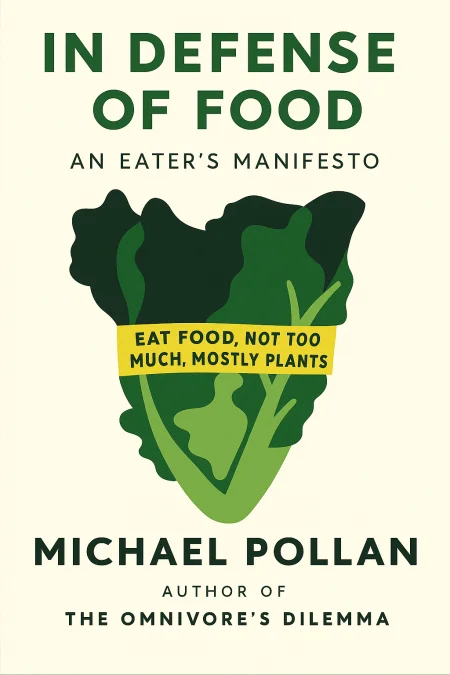
In Defense of Food
An Eater’s Manifesto
Book Edition Details
Summary
In a world where the simple act of eating has become a battleground, Michael Pollan's "In Defense of Food" slices through the noise with a clarion call to rediscover the joy of nourishment. Forget the endless debates over carbs and calories; Pollan distills a lifetime of insight into seven liberating words: Eat food. Not too much. Mostly plants. With eloquence and urgency, he reveals how we've traded the rich tapestry of food for the barren landscape of nutrients, and invites us to reclaim our meals as a source of delight and vitality. This isn't just a guide—it's a manifesto for a healthier, happier life, challenging us to question the very foundations of our modern diet and to savor the transformative power of mindful eating.
Introduction
Modern civilization has created a peculiar paradox: we live in an era of unprecedented food abundance yet suffer from widespread nutritional confusion and diet-related diseases. The contemporary food landscape presents us with thousands of products masquerading as nourishment while traditional relationships between humans and their sustenance have been systematically dismantled. This transformation represents more than mere dietary change—it constitutes a fundamental shift in how we understand the very act of eating. The dominance of reductionist thinking has reduced complex foods to their constituent nutrients, creating a culture obsessed with invisible chemical components rather than actual nourishment. This analytical approach reveals how industrial food production, scientific reductionism, and marketing forces have converged to create what can only be described as a crisis of eating. The investigation proceeds through three interconnected arguments: first examining how nutritional science became divorced from food wisdom, then analyzing the specific mechanisms by which industrial eating patterns generate disease, and finally proposing practical principles for reclaiming a more sensible relationship with nourishment.
The Age of Nutritionism: How Food Science Failed Us
The transformation of eating from a cultural practice into a scientific endeavor represents one of the most significant shifts in human relationship to food. Nutritionism emerged as an ideology that reduces food to its nutrient components, fundamentally altering how societies approach nourishment. This reductionist framework assumes that understanding individual chemical compounds provides sufficient knowledge for optimal eating, bypassing thousands of years of accumulated food wisdom. The rise of nutritional science coincided with industrialization, creating a symbiotic relationship between food manufacturers and researchers seeking to quantify nutrition. This partnership proved mutually beneficial: scientists gained funding and legitimacy while industry acquired scientific justification for processed products. The focus on isolated nutrients enabled manufacturers to engineer foods that could claim health benefits while bearing little resemblance to traditional nourishment. Political forces accelerated this transition when government dietary guidelines shifted from recommending whole foods to targeting specific nutrients. The 1977 Dietary Goals marked a turning point, transforming "eat less meat" into "reduce saturated fat intake"—a linguistic change that opened markets for countless reformulated products. This nutrient-focused approach satisfied industry interests while appearing to address public health concerns. The fundamental flaw in nutritionism lies in its assumption that foods can be understood through their constituent parts. This mechanistic view ignores the complex synergies within whole foods and the cultural contexts that traditionally guided food choices. By reducing nourishment to chemistry, nutritionism has created more confusion than clarity, leaving people dependent on expert interpretation of increasingly contradictory scientific findings.
The Western Diet and Diseases of Civilization
The concept of Western diseases emerges from compelling observations made by medical practitioners working among populations untouched by industrial food systems. These researchers documented the virtual absence of chronic diseases like diabetes, heart disease, and cancer among people eating traditional diets, followed by rapid disease onset after adopting Western eating patterns. This phenomenon suggests that modern health problems stem not from genetic predisposition but from environmental factors—specifically, our transformed food environment. The Western diet's defining characteristics include processed foods, refined grains, added sugars, and industrial oils, combined with reduced consumption of plants and traditional food preparations. This represents a radical departure from the dietary patterns that sustained human health for millennia. The speed of this transformation—occurring within mere decades—has outpaced human biological adaptation, creating unprecedented physiological stress. Evidence from intervention studies demonstrates the reversibility of Western diseases when people return to traditional eating patterns. Aboriginal populations who resumed hunter-gatherer lifestyles showed dramatic improvements in diabetes, blood pressure, and other metabolic markers within weeks. These findings suggest that genetic factors play a secondary role to environmental influences in determining health outcomes. The mechanistic pathway from Western diet to disease involves multiple interconnected processes: the replacement of nutrient-dense foods with calorie-dense products, the disruption of natural satiety signals through processed ingredients, and the inflammatory effects of industrial food components. This creates a cascade of metabolic dysfunction that manifests as the cluster of conditions now recognized as diseases of civilization, affecting populations worldwide as Western dietary patterns spread globally.
Getting Over Nutritionism: Eat Food, Not Too Much, Mostly Plants
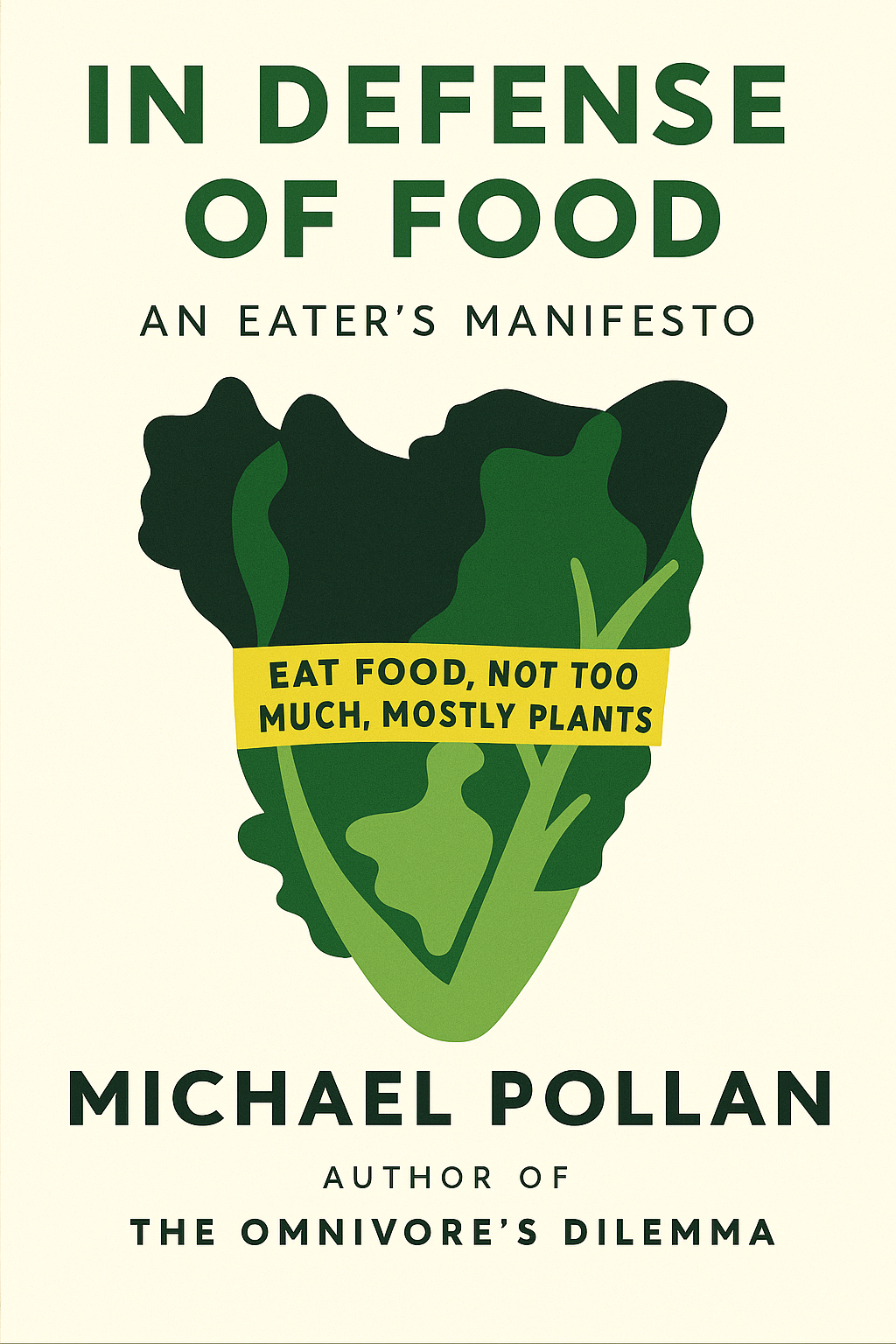
The solution to nutritional confusion lies not in more sophisticated science but in returning to fundamental principles that predate nutritional reductionism. Three simple rules provide a framework for escaping the Western diet: eat food, not too much, mostly plants. This approach sidesteps nutritional debates by focusing on food quality, quantity, and plant emphasis rather than specific nutrients. "Eat food" requires distinguishing actual nourishment from industrial food products. This involves recognizing that many supermarket items would be unrecognizable to previous generations as food. Practical guidelines include avoiding products with unpronounceable ingredients, multiple additives, or health claims—since truly healthy foods rarely require marketing. Shopping at farmers markets and preparing meals from recognizable ingredients provides the most reliable path to real food. "Mostly plants" acknowledges that plant-based eating patterns consistently correlate with better health outcomes across diverse populations. Plants provide essential nutrients, antioxidants, and fiber while typically containing fewer calories per unit than animal products or processed foods. This recommendation doesn't require complete vegetarianism but suggests treating plant foods as the foundation of meals rather than accompaniments. "Not too much" addresses the quantity aspect of eating, recognizing that caloric restriction consistently improves health markers and longevity. This involves relearning hunger and satiety cues, eating more slowly, and paying attention to food quality over quantity. Cultural practices like shared meals, cooking at home, and avoiding eating while distracted help naturally regulate consumption while restoring the social and cultural dimensions of eating that industrialization has eroded.
Summary
The fundamental insight revealed through this analysis is that human health depends not on understanding nutritional science but on maintaining proper relationships—to real food, to appropriate quantities, to plant-based eating, and to the cultural practices that have traditionally governed nourishment. The failure of nutritional reductionism demonstrates that food represents something far more complex than the sum of its chemical parts, requiring an ecological rather than mechanistic understanding of eating. This approach offers readers a practical alternative to the confusion generated by competing nutritional theories while reconnecting eating to its proper cultural and biological contexts.
Related Books
Download PDF & EPUB
To save this Black List summary for later, download the free PDF and EPUB. You can print it out, or read offline at your convenience.
By Michael Pollan
