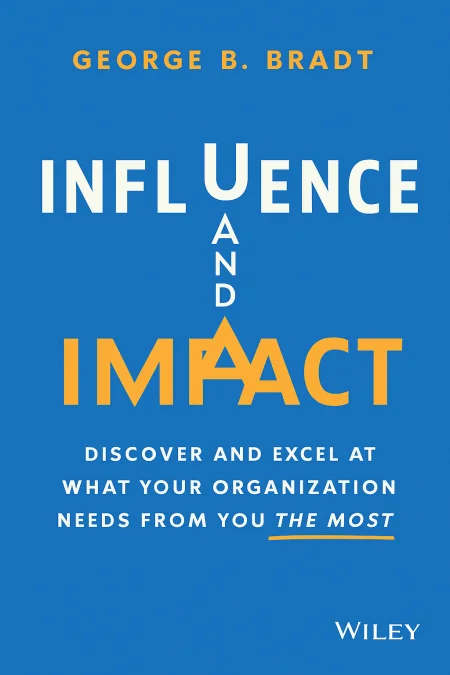
Influence and Impact
Discover and Excel at What Your Organization Needs From You The Most
Book Edition Details
Summary
In the intricate dance of corporate life, where influence can make or break careers, "Influence and Impact" emerges as a beacon for those aspiring to leave their mark. Picture yourself navigating the complex web of professional expectations—this book arms you with the tools to masterfully weave through it. Crafted by the insightful minds of Bill Berman and George Bradt, this guide doesn’t just tell you what to do; it reshapes how you see your role within your organization. With a blend of storytelling and actionable advice, it invites you to reevaluate your strengths, expand your skill set, and uncover the roles that amplify your impact. Whether you’re a seasoned leader or an ambitious newcomer, this compelling narrative offers a fresh lens through which to view your professional journey, ensuring your efforts resonate where they matter most.
Introduction
Have you ever found yourself working harder than ever, yet feeling like your contributions go unnoticed? You're delivering results, putting in the hours, and doing what you believe is expected, but somehow you're not gaining the recognition, influence, or impact you deserve. This frustrating disconnect affects millions of professionals at every level, from emerging leaders to seasoned executives. The truth is, many capable people struggle not because they lack talent or dedication, but because they're focused on the wrong things. They're working diligently on tasks that feel important but aren't actually what their organization needs most urgently. When you discover what your company truly requires from you and align your efforts accordingly, something remarkable happens. Your influence expands naturally, your impact becomes undeniable, and your value to the organization becomes crystal clear. The path to professional fulfillment isn't about working harder or even working smarter—it's about working on what matters most.
Discover Your True Job Requirements
Understanding what your job actually entails goes far beyond reading your official job description or following the tasks assigned during your first week. Your true job requirements exist at the intersection of organizational needs, unspoken cultural expectations, and the specific challenges your role was created to solve. Most people spend years operating under assumptions about their responsibilities, only to discover they've been focusing on secondary priorities while missing the mission-critical elements that would truly demonstrate their value. Consider the story of Dana, a newly appointed CEO who believed his role was to provide inspirational leadership and strategic vision over a three-year timeline. He spent months energizing his team and developing long-term transformation plans, confident he was delivering exactly what was expected. However, when market pressures intensified and the board became more involved, Dana discovered a crucial truth: the private equity firm that owned the company needed an exit strategy within twelve to eighteen months, not three years. His real job wasn't broad organizational transformation—it was tactical revenue generation and operational excellence that would make the company attractive for acquisition. This revelation completely changed Dana's approach. Instead of continuing his inspirational leadership style, he rolled up his sleeves and focused intensively on sales performance, cash flow, and the day-to-day operational details that would drive immediate results. He hired specialists to handle the areas outside his wheelhouse and became, in essence, a senior vice president of sales rather than a traditional CEO. Within nine months, the company was successfully sold, and Dana was the only executive the acquiring company wanted to retain. To discover your true job requirements, start by having direct conversations with key stakeholders about what success looks like in their eyes. Ask your manager not just what you should be doing, but why your role exists and what problem it was created to solve. Observe which activities and results get the most attention from leadership, and notice what behaviors are actually rewarded versus what's stated in company values. Pay attention to the urgent needs that keep surfacing in meetings and the challenges that cause the most stress for your team and organization. Remember that your true job requirements will evolve as business conditions change, so make this discovery process ongoing rather than a one-time exercise. When you align your efforts with these authentic organizational needs, you'll find that your influence grows naturally and your contributions become indispensable.
Build Your Personal Strategic Plan
Creating a Personal Strategic Plan means developing a clear roadmap for how you'll focus your energy, develop your capabilities, and position yourself to deliver maximum value to your organization. This isn't about grand career aspirations or abstract goal-setting—it's about identifying the specific changes you need to make in your priorities, behaviors, and relationships to become truly indispensable in your current role. The process begins with defining your working mission, which connects your personal sense of purpose with your organization's immediate needs. One successful marketing leader described her working mission as "using my experience and knowledge as a marketer to help both our services and our people leverage their strengths in a way that others immediately understand their value." This clarity helped her focus on activities that simultaneously advanced business objectives and developed her team's capabilities. Take the example of Didi, an account manager whose team consistently exceeded their sales goals but who felt undervalued and passed over for promotion. Through careful self-assessment, she recognized that while her results-driven approach was delivering numbers, it was creating friction with internal stakeholders who felt she prioritized her team's agenda over collaborative solutions. Her Personal Strategic Plan focused on three key changes: first, developing a deeper understanding of what all stakeholders needed from her team; second, shifting from setting boundaries on requests to finding win-win solutions; and third, changing her communication style to emphasize benefits to others rather than just the quality of work produced. Within months of implementing this plan, Didi's relationships with internal customers transformed dramatically. She continued delivering the same strong results, but now she was seen as a collaborative partner rather than someone focused solely on her own metrics. By year's end, she received both the promotion she'd been seeking and a significant salary increase, with feedback from leadership that she had become much more effective across the organization. Your Personal Strategic Plan should include no more than three major focus areas, as attempting to change everything at once dilutes your efforts and makes it difficult to track what's actually working. Focus on the changes that will have the greatest impact on how others perceive your value and effectiveness. Create specific, measurable actions for each focus area, set realistic timelines, and build in regular check-points to assess progress and make adjustments. Most importantly, involve your manager in this process—their support and feedback will be crucial to your success.
Grow Your Influence and Impact
Growing your influence and impact requires moving beyond simply doing good work to ensuring that your contributions are visible, valued, and aligned with organizational priorities. Influence isn't about political maneuvering or self-promotion—it's about consistently delivering value in ways that make others want to work with you, listen to your ideas, and support your initiatives. The foundation of influence is reliable execution combined with strategic thinking. Tommy, a business unit leader with deep technical expertise, initially struggled with influence because he would identify solutions quickly and then direct his team to execute them. While this approach got things done, it left his team feeling micromanaged and undervalued. His boss wanted him focused on enterprise strategy, reorganization, and cross-business collaboration—areas that required influence rather than technical authority. Tommy's breakthrough came when he stepped back from providing immediate answers and instead began asking his team to develop solutions and present them to him. This shift accomplished two things: it freed up his time to focus on the strategic, relationship-building work his role actually required, and it began developing his team's capabilities and confidence. When they occasionally struggled to find good solutions, he would redirect them and let them work the problem further rather than jumping in with the answer. This approach transformed Tommy's effectiveness. His team's engagement scores improved dramatically as they felt trusted and challenged. Meanwhile, Tommy could dedicate time to building relationships with senior leaders across business units, tackling complex organizational challenges, and working on the strategic initiatives that would drive long-term value. His boss later told him, "I've been waiting for you to figure this out." To grow your influence and impact, focus on solving problems that matter to people who matter. Volunteer for cross-functional projects that give you visibility across the organization. When presenting to senior leaders, lead with insights rather than information—tell them why the data matters and what they can do with it, rather than overwhelming them with details about how you gathered it. Build relationships by showing genuine interest in others' work and challenges. Most importantly, help your team members shine by celebrating their contributions and providing them with opportunities to showcase their capabilities to senior leadership. Remember that influence compounds over time through consistent demonstration of good judgment, reliable delivery, and genuine concern for organizational success rather than personal advancement.
Navigate Career Changes Successfully
Successfully navigating career changes, whether within your current organization or to a new company, requires a strategic approach that balances honest self-assessment with proactive relationship building and clear communication about your capabilities and aspirations. The key is positioning yourself not as someone who needs a change, but as someone whose talents and interests align perfectly with emerging organizational needs. Frank's story illustrates both the challenges and opportunities inherent in career transitions. After successfully moving from consulting to marketing to general management within a global pharmaceutical firm, he found himself struggling in his new role. Two difficult team members resented his presence, supply chain issues emerged that hadn't appeared under the previous manager, and the FDA identified quality control problems. Frank discovered that his strengths in strategic thinking and analytical marketing weren't translating to the conflict management and detailed operational oversight that general management required. Rather than persisting in a role that didn't suit his capabilities, Frank recognized that his long-held aspiration to become a CEO might not align with his actual talents and interests. When a global marketing position opened with the head of the International division, Frank raised his hand and successfully transitioned back to a role that leveraged his core strengths. While this meant adjusting his career trajectory, it led to renewed high performance and job satisfaction. The first step in navigating career changes is conducting an honest assessment of whether your current struggles stem from a skill gap that can be addressed through development, or from a fundamental mismatch between your strengths and role requirements. If development can bridge the gap and you're energized by the challenge, create a specific plan with your manager's support. If the mismatch is fundamental, don't view this as failure—view it as valuable self-knowledge that will guide you toward greater success. When seeking new opportunities, lead with the value you can create rather than the problems you want to escape. Build awareness of your capabilities by discussing interesting work your team is doing, sharing insights from your experience, and showing genuine curiosity about challenges in other parts of the organization. Position yourself as someone who takes initiative by volunteering for projects that stretch your capabilities while demonstrating your potential for expanded responsibilities. Whether changing roles within your organization or moving to a new company, remember that successful career navigation requires patience, strategic thinking, and the courage to make decisions based on authentic self-knowledge rather than external expectations or previous plans that no longer serve you.
Summary
The path to professional fulfillment and organizational impact lies not in working harder or climbing traditional career ladders, but in discovering and excelling at what your organization genuinely needs from you most. As this exploration has revealed, many talented professionals struggle not because they lack capability or dedication, but because they're focused on the wrong priorities or operating in ways that don't align with their organization's culture and urgent needs. The most successful leaders understand that true influence comes from consistent delivery of value in the areas that matter most, combined with the wisdom to recognize when a role truly fits their strengths and aspirations. "You can't connect the dots looking forward; you can only connect them looking backwards. So, you have to trust that the dots will somehow connect in your future." When you align your efforts with organizational needs while staying true to your authentic capabilities, you create the conditions for both personal satisfaction and professional success. Start today by having honest conversations with key stakeholders about what success looks like in their eyes, and commit to focusing your energy on the work that will have the greatest impact on your organization's mission.
Related Books
Download PDF & EPUB
To save this Black List summary for later, download the free PDF and EPUB. You can print it out, or read offline at your convenience.
By George B. Bradt
