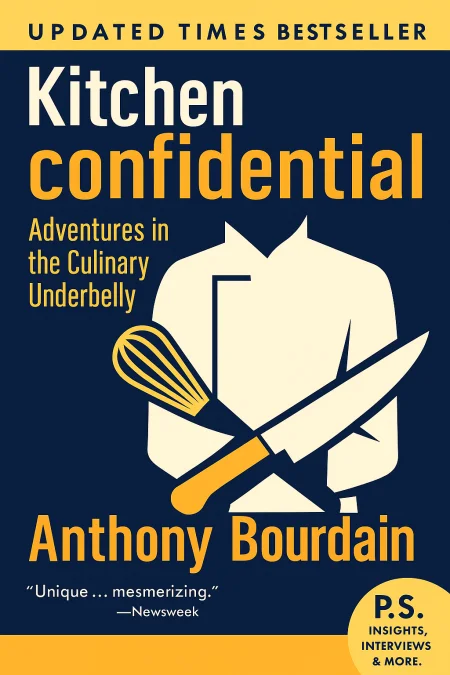
Kitchen Confidential
Adventures in the Culinary Underbelly
Book Edition Details
Summary
Unmask the raw and raucous underbelly of the culinary world through the eyes of its most audacious storyteller, Anthony Bourdain. In this exclusive annotated edition of "Kitchen Confidential," Bourdain's sharp wit and unapologetic honesty transport readers into the high-octane, high-stakes life of a chef. With tales soaked in excess and debauchery, Bourdain lays bare the intoxicating allure and brutal reality of the restaurant industry. This commemorative volume enriches the original narrative with Bourdain's handwritten reflections and rare, unpublished photos, offering a savory feast for both the curious and the devoted. Relish in this intoxicating cocktail of culinary chaos and candid confession, where every page crackles with the vibrant energy of a life lived unfiltered.
Introduction
In the unforgiving world of professional kitchens, where split-second decisions can make or break a service and tempers run as hot as the flames beneath searing pans, Anthony Bourdain forged a legendary career that would forever change how we understand food, culture, and the human condition. His journey from a privileged suburban upbringing to the gritty underbelly of New York's restaurant scene reads like a modern odyssey of self-discovery, addiction, and ultimate redemption through the transformative power of honest work. Bourdain's story transcends the typical celebrity chef narrative, offering instead a raw and unflinching examination of what it means to find purpose in chaos, meaning in suffering, and brotherhood among society's outcasts. His experiences in the trenches of professional cooking reveal universal truths about leadership, resilience, and the courage required to confront one's demons while pursuing excellence in an industry that demands everything from its practitioners. Through his remarkable transformation, readers will discover how the most profound life lessons often emerge from our darkest moments, how authentic leadership is forged in the crucible of shared struggle, and how the pursuit of craftsmanship can become a path to personal salvation. His journey illuminates the complex relationship between creation and destruction, showing how the same intensity that can lead to self-destruction can also fuel extraordinary achievement when properly channeled.
Early Kitchen Baptism: Finding Purpose in Professional Chaos
Bourdain's entry into the culinary world began not with grand ambitions but with the desperate need for direction in a life that seemed to be drifting toward mediocrity. Fresh out of college with a liberal arts degree and few marketable skills, he stumbled into his first kitchen job at a seafood restaurant in Provincetown, Massachusetts. The transition from his comfortable suburban background to the brutal realities of professional cooking came as a shock that would fundamentally reshape his understanding of work, hierarchy, and what it meant to earn respect through competence rather than privilege. The early days were marked by constant humiliation and steep learning curves that tested every assumption he had about his own capabilities. Simple tasks like shucking oysters became exercises in pain tolerance as his soft hands were repeatedly sliced by shells and knives. The kitchen hierarchy was unforgiving and absolute, with veteran cooks showing little patience for mistakes or signs of weakness. Every shift brought new challenges, from managing the intense physical demands of standing for twelve-hour stretches to navigating the complex social dynamics among a crew that included ex-convicts, addicts, and other refugees from conventional society. Yet within this crucible of sweat, burns, and relentless pressure, Bourdain discovered something unexpected and transformative: a sense of belonging that had eluded him in more traditional environments. The kitchen's crude camaraderie, built on mutual respect earned through competence and endurance, offered a form of acceptance based purely on merit. The work was honest in its brutality, demanding nothing but skill, stamina, and the ability to perform under extreme pressure while maintaining impossible standards. These formative experiences taught him that the restaurant industry operates by its own moral code, where traditional markers of success mean nothing compared to the ability to execute flawlessly during the dinner rush. The kitchen became his university, teaching lessons about human nature, survival, and the deep satisfaction that comes from mastering difficult skills through sheer determination, repetition, and an almost military devotion to craft.
Descent into Darkness: When Addiction Nearly Destroyed Everything
As Bourdain's culinary skills developed and his reputation in the industry grew, so did his relationship with substances that would nearly derail his career and destroy his life entirely. The restaurant industry's culture of excess, combined with the intense stress of kitchen work and the availability of drugs within the tight-knit community of food service workers, created perfect conditions for destructive habits to flourish unchecked. What began as casual experimentation with drugs and alcohol as a way to cope with the physical and emotional demands of the job gradually evolved into serious addiction that threatened to consume everything he had worked to build. The progression was insidious, masked by the industry's unusual tolerance for extreme behavior and self-medication as occupational hazards. Long hours, physical exhaustion, and the adrenaline-fueled environment of busy kitchens made substances seem like necessary tools for survival rather than dangerous dependencies that were slowly eroding his judgment and capabilities. Bourdain found himself caught in increasingly destructive cycles of working grueling shifts while under the influence, then crashing hard during brief periods of downtime, only to repeat the pattern night after night. His addiction period coincided with some of the most chaotic and professionally damaging years of his career, as he moved from kitchen to kitchen, working in restaurants that were often as dysfunctional and morally compromised as he was becoming. These establishments attracted other damaged individuals and operated in the gray areas of legality, creating environments where criminal behavior, violence, and complete professional irresponsibility were normalized and even celebrated as signs of authenticity and rebellion against conventional society. The rock bottom came when his drug use began affecting not just his performance but his fundamental ability to function as a human being capable of maintaining relationships or making rational decisions. Professional bridges were burned, personal relationships crumbled, health deteriorated rapidly, and the very passion for cooking that had initially saved him from aimlessness now seemed like another casualty of his self-destructive lifestyle, teaching him harsh lessons about the thin line between surviving and truly living.
Rising from Ashes: Recovery and Hard-Won Culinary Mastery
The path back from the brink of complete self-destruction required Bourdain to rebuild not just his personal life but his entire professional identity from the ground up, confronting the reality that his previous success had been built on fundamentally unstable foundations. Recovery meant developing new ways of coping with the intense pressures of kitchen work without relying on chemical assistance, a process that demanded the same kind of persistence, dedication, and attention to detail he had once applied to his destructive habits, but now channeled toward healing and growth. Methadone treatment provided the chemical stability necessary to begin functioning normally again, but it also brought new challenges and a different kind of dependence that required careful management. The fog of active addiction lifted gradually to reveal the full extent of damage to his reputation and relationships within the tight-knit restaurant community, where word travels fast and second chances are rare. Many professional bridges had been burned beyond repair, and rebuilding trust with colleagues and potential employers required proving himself all over again, this time without the chemical crutches he had relied upon for so long. This difficult period of recovery coincided with some of his most important culinary education, as he worked under demanding chefs who insisted on excellence and refused to accept excuses or substandard performance. The discipline required for maintaining sobriety translated naturally into the discipline needed for culinary mastery, creating positive feedback loops that reinforced his commitment to both personal recovery and professional growth. He learned to channel his intensity and perfectionist tendencies into perfecting techniques, understanding the deeper principles behind great cooking, and developing the consistency that separates true professionals from talented amateurs. The experience of hitting absolute bottom and slowly climbing back up gave Bourdain a unique perspective on resilience, second chances, and the daily work required to maintain both sobriety and professional excellence. He discovered that redemption in the kitchen, as in life, comes not from grand gestures or dramatic transformations, but from showing up consistently and doing the work with integrity, day after day, until competence becomes habit and habit becomes character.
Kitchen Leadership: Transforming Pain into Professional Wisdom
Bourdain's evolution from struggling line cook to respected executive chef represented far more than simple career advancement; it marked his transformation into a leader who understood both the technical demands of running a successful kitchen and the complex human dynamics that determine whether a restaurant thrives or fails. His experiences with personal failure, addiction, and recovery had taught him lessons about managing people under extreme pressure that no culinary school could provide, giving him an almost supernatural ability to read the signs of stress, burnout, and personal crisis in his staff before problems exploded into disasters that could derail an entire service. His leadership style was shaped by the brutal honesty of his own journey through hell and back, creating a management philosophy that demanded excellence while acknowledging human frailty and the reality that everyone carries invisible burdens that affect their work. He learned to create kitchen environments that were demanding yet supportive, where high standards were maintained through mutual respect rather than fear or intimidation. The multicultural crews he managed taught him to communicate across language barriers and cultural differences, developing an inclusive approach that recognized talent and dedication regardless of background or personal history. The hard-won wisdom gained from years of spectacular mistakes made him particularly effective at handling the constant crises that define restaurant work, from equipment failures and staff shortages to difficult customers and supply chain disasters. These challenges became opportunities to demonstrate the kind of calm competence under fire that inspires loyalty and confidence in subordinates, showing them that problems are simply puzzles to be solved rather than catastrophes to be feared. His ability to maintain quality standards while managing chaos became his signature as a chef and leader. Perhaps most importantly, his journey through addiction and recovery taught him that success in the kitchen, like success in life, comes from understanding that perfection is impossible but excellence is always within reach for those willing to do the work. This philosophy allowed him to build teams that could perform consistently under pressure while maintaining the passion and creativity that make great cooking possible, creating a legacy that extended far beyond any single dish or restaurant service.
Summary
Anthony Bourdain's extraordinary journey through the culinary underworld reveals that true mastery and authentic leadership emerge not from avoiding failure, but from learning to transform our deepest struggles into wisdom, strength, and compassion for others facing similar battles. His story demonstrates that the most valuable lessons about resilience, integrity, and finding meaning in work often come from our darkest moments, when we are forced to confront our limitations and rebuild ourselves from the ground up with nothing but determination and the support of those who understand our struggles. From his experiences, we learn that authentic leadership requires embracing both our strengths and vulnerabilities, and that the most effective teachers are often those who have survived their own spectacular failures and emerged with hard-won insights about human nature and the daily work required to maintain excellence. His path suggests that finding one's true calling sometimes requires traveling through unexpected and dangerous territory, but that the skills developed in surviving those challenges often prove essential for both professional success and personal fulfillment. For anyone facing struggles with addiction, career uncertainty, or the daunting task of rebuilding after failure, Bourdain's story offers compelling proof that redemption is always possible for those willing to show up consistently, do the work with integrity, and transform their pain into wisdom that can guide and inspire others on similar journeys.
Related Books
Download PDF & EPUB
To save this Black List summary for later, download the free PDF and EPUB. You can print it out, or read offline at your convenience.
By Anthony Bourdain
