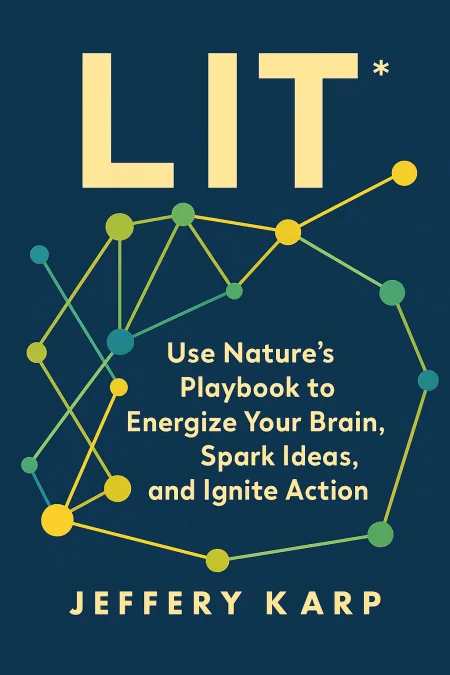
LIT
Using Nature's Playbook to Spark Energy, Ideas, and Action
Book Edition Details
Summary
In a world where endless notifications and relentless news cycles rule our lives, Jeff Karp, a visionary scientist from Harvard and MIT, unveils a transformative toolkit in "LIT." Imagine breaking free from the chains of routine to unlock your most vibrant self. Karp's Life Ignition Tools promise to catapult you into a state of heightened awareness, where creativity flourishes, relationships deepen, and life's noise becomes a symphony of clarity. With LIT, you'll find yourself propelled by an unstoppable curiosity and compassion, ready to rewrite your life's narrative with renewed energy and focus. Whether you're seeking to refresh your work, reconnect with your spirit, or simply navigate the chaos with grace, this book is your guide to creating a life not just lived but truly illuminated.
Introduction
Picture a young boy walking up the steps of an old brick school building, past the principal's office, down the hall into his classroom. Every day feels like a battle he's destined to lose. His mind races with curiosity about everything around him, but the letters on the page remain mysterious symbols he cannot decode. Teachers label him a troublemaker, classmates tease him, and he begins to believe he's fundamentally broken. This was the reality for a child who would one day become a Harvard Medical School professor and pioneering bioengineer, transforming medical science with innovations inspired by nature itself. This remarkable journey from academic struggle to scientific breakthrough reveals a profound truth about human potential. The very qualities that made traditional learning difficult—an inability to focus in conventional ways, a mind that wandered constantly, an insatiable curiosity that couldn't be contained—became the foundation for extraordinary innovation. The story challenges everything we think we know about success, failure, and the untapped capabilities that lie dormant within each of us. What if the struggles we face aren't obstacles to overcome, but rather clues to our greatest strengths? What if the moments when we feel most lost are actually pointing us toward our most authentic path? This exploration into the science of human potential reveals how we can transform our perceived limitations into our most powerful assets, igniting a life of purpose, creativity, and meaningful contribution to the world around us.
From Learning Disabilities to Harvard: Rewiring the Mind
The kindergarten teacher's voice echoed through the classroom: "Pretend your bottom is glued to your chair." The young boy took her literally, wrapping his fingers around his seat and waddling around the room while his classmates giggled. What seemed like defiance was actually a mind that processed instructions differently, a brain that would later revolutionize medical science by thinking in ways others couldn't imagine. By second grade, while his peers effortlessly decoded the strange symbols on book pages, he remained baffled by letters that seemed to dance and rearrange themselves. His mother tried everything—phonics, flash cards, endless practice sessions—but nothing seemed to work. Teachers recommended he repeat the grade, labeling him as someone who simply couldn't keep up. One teacher called him "a lazy con artist," while another declared, "You'll never make it in the real world." Yet something remarkable was happening beneath the surface of these academic struggles. During summer school for children with learning disabilities, he thrived under one-on-one attention. Teachers there saw past his difficulties to recognize genuine intelligence and curiosity. They built on his strengths rather than focusing on his deficits, creating an environment where his unique way of processing information became an asset rather than a liability. The transformation didn't happen overnight. It took years of developing strategies, learning to work with his brain rather than against it, and discovering that his scattered attention could become laser-focused when properly directed. What appeared to be a learning disability was actually a different kind of neural wiring—one that would prove invaluable in tackling complex medical problems that required thinking outside conventional boundaries.
The LIT Toolkit: Purposeful Movement and Present Attention
Walking through the woods behind his childhood home, the boy discovered something extraordinary. Despite his inability to focus in school, he could spend hours completely absorbed in observing a bat hanging from a tree branch, studying its tiny teeth, watching its subtle movements. His attention, so scattered in the classroom, became intensely concentrated when something genuinely captured his interest. This revelation sparked a lifelong quest to understand how the brain could be intentionally directed toward peak performance. He began experimenting with what he called "pinching" his attention—deliberately focusing on something that naturally engaged his curiosity, then using that concentrated energy to tackle less interesting but necessary tasks. If he could harness the same focused intensity he felt while exploring nature and apply it to homework or reading, perhaps his academic struggles could be overcome. This wasn't about forcing attention through willpower, but about understanding how to work with his brain's natural tendencies. The experiments expanded beyond attention. He discovered that small changes in routine could energize his thinking—writing with his non-dominant hand, taking different routes to familiar places, asking unexpected questions during conversations. Each variation seemed to wake up his brain in new ways, creating fresh neural pathways and possibilities. What started as survival strategies for a struggling student evolved into a comprehensive toolkit for optimizing human performance. Years later, as a professor leading a cutting-edge research laboratory, these same principles would become the foundation for breakthrough innovations. The lab's culture embraced curiosity over conformity, questions over answers, and the kind of intellectual risk-taking that leads to revolutionary discoveries. The boy who once couldn't focus in school had learned to create environments where minds could flourish, transforming not just his own potential but that of countless others.
Embracing Failure as Innovation Fuel
The rejection letter felt like a punch to the gut. After submitting more than a hundred grant proposals during his first years as a faculty member, almost all had been rejected. Each "no" felt personal, a confirmation of old fears that perhaps those elementary school teachers had been right about his limitations. The pressure was immense—without funding, his laboratory couldn't survive, and his dreams of developing life-saving medical technologies would die. But his mentor offered a different perspective: "It's the grants you get that count!" This simple statement reframed everything. Instead of dwelling on the rejections, he began studying them systematically. What were reviewers really looking for? What gaps existed in his proposals? How could he better communicate the potential impact of his work? Each rejection became a learning opportunity, a piece of data to improve the next submission. The breakthrough came when he realized that his proposals needed to tell a complete story—not just the science, but the path from laboratory discovery to patient treatment. He began including preliminary data, detailed backup plans, and comprehensive teams with diverse expertise. Most importantly, he learned to articulate not just what he wanted to study, but why it mattered for human health and how it could realistically reach the people who needed it most. In his third year, three major grants were approved, securing his laboratory's future. But the real victory wasn't the funding—it was the transformation of his relationship with failure itself. What had once felt like devastating setbacks became essential steps in a larger process of growth and discovery. This shift in perspective would prove crucial as his team tackled seemingly impossible medical challenges, turning rejection into the fuel for innovations that would improve millions of lives worldwide.
Creating Ripple Effects Through Compassion and Action
James Doty was just twelve years old when a chance encounter in a magic shop changed the trajectory of his life. The shop owner, Ruth, saw something in the struggling boy from a broken home and taught him simple meditation and visualization techniques. These practices didn't just help him cope with his difficult circumstances; they awakened in him a deep sense of compassion that would later drive him to become a neurosurgeon and dedicate his career to understanding the science of human connection and kindness. Decades later, as the founder of Stanford's Center for Compassion and Altruism Research, Doty discovered that compassion isn't just a nice sentiment—it's a trainable skill that literally rewires our brains for greater well-being and effectiveness. His research shows that when we practice compassion, we activate neural networks that reduce stress, enhance immune function, and increase our capacity for clear thinking and creative problem-solving. More importantly, compassion creates ripple effects that extend far beyond the individual. The transformation from personal awakening to global impact happens through the accumulation of individual choices to show up with greater awareness, kindness, and intentionality. When we learn to interrupt our automatic patterns of reactivity and choose responses that serve not just ourselves but the larger web of life we're part of, we become agents of positive change. This isn't about grand gestures or perfect behavior; it's about recognizing that every interaction is an opportunity to either add to the world's store of wisdom and compassion or to perpetuate patterns of disconnection and harm. The journey from a struggling child to a pioneering scientist reveals that our greatest contributions often emerge from our deepest challenges. When we learn to transform our perceived limitations into sources of strength and channel our unique gifts toward serving others, we don't just change our own lives—we create lasting impact that ripples through generations.
Summary
The journey from a struggling student who couldn't decode simple words to a pioneering scientist developing life-saving medical technologies reveals a fundamental truth about human potential: our greatest strengths often emerge from our deepest challenges. The scattered attention that made traditional learning difficult became the source of innovative thinking that could see connections others missed. The failures that once felt devastating transformed into essential stepping stones toward breakthrough discoveries. This transformation didn't happen through willpower alone, but through developing practical tools for working with the brain's natural tendencies rather than against them. By learning to "pinch" attention toward genuine interests, embrace failure as valuable feedback, and create environments that nurture curiosity over conformity, it becomes possible to unlock capabilities we never knew we possessed. The key insight is that peak performance isn't about fixing our perceived flaws, but about understanding how to channel our unique neural wiring toward meaningful contribution. The most profound lesson may be that the qualities our educational and professional systems often view as deficits—restless curiosity, unconventional thinking, the inability to accept "impossible" as an answer—are precisely what the world needs most. When we stop trying to fit into predetermined molds and instead learn to amplify our authentic strengths, we don't just transform our own lives; we create innovations and solutions that can heal, inspire, and elevate the human experience for generations to come.
Related Books
Download PDF & EPUB
To save this Black List summary for later, download the free PDF and EPUB. You can print it out, or read offline at your convenience.
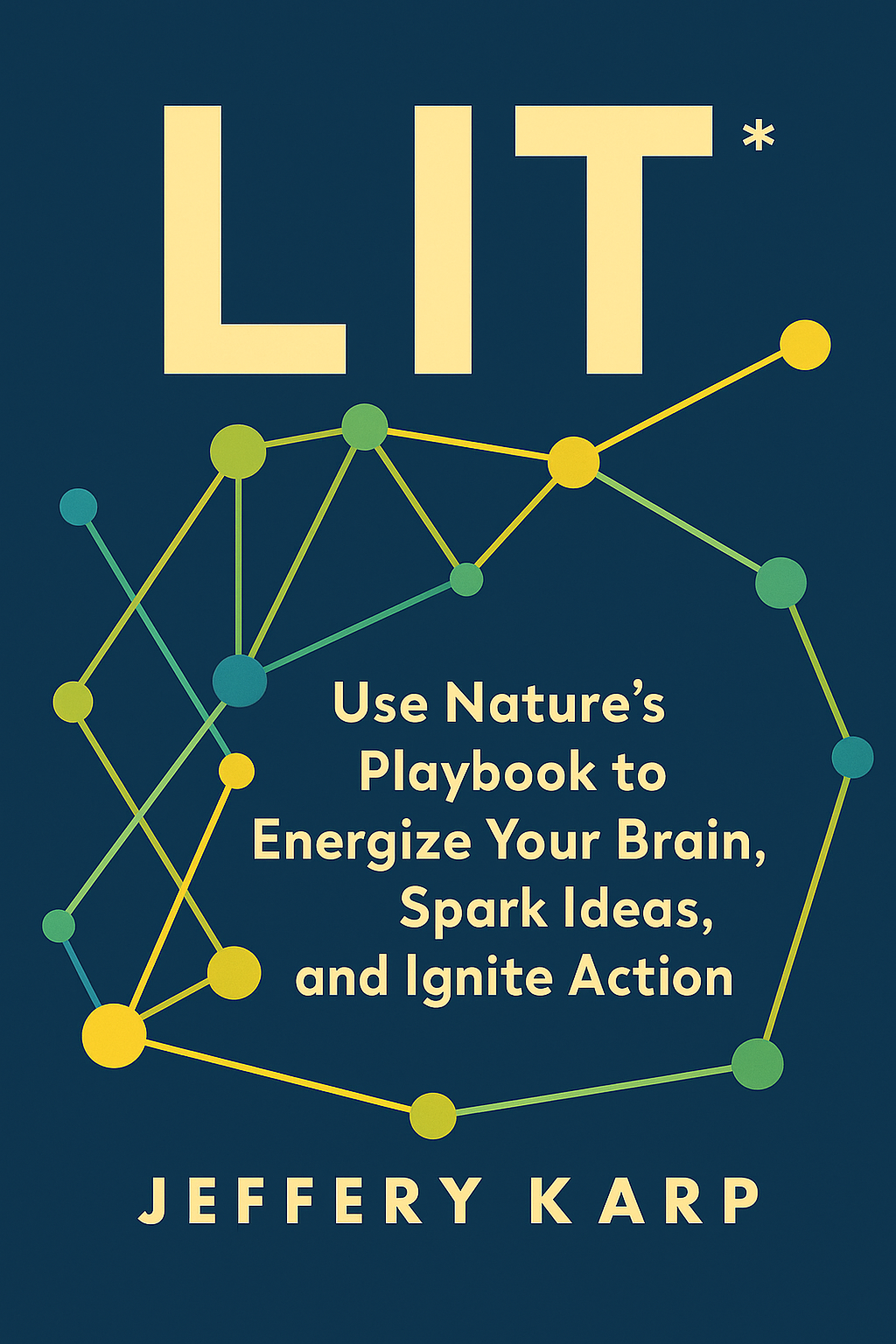
By Jeffery Karp
