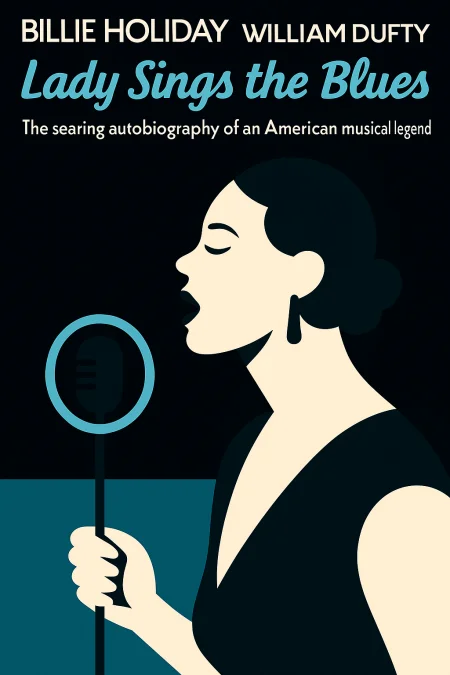
Lady Sings the Blues
The 50th-Anniversay Edition with a Revised Discography
byBillie Holiday, William Dufty
Book Edition Details
Summary
Billie Holiday's voice wasn’t just heard—it was felt. In "Lady Sings the Blues," her soul-stirring memoir, the legendary jazz icon doesn't just recount her life; she bares it. From the gritty streets of Baltimore to the smoky clubs of Harlem, this narrative captures the dazzling rise and devastating fall of a woman whose talent lit up the darkest corners of the music world. Holiday invites us into a world where her haunting melodies met the harsh realities of racism and addiction. With a style as raw and unforgettable as her performances, she paints a portrait of resilience amid turmoil. Feel the pulse of jazz's golden age and the heartache of a star who shone too brightly, too briefly.
Introduction
In the smoky clubs of 1930s Harlem, a young woman with gardenias in her hair transformed American music forever. Billie Holiday possessed a voice that could break hearts with its vulnerability and heal them with its strength. Born into poverty in Baltimore, she rose from the streets to become one of jazz's most influential artists, turning personal pain into transcendent art that continues to move audiences nearly a century later. Holiday's life was a study in contrasts: triumph and tragedy, fame and persecution, love and loss. She faced racism, addiction, and legal troubles that would have crushed a lesser spirit, yet she channeled these experiences into music of unprecedented emotional depth. Her unique phrasing and interpretive genius influenced generations of singers, while songs like "Strange Fruit" became anthems for social justice. Through her story, we discover the price of artistic integrity, the power of resilience in the face of systemic oppression, and the way great artists can transform suffering into beauty. Her journey from Baltimore's mean streets to the world's most prestigious stages reveals not just the evolution of a legendary performer, but the complex relationship between art, identity, and survival in America.
From Baltimore Streets to Harlem Stages
Eleanor Fagan entered the world in 1915 Baltimore, born into circumstances that would have defeated many before they began. Her mother Sadie was barely thirteen, her father Clarence a teenager who would soon disappear on the road with traveling bands. The young girl who would become Billie Holiday grew up in a world of brutal realities: sexual assault at ten, reform school, and the harsh education of America's urban underclass. Yet even in these darkest moments, music called to her. She found refuge in Alice Dean's brothel, not for the illicit activities within, but for the Victrola that played Louis Armstrong and Bessie Smith records. Here, washing basins and running errands, she discovered the sounds that would shape her artistic soul. The young Eleanor would sit for hours, mesmerized by Pops Armstrong's wordless scat singing and Bessie's raw emotional power, unconsciously absorbing the lessons that no conservatory could teach. Her migration north to Harlem represented more than a geographical move—it was a journey toward artistic destiny. When poverty and desperation drove her into a club called Pod's and Jerry's, asking for work as a dancer, fate intervened. Unable to dance beyond two basic steps, she was asked instead to sing. Her rendition of "Trav'lin' All Alone" silenced the room, and when she finished, the floor was littered with money thrown by moved patrons. This moment marked the birth of Billie Holiday the artist. The scared fifteen-year-old who had suffered unimaginable trauma discovered that her pain, when channeled through song, possessed the power to touch others' hearts. The girl who had known only rejection and abuse found acceptance and even adoration through her voice. In Harlem's clubs, she wasn't Eleanor Fagan the victim—she was Lady Day, an artist whose emotional honesty would revolutionize American popular song.
Rising Fame and Personal Struggles
The late 1930s brought Holiday recognition as one of jazz's most distinctive voices, but success came with its own set of challenges. Working with Benny Goodman, Teddy Wilson, and other leading musicians of the era, she developed her signature style: the ability to take a standard song and completely reimagine it through her unique phrasing and emotional interpretation. Her collaboration with tenor saxophonist Lester Young created some of the most beautiful recordings in jazz history, establishing musical conversations that seemed telepathic in their understanding. Young christened her "Lady Day," while she dubbed him "Prez" (President), acknowledging his supreme artistry. Their musical partnership reflected a deeper friendship—two artists who understood the loneliness and creativity that drove their art. Living together platonically in Holiday's family home, they created a refuge where music and mutual respect flourished. These years produced classics like "Fine and Mellow" and "Strange Fruit," the haunting anti-lynching song that became her signature and a powerful statement against racial violence. However, personal relationships proved more complicated than musical ones. Holiday's marriage to Jimmy Monroe in 1941 introduced her to heroin, beginning a struggle that would plague her for the rest of her life. The relationship itself was troubled, marked by infidelity and emotional turmoil that she immortalized in songs like "Don't Explain." The juxtaposition of her growing artistic maturity with her personal vulnerabilities created a tension that both fueled her creativity and threatened her stability. During this period, Holiday also faced the harsh realities of being a Black woman in the entertainment industry. Her time with Artie Shaw's band, though musically rewarding, subjected her to constant racism on the road. Hotels refused her service, restaurants wouldn't seat her, and she often had to sleep on the tour bus while white band members enjoyed comfortable accommodations. These experiences deepened her understanding of American racial dynamics and informed her interpretations of songs about love, loss, and survival.
Jazz Legend Facing Legal Battles
The 1940s established Holiday as a major recording artist, but also marked the beginning of her devastating encounters with the American legal system. Her struggle with heroin addiction, which began during her troubled marriage, made her a target for law enforcement agencies more interested in making examples than providing help. The federal agents who pursued her seemed to view her celebrity status as an opportunity for publicity rather than treating her addiction as the medical condition it was. In 1947, Holiday voluntarily entered a private sanatorium, spending two thousand dollars of her own money for confidential treatment. Upon completing the program clean and hopeful, she discovered federal agents waiting outside. Someone had violated the medical confidentiality she had paid to ensure, turning her recovery attempt into a trap. This betrayal marked a turning point in her relationship with authority and her understanding of how the system viewed her as both an artist and a Black woman. The subsequent trial and imprisonment at Alderson Federal Prison revealed the cruel paradoxes of American justice. While Holiday served ten months for drug possession, the men involved in supplying her received lighter sentences or were acquitted entirely. Her conviction also resulted in the loss of her New York cabaret card, effectively banning her from performing in the city's clubs where she had built her reputation. This professional exile forced her to work primarily in theaters and concert halls, limiting her income and separating her from the intimate club settings where she thrived artistically. The legal persecution continued throughout the 1950s, with arrests in San Francisco and Philadelphia that seemed timed to maximize career damage. Each arrest generated headlines that overshadowed her artistic achievements, creating a public image of Holiday as a troubled addict rather than a pioneering artist. The stress of constant surveillance and legal threats took its toll on both her health and her music, though even in decline, her emotional honesty and interpretive genius remained undiminished.
European Triumph and Final Reflections
Holiday's 1954 European tour provided a stark contrast to her treatment in America, revealing how differently she was perceived abroad. European audiences and critics approached her as an artist first, celebrating her musical innovations and emotional depth without the sensationalism that characterized American coverage of her personal struggles. In cities like Copenhagen, Berlin, and London, she found the respect and artistic appreciation that had been overshadowed by scandal in her homeland. The tour rekindled her love for performance and reminded her of music's transcendent power. European musicians treated her as a master teacher, studying her phrasing and learning from her interpretive approach. Critics focused on her artistic evolution rather than her personal troubles, writing about her music with the seriousness it deserved. For the first time in years, Holiday felt valued primarily for her artistry rather than her notoriety. Returning to America, Holiday continued recording despite declining health and ongoing legal troubles. Her final albums, particularly "Lady in Satin," recorded in 1958, found her voice weathered but her interpretive powers arguably at their peak. Working with a string orchestra for the first time, she brought new depth to familiar songs, her lived experience adding weight to every phrase. Critics who had once praised her youthful vitality now recognized that her struggles had deepened rather than diminished her artistry. Holiday's death in 1959 at age forty-four ended a career that had fundamentally changed American music. Despite the personal cost, she had succeeded in creating an artistic legacy that influenced everyone from Frank Sinatra to Amy Winehouse. Her approach to popular song—treating each performance as an opportunity for emotional truth-telling—became the template for modern interpretive singing. More importantly, her willingness to address controversial subjects like racism and her refusal to sanitize her personal experiences for public consumption established her as an artist of uncompromising integrity.
Summary
Billie Holiday's life demonstrates that true artistry often emerges not despite suffering, but through the courage to transform pain into beauty and truth. Her journey from Baltimore's streets to international acclaim illustrates the power of authentic expression to transcend social barriers and speak to universal human experiences. Holiday proved that vulnerability, when channeled through genuine talent and unwavering honesty, becomes strength rather than weakness. Her willingness to sing about controversial subjects and to live openly with her flaws and struggles challenged both musical conventions and social expectations, paving the way for future artists to embrace similar authenticity. For anyone facing personal challenges or fighting for artistic integrity against institutional pressure, Holiday's story offers the profound lesson that our deepest wounds can become the source of our greatest gifts to the world, and that true artistry requires the courage to remain honest even when honesty proves costly.
Related Books
Download PDF & EPUB
To save this Black List summary for later, download the free PDF and EPUB. You can print it out, or read offline at your convenience.
By Billie Holiday
