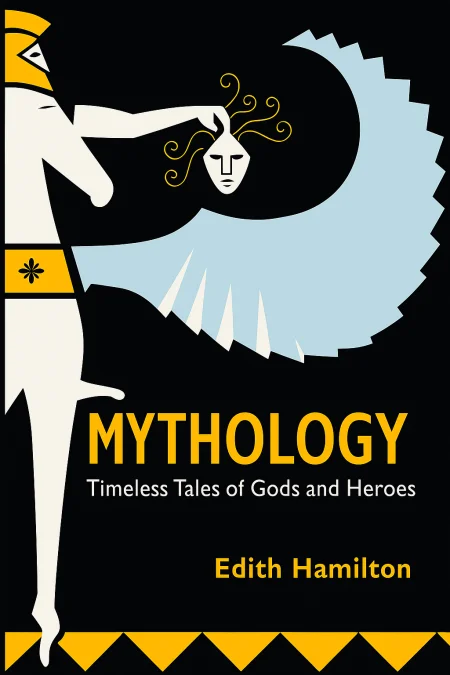
Mythology
Timeless Tales of Gods and Heroes
Book Edition Details
Summary
In the realm of ancient lore, where gods and heroes tread the boundaries of mortal comprehension, Edith Hamilton stands as your eloquent guide. Her seminal work, "Mythology," is a tapestry woven from the enduring threads of Greek and Norse legends, revealing the timeless narratives that have shaped human understanding for millennia. With each story, Hamilton not only resurrects the vivid exploits of figures like Odysseus and Odin but also unveils the profound truths they offer about human nature and the cosmos. This collection is not merely a retelling; it is a masterful exploration of how these epic tales echo through the corridors of time, still resonant and captivating to the modern soul. An indispensable addition to any library, Hamilton’s "Mythology" is a luminous portal to the past, offering insights into the eternal dance of destiny, valor, and the human condition.
Introduction
Have you ever wondered why we still say someone has an "Achilles' heel" or describe a lengthy, difficult journey as an "odyssey"? These everyday expressions are living fragments of stories that have captivated human imagination for over three thousand years. Ancient mythology isn't simply a collection of fantastical tales about gods throwing lightning bolts or heroes slaying monsters—it represents humanity's first sophisticated attempt to understand the deepest questions of existence: Why do we suffer? What makes a life meaningful? How should we face inevitable tragedy? Long before the development of modern psychology, philosophy, or science, ancient peoples created elaborate narratives that explored human nature with startling sophistication. Across different cultures that had no contact with each other, remarkably similar stories emerged featuring divine hierarchies, heroic quests, and transformative love. The Greeks and Romans developed perhaps the most influential mythological system in Western history, weaving together interconnected tales that continue to shape our literature, art, and understanding of the human condition. Through these timeless stories, you'll discover how ancient minds grappled with concepts that remain central to human experience today. You'll see how creation myths reveal early insights into the nature of power and social order, how heroic journeys provide blueprints for personal growth and moral development, and how tales of love and transformation offer profound wisdom about the forces that shape our emotional lives. Most remarkably, you'll find that these "primitive" stories often contain more nuanced understanding of human psychology than many modern narratives, suggesting that fundamental truths about human nature transcend time and culture.
Divine Hierarchies and Creation: How Ancient Gods Explained the Universe
The ancient Greeks didn't imagine their gods as distant, perfect beings dwelling in some unreachable paradise. Instead, they created deities who were remarkably human-like, complete with family feuds, romantic entanglements, and personality flaws that would make any soap opera writer envious. At the pinnacle of this divine hierarchy sat Zeus, king of the gods, who had won his throne not through peaceful succession but through a violent cosmic revolution against his own father, Cronus, and the older generation of divine beings called Titans. This wasn't simply a change of management—it was a universe-shaking war that nearly destroyed existence itself. Cronus, paranoid about losing power, had devoured his own children immediately after birth, until his wife Rhea cleverly substituted a stone wrapped in baby clothes for the infant Zeus. When Zeus grew to maturity, he forced his father to regurgitate his siblings and led them in a ten-year war that reshaped the cosmos. Mountains were hurled as weapons, the earth trembled under divine combat, and the very fabric of reality hung in the balance. What makes these creation stories particularly fascinating is how they present the birth of order as an ongoing struggle rather than a single divine decree. Before Zeus and his Olympian siblings established their rule, the universe was governed by increasingly chaotic forces: first the primordial void of Chaos, then the elemental powers of Earth and Sky, followed by the Titans who represented raw, uncontrolled natural forces. Each generation of gods represented a step toward greater civilization and rational order, yet even the Olympians retained dangerous flaws and conflicting desires. These divine family dramas served multiple purposes in ancient society. They explained natural phenomena in an age before scientific understanding—earthquakes became evidence of imprisoned Titans struggling beneath the earth, while lightning revealed Zeus's emotional state. More importantly, they established moral frameworks that emphasized both the necessity of respecting authority and the reality that even divine power comes with responsibilities and limitations. The message was sophisticated: progress requires struggle, order must be constantly maintained against chaos, and even the mightiest rulers are subject to consequences for their actions.
Heroic Journeys and Psychological Growth: Myths as Life Blueprints
The heroes of Greek mythology weren't invincible warriors or flawless champions, but complex individuals whose greatest strengths often became their most dangerous vulnerabilities. Perseus, Theseus, Hercules, and other legendary figures represented human potential to transcend ordinary limitations through courage, wisdom, and perseverance, while simultaneously demonstrating that heroism requires confronting both external monsters and internal demons. Perseus's quest to slay Medusa, the snake-haired Gorgon whose gaze turned viewers to stone, illustrates the sophisticated psychological insights embedded in these tales. Success required not just physical bravery but strategic thinking, divine assistance, and the humility to accept help from others. Perseus used Athena's polished shield as a mirror to avoid Medusa's deadly gaze while striking the fatal blow, demonstrating that intelligence and preparation often matter more than raw strength. His journey from reluctant hero to confident leader provided a template for personal growth that remains remarkably relevant today. These heroic narratives follow a consistent pattern that scholars now recognize as fundamental to human storytelling across all cultures. The hero begins in ordinary circumstances, receives a call to adventure triggered by crisis or divine command, faces escalating challenges that test different aspects of character, and finally returns home transformed with gifts that benefit the entire community. Theseus's voluntary entry into the Labyrinth to face the Minotaur perfectly exemplifies this structure, as his success not only saved his own life but freed Athens from a terrible tribute and demonstrated that cleverness could triumph over brute force. What distinguishes mythological heroes from mere adventurers is their complex relationship with fate and free will. Perseus was destined to accidentally kill his grandfather despite all attempts to prevent this tragedy, yet his heroic deeds saved countless lives and established lasting dynasties. These stories suggest that while humans cannot escape their ultimate destiny, they retain the power to choose how they face challenges and what legacy they leave behind. The practical wisdom embedded in these tales taught ancient audiences about the importance of preparation, the value of accepting mentorship, and the necessity of using intelligence rather than relying solely on physical prowess.
Love, Transformation, and Human Nature in Ancient Tales
Greek mythology explores the transformative power of love with a psychological sophistication that rivals modern therapeutic understanding, presenting it as a force capable of both creation and destruction, elevation and degradation. The story of Pygmalion, who fell so deeply in love with his own sculpture that Aphrodite brought it to life, suggests that genuine passion can literally reshape reality. Conversely, the tale of Narcissus, who became so obsessed with his own reflection that he wasted away beside a pool, warns that misdirected love leads inevitably to spiritual death. The theme of transformation permeates countless mythological narratives, often serving as metaphor for the profound psychological changes that love brings to human consciousness. When Daphne transforms into a laurel tree to escape Apollo's relentless pursuit, the story explores the tension between desire and autonomy, between the pursuer's passion and the pursued's right to self-determination. Apollo's decision to make the laurel his sacred tree suggests that even unrequited love can produce something beautiful and lasting when properly honored rather than selfishly pursued. These transformation myths functioned as early attempts to understand psychological development and personal growth. The elaborate trials of Psyche, who must complete seemingly impossible tasks to win back Cupid's trust after betraying him, represent the soul's journey toward spiritual maturity. Each challenge she faces—from sorting mixed grains to retrieving beauty from the underworld—symbolizes different aspects of psychological development, suggesting that true love requires not just passion but patience, perseverance, and willingness to grow beyond initial limitations. Perhaps most remarkably, Greek mythology presents love as operating according to its own logic, often defying social conventions and rational expectations. The gods themselves fall victim to love's power, with Zeus constantly pursuing mortal women despite Hera's jealous rage, and Aphrodite compelled to love the war god Ares despite their obvious incompatibility. These stories normalize the irrational aspects of human attraction while exploring their consequences, suggesting that while we cannot control whom we love or when love strikes, we remain responsible for how we act on these feelings and how we treat both ourselves and others caught in love's grip.
Mythological Legacy: Ancient Wisdom in Modern Culture
The influence of ancient mythology on contemporary culture extends far beyond obvious references in literature and entertainment—these stories have fundamentally shaped how Western civilization approaches psychology, morality, and the very structure of meaningful narrative. Every time we describe someone's fatal flaw as their "Achilles' heel," refer to a "Herculean task," or speak of opening a "Pandora's box," we invoke mythological frameworks that continue to provide context and meaning for modern experience. Modern psychology owes an enormous debt to mythological thinking, with foundational concepts like Freud's Oedipus complex and Jung's archetypal theory drawing directly from ancient narratives to explain human behavior and motivation. The myth of Narcissus doesn't merely provide a clinical term for excessive self-love—it offers a complete psychological profile of how self-obsession leads to isolation and spiritual emptiness. These stories provide vocabulary for understanding complex emotional states that purely technical language often fails to capture, allowing therapists and individuals to explore personal challenges through rich, symbolic frameworks. The narrative patterns established in ancient mythology continue to dominate storytelling across all contemporary media, from blockbuster films to video games to personal memoirs. The hero's journey, with its archetypal progression through departure, initiation, and return, appears repeatedly because it mirrors fundamental patterns of human psychological development. Characters like the wise mentor, the shape-shifting trickster, and the innocent who must be protected resonate across cultures and generations because they represent essential aspects of human experience that transcend specific historical contexts. Perhaps most importantly, mythology provides sophisticated frameworks for grappling with questions that remain as pressing today as they were millennia ago: How do we balance individual desires with social responsibilities? What do we owe to future generations? How do we find meaning in the face of suffering and uncertainty? Ancient myths don't offer simple answers to these dilemmas, but they provide nuanced ways of thinking about them that acknowledge complexity and ambiguity while still affirming the importance of courage, wisdom, and compassion in human life.
Summary
The greatest revelation from ancient mythology is that human nature itself remains fundamentally unchanged despite millennia of technological and social progress—we continue to wrestle with the same passions, fears, and moral dilemmas that drove the actions of gods and heroes thousands of years ago. These timeless stories demonstrate that wisdom comes not from avoiding life's inevitable challenges and tragedies, but from facing them with courage, creativity, and understanding that our individual struggles connect us to a larger human narrative spanning across time and culture. How might recognizing these ancient patterns in our own lives help us navigate contemporary challenges with greater insight and resilience? What would it mean for our society if we approached modern conflicts with the same sophisticated understanding of human complexity that these ancient storytellers possessed, acknowledging both our potential for greatness and our capacity for tragic error?
Related Books
Download PDF & EPUB
To save this Black List summary for later, download the free PDF and EPUB. You can print it out, or read offline at your convenience.
By Edith Hamilton
