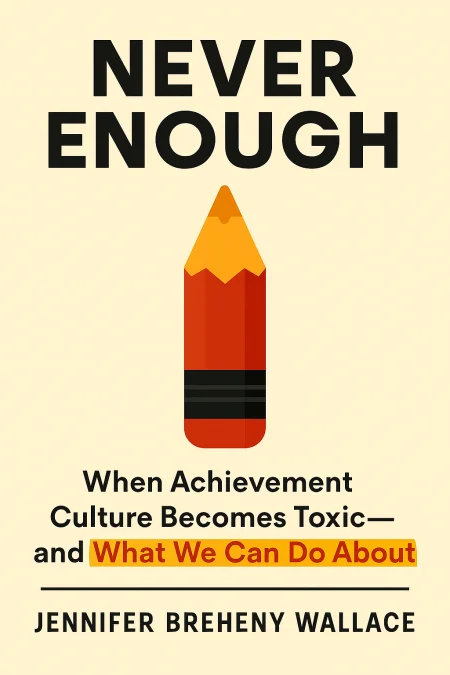
Never Enough
When Achievement Culture Becomes Toxic-and What We Can Do About It
Book Edition Details
Summary
In a society feverishly chasing the mirage of perfection, our children are paying the price. "Never Enough" by Jennifer Breheny Wallace slices through the veneer of the toxic achievement race with a journalist's precision and a parent's compassion. As families buckle under the weight of excessive academic and extracurricular demands, a sinister truth emerges: the worth of a child has been reduced to a ledger of accomplishments. Wallace's investigation peels back layers of societal expectation, revealing how deep-seated economic disparities and cultural messages corrode self-worth. Through poignant interviews and an eye-opening survey, she offers a beacon of hope—a path to nurturing children who understand that they matter beyond their trophies. Here lies a clarion call to educators and parents to foster resilience and intrinsic value in our youth, crafting a future where excellence is measured not by accolades, but by the strength of the spirit.
Introduction
Sarah stared at her phone at 2 AM, scrolling through Instagram posts of her classmates celebrating their college acceptances. Each notification felt like a small knife twist. Despite her 4.2 GPA, varsity tennis achievements, and countless volunteer hours, the rejections kept coming. In her affluent suburban community, she wasn't just competing against her peers—she was drowning in a culture that whispered she would never be enough unless she was exceptional at everything. This scene plays out in high-performing schools across America, where a generation of young people is suffocating under the weight of impossible expectations. Behind the manicured lawns and impressive test scores lies a troubling reality: students in these privileged communities are experiencing anxiety, depression, and substance abuse at alarming rates. The very environments designed to launch them toward success are instead teaching them that their worth depends entirely on their performance. What if the path we've carved for our children—packed with Advanced Placement classes, elite sports teams, and resume-building activities—is actually undermining the very qualities we hope to cultivate? Through intimate conversations with families nationwide, this exploration reveals how our achievement-obsessed culture is creating a generation that feels perpetually inadequate, despite having every advantage. More importantly, it offers a roadmap toward raising children who understand their inherent worth, find genuine purpose, and develop the resilience to thrive in an uncertain world.
The Pressure Paradox: When Success Becomes Suffering
Amanda should have been celebrating. At seventeen, she had just received early admission to an elite university—the culmination of years of perfect grades, varsity athletics, and leadership roles. Instead, she found herself in a friend's basement, drinking vodka straight from the bottle, trying to numb a pain she couldn't even name. The acceptance letter that was supposed to validate everything felt hollow, meaningless. Growing up in a picturesque West Coast town, Amanda had learned early that excellence wasn't optional—it was expected. Her parents never explicitly demanded perfection, but their subtle disappointment when she brought home anything less than an A spoke volumes. By high school, Amanda's life had become a carefully orchestrated performance: AP classes, year-round sports, community service, all designed to create the perfect college applicant. The pressure wasn't just coming from home—teachers expected excellence, and even friendships became competitive. What Amanda experienced reflects a broader crisis affecting students in high-achieving schools nationwide. Research has identified these environments as producing a new category of "at-risk" youth—not because of poverty or neglect, but because of relentless pressure to excel. When every aspect of childhood becomes a means to an end, when rest is seen as laziness and vulnerability as weakness, young people lose touch with their authentic selves. They learn to perform rather than to be, creating a generation that achieves external success while feeling internally empty.
The Mattering Crisis: Why Our Kids Feel Invisible
Rebecca gripped the steering wheel tighter as tears blurred her vision. She pulled over, overwhelmed not by tragedy but by her reaction to her kindergartner's IQ test results. Her daughter had scored "average"—a word that shouldn't devastate a trained psychologist, yet here she was, sobbing on the roadside. In that moment, Rebecca realized how deeply she had internalized the message that only exceptional children matter. The scene at her daughter's school had been chaos. Parents demanded explanations for test scores, questioned the reliability of assessments, and worried aloud about their five-year-olds' futures. What struck Rebecca wasn't the absurdity of the situation, but how quickly she had been swept into it. Despite her professional knowledge about child development, she had felt her stomach drop when her daughter didn't make the "gifted" cut. This incident forced Rebecca to confront an uncomfortable truth: she had unconsciously absorbed her community's definition of worth. In high-achieving environments, children learn early that their value fluctuates based on performance. They internalize the message that love and acceptance are conditional, tied to grades, achievements, and accolades. The psychological concept of "mattering"—feeling valued for who we are, not what we achieve—offers a framework for understanding what's missing. When children feel they must constantly audition for love and acceptance, they develop a false self, presenting a perfect facade while their authentic identity withers.
Competition and Connection: Redefining Healthy Rivalry
Vaughan walked into her high school journalism classroom expecting another battlefield. At her elite Los Angeles school, every interaction felt like a competition, every friendship shadowed by the question of who would get the better grade, the lead role, the college acceptance. She had learned to keep her guard up, to view classmates as rivals rather than allies. But something different happened in Ms. Taylor's newspaper class. Instead of fostering competition, the teacher deliberately created connection. She started each week with "share the love"—students celebrating each other's contributions. She made the invisible visible, openly discussing the envy and comparison that poisoned relationships in high-pressure environments. Most importantly, she insisted that the newspaper could only succeed if students supported each other. Slowly, Vaughan's defensive walls began to crumble. She formed genuine friendships with Chloe and Thea, relationships built not on mutual benefit but on authentic care. When all three applied for editor-in-chief, they supported each other through the process, understanding that one person's success didn't diminish the others' worth. The experience taught Vaughan that competition could be healthy when rooted in mutual respect rather than zero-sum thinking. This shift from competition to connection represents a fundamental reframing of achievement culture. Instead of teaching children that they must outperform others to matter, we can help them understand that they matter inherently and that their growth is enhanced by lifting others up. When young people feel secure in their worth, they can take risks, be vulnerable, and form the deep relationships that sustain them through life's inevitable challenges.
Finding Purpose Beyond Performance: The Path Forward
Adam stood at the edge of Snoqualmie Falls, his search and rescue team preparing to recover the body of a sixteen-year-old who had taken his own life. As they carefully raised the boy's body two hundred feet from the rocks below, Adam felt something shift inside him. Here was a peer who had everything—intelligence, opportunity, a bright future—yet had felt so worthless that death seemed preferable to another day of trying to measure up. That night, driving home with dirt caked on his boots, Adam made a decision that would reshape his entire approach to life. He applied to volunteer at a teen crisis hotline, determined to help other young people find reasons to keep living. Later, he founded a peer support group at his high school, creating safe spaces for students to discuss their struggles without judgment. For the first time since his dyslexia diagnosis had made him feel academically inadequate, Adam felt truly competent—not because of what he could achieve for himself, but because of what he could contribute to others. Adam's transformation illustrates a crucial truth: purpose emerges not from self-focus but from service to something greater. While his classmates obsessed over GPAs and college rankings, Adam discovered that meaning comes from understanding how our unique gifts can address real needs in the world. His learning disability, once a source of shame, became a source of empathy that helped him connect with struggling peers. The path forward isn't about lowering expectations or abandoning excellence. Instead, it's about expanding our definition of success to include character, contribution, and connection. When young people understand that their worth isn't contingent on performance, they paradoxically perform better—not from fear of failure, but from genuine engagement with meaningful work.
Summary
The stories woven throughout this exploration reveal a profound truth: our well-intentioned efforts to give children every advantage have inadvertently created environments where they feel perpetually inadequate. From Amanda's hollow victory to Adam's purposeful transformation, we see how achievement without meaning creates suffering, while service to others generates genuine fulfillment. The solution isn't to abandon high expectations but to ground them in unconditional love and authentic purpose. When children feel they matter simply for who they are, they develop the confidence to take risks, the resilience to handle failure, and the wisdom to pursue goals that align with their values rather than external pressures. When they understand their responsibility to contribute to something larger than themselves, they find the motivation and meaning that makes hard work sustainable and rewarding. This shift requires courage from adults—the courage to resist cultural pressures, to prioritize relationships over rankings, and to model the balanced lives we want our children to live. It means creating communities where vulnerability is welcomed, where failure is seen as learning, and where every child's unique gifts are celebrated. Most importantly, it means remembering that our children are not projects to be perfected but human beings deserving of love, support, and the freedom to become their authentic selves. In choosing connection over competition, purpose over performance, we give them the greatest gift possible: the knowledge that they are enough, exactly as they are.
Related Books
Download PDF & EPUB
To save this Black List summary for later, download the free PDF and EPUB. You can print it out, or read offline at your convenience.
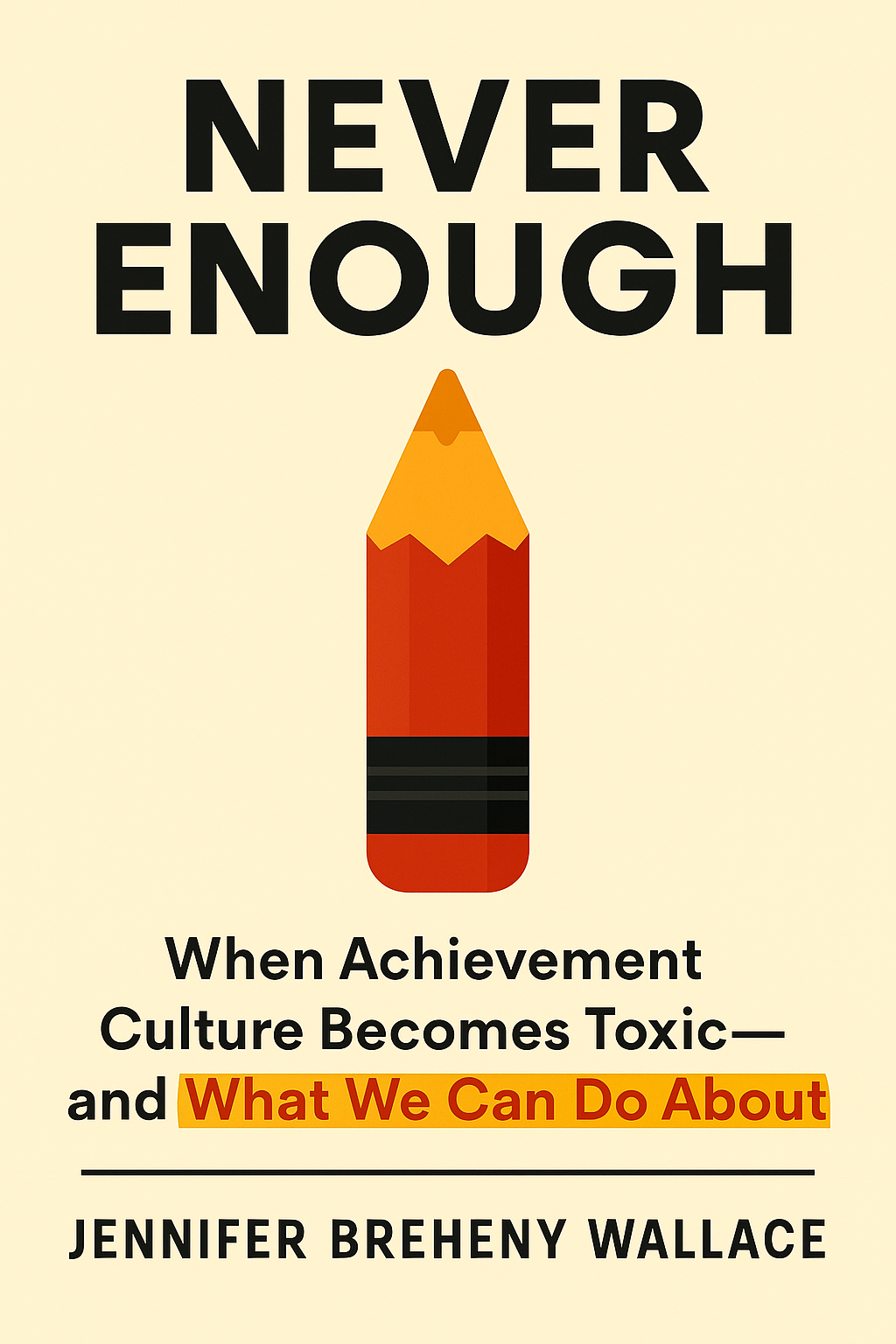
By Jennifer Breheny Wallace
