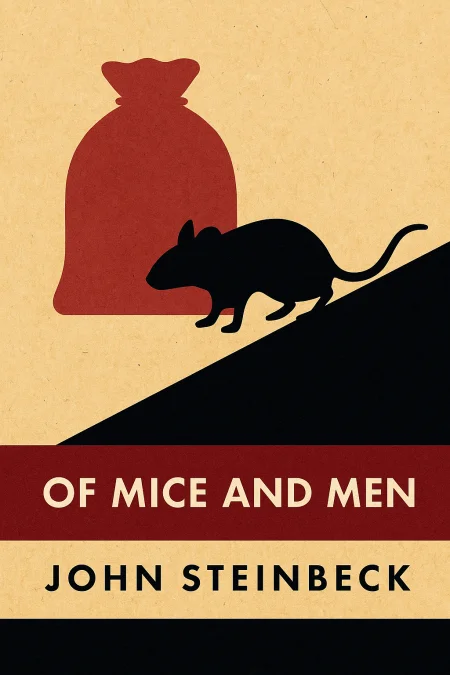
Of Mice and Men
The Dangers of the American Dream During the Great Depression
Book Edition Details
Summary
In the gritty expanse of California's sun-baked fields during the Great Depression, a poignant tale unfolds—one of friendship and dreams against the odds. Meet George and Lennie: an inseparable duo navigating the harsh landscape of itinerant labor. George, sharp-eyed and agile, shoulders the burden of protecting Lennie, whose imposing size belies a child's innocence. Together, they harbor a vision of a better life: a slice of land to call their own. In "Of Mice and Men," Steinbeck delves into the complexities of human bonds amidst a world rife with cruelty and indifference. This classic narrative weaves a rich tapestry of hope and despair, inviting readers to witness the enduring power of companionship in the face of relentless adversity.
Introduction
In the dusty fields of Depression-era California, where migrant workers wandered from ranch to ranch with nothing but bedrolls and fading hopes, we find one of literature's most profound examinations of the American Dream. This story unfolds against a backdrop of economic desperation, where men clung to impossible fantasies as their only refuge from crushing loneliness and social invisibility. Through the lens of friendship, displacement, and tragedy, we witness how society's most vulnerable members navigate a world that offers little compassion for those who cannot defend themselves. The narrative reveals three critical insights into human nature and social dynamics: how genuine companionship becomes both salvation and burden in times of hardship, how systemic inequalities create insurmountable barriers to even the most modest dreams, and how society's treatment of the powerless reflects our deepest moral failings. This exploration resonates powerfully with anyone seeking to understand the complexities of friendship, the persistence of hope against impossible odds, and the tragic consequences of a society that fails to protect its most vulnerable members.
Seeds of Hope: The Birth of a Shared Dream
The story begins beside the Salinas River, where two unlikely companions pause in their journey toward yet another temporary job. George Milton, sharp and pragmatic, travels with Lennie Small, whose mental disability makes him both childlike and dangerously strong. Their partnership defies the harsh individualism of Depression-era America, where most men drift alone from ranch to ranch, accumulating neither relationships nor possessions. In this opening moment, we witness the birth of their shared dream through George's rhythmic recitation of their future plans. "Guys like us, that work on ranches, are the loneliest guys in the world," George explains to Lennie. "They got no family. They don't belong no place." But their vision offers an alternative: a small farm where they can live "off the fatta the lan'" with rabbits for Lennie to tend and a place truly their own. This dream represents more than mere wishful thinking; it embodies the fundamental human need for belonging and purpose. George's careful repetition of their plans serves multiple functions—it soothes Lennie's anxieties, strengthens their bond, and transforms an impossible fantasy into something that feels attainable through shared belief. The specificity of their vision, from the vegetable garden to the rabbit hutches, gives concrete form to abstract hopes for dignity and security. Yet even in these early moments, shadows of tragedy emerge. George's instructions to Lennie about hiding by the river "if you jus' happen to get in trouble like you always done before" reveal the cyclical nature of their struggles. Their dream flourishes precisely because it offers escape from a pattern of displacement and disappointment that has already defined their lives.
Friendship Against Isolation: Building Bonds in Hard Times
The bunkhouse of the ranch becomes a microcosm of Depression-era social dynamics, where isolation and suspicion dominate relationships between workers. Into this environment, George and Lennie bring something revolutionary: unconditional loyalty to each other. Their partnership immediately draws scrutiny from the boss, who cannot understand why one man would look after another without ulterior motives. Slim, the respected jerkline skinner, becomes the first to recognize the genuine nature of their friendship. His calm acceptance provides validation in a world where such bonds are viewed with suspicion. When George finally confides the story of their relationship—how he once took advantage of Lennie's trust before realizing the cruelty of such actions—we see the moral growth that true friendship demands. The introduction of old Candy and his ancient dog creates a parallel that illuminates both the power and fragility of companionship. When Candy is pressured to allow his dog's killing, we witness the harsh pragmatism that governs ranch life. Yet in his grief, Candy recognizes the value of what George and Lennie possess and pleads to join their dream of owning land together. This expansion of their dream from two to three reveals its deeper significance. It transforms from a private fantasy into a genuine possibility, complete with concrete financial planning and timeline. Candy's willingness to contribute his savings demonstrates how the dream's power extends beyond George and Lennie—it offers hope to anyone trapped in cycles of loneliness and insecurity. The dream becomes a form of resistance against a system that treats workers as disposable commodities.
Social Barriers and Broken Promises: When Dreams Collide with Reality
The ranch reveals itself as a place where power dynamics and social hierarchies create insurmountable barriers for the vulnerable. Curley, the boss's son, embodies the petty cruelty of those who use authority to mask their own insecurities. His aggressive posturing toward Lennie stems not from any real grievance but from a need to assert dominance over someone he perceives as weak. Curley's wife emerges as perhaps the story's most tragic figure—a young woman trapped by gender, circumstance, and broken promises. Her attempts to connect with the ranch workers stem from desperate loneliness, yet her very presence threatens the men's already precarious positions. Her dreams of Hollywood stardom mirror the men's fantasies of land ownership: both represent escapes from circumstances that offer little hope for genuine fulfillment. The character of Crooks, the African American stable hand, provides the starkest illustration of social barriers. Segregated even within this community of outcasts, he experiences isolation in its most extreme form. When he briefly joins the conversation about George and Lennie's dream, his initial cynicism gives way to cautious hope before reality reasserts itself. His withdrawal from their plans reflects his understanding that some barriers cannot be overcome through mere dreaming. The violent confrontation between Curley and Lennie serves as a turning point, revealing how quickly circumstances can spiral beyond control. Lennie's crushing of Curley's hand demonstrates the dangerous unpredictability that lurks beneath his gentle nature. This incident foreshadows the tragic events to come while highlighting how society's treatment of mental disability creates conditions for catastrophe.
The Final Tragedy: Dreams Destroyed by Circumstance and Society
The story's climax unfolds in the barn, where Lennie's innocent desire for gentle contact leads to unthinkable tragedy. His accidental killing of Curley's wife represents the collision between his childlike needs and an adult world that cannot accommodate his limitations. The scene reveals how society's failure to protect and understand the vulnerable creates the conditions for devastating consequences. George's discovery of the tragedy marks the death of more than just Curley's wife—it signals the end of their shared dream. Candy's desperate question, "You an' me can get that little place, can't we, George?" receives no answer because both men understand that their vision was always dependent on the three of them together. Without Lennie, the dream becomes just another impossible fantasy. The formation of the lynch mob reveals the quick transformation from community to mob mentality. Curley's thirst for vengeance, supported by the other men's complicity, demonstrates how society responds to tragedy with violence rather than understanding. George's realization that he must act before the mob finds Lennie reflects his deep love and his understanding of what fate awaits his friend. The final scene by the river brings the story full circle. As George recites their dream one last time, the vision of their little farm becomes both more vivid and more impossible than ever. His act of mercy—shooting Lennie while his friend imagines their happy future—represents the ultimate sacrifice of friendship. George chooses to preserve Lennie's innocence and hope rather than allow society to destroy him through violence and imprisonment.
Summary
This tragic tale illuminates the fundamental tension between human dreams and social realities, revealing how systemic failures create the conditions for personal catastrophe. The story demonstrates that while friendship and shared vision can provide temporary refuge from isolation and despair, they cannot ultimately overcome the barriers erected by a society unprepared to care for its most vulnerable members. The narrative offers profound insights into the nature of the American Dream itself—how it sustains hope while remaining perpetually out of reach for those without power or privilege. The recurring pattern of displacement experienced by the characters reflects broader economic and social forces that treat human beings as expendable resources rather than individuals deserving of dignity and opportunity. Three essential lessons emerge for contemporary readers: first, that genuine friendship requires sacrifice and moral courage, demanding that we protect those we love even when the cost is enormous; second, that society must be judged by how it treats its most vulnerable members, with our failure to provide adequate care and understanding creating the conditions for tragedy; and finally, that dreams of belonging and security represent fundamental human needs that deserve respect and support rather than cynical dismissal. The story challenges us to examine our own communities and consider how we might create spaces where the vulnerable are protected and impossible dreams might occasionally become possible realities.
Related Books
Download PDF & EPUB
To save this Black List summary for later, download the free PDF and EPUB. You can print it out, or read offline at your convenience.
By John Steinbeck
