
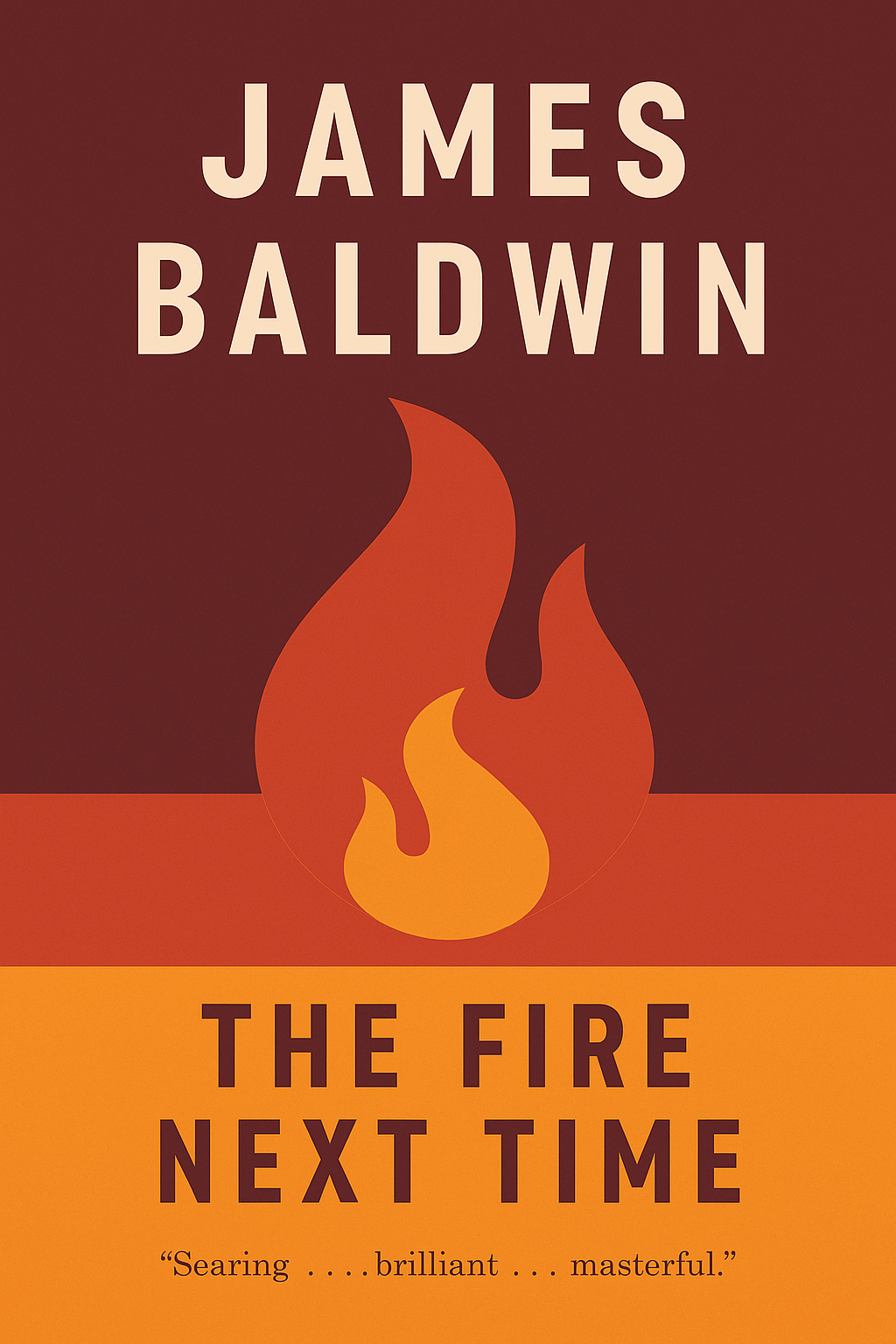
The Fire Next Time
A Compelling Exploration of Racism, Religion, and Resilience
Book Edition Details
Summary
In 1963, a literary spark ignited a movement: James Baldwin's "The Fire Next Time" roars with the power of personal testimony and cultural critique. This seminal work, crafted as two fervent letters, delves deep into Baldwin's own upbringing in Harlem, dissecting the harrowing specter of racial injustice that haunts America. With prose that crackles with intensity, Baldwin challenges readers to confront the enduring chains of racism, urging a nation divided by color to recognize its shared humanity. Heralded by The New York Times as a multifaceted masterpiece—part sermon, part manifesto—this book stands as a timeless beacon of hope and a clarion call for change.
Introduction
This penetrating examination of American racial dynamics challenges the fundamental assumptions underlying both white supremacy and black separatism through an intensely personal yet universally relevant lens. The work confronts readers with uncomfortable truths about the psychological and spiritual costs of racism, not merely as a political system but as a force that corrupts both oppressor and oppressed. Through a masterful blend of autobiographical reflection, religious criticism, and social analysis, the text exposes how American Christianity has served as both sanctuary and prison for black Americans while revealing the deep existential crisis at the heart of white American identity. The argument unfolds through two interconnected narratives: a letter to a nephew that strips away illusions about American innocence, and an account of encounters with the Nation of Islam that explores the seductive appeal of counter-racism. This dual approach forces readers to grapple with the inadequacy of both integration and separation as solutions to America's racial crisis, ultimately pointing toward a more radical transformation based on love rather than power.
The Foundation of White Innocence and Black Suffering
The central thesis emerges through a devastating critique of American innocence, revealing how white Americans maintain their moral equilibrium by refusing to acknowledge the systematic destruction they perpetuate. This innocence operates not as mere ignorance but as a deliberate psychological strategy that allows the perpetuation of injustice while maintaining self-righteousness. The argument demonstrates how this willful blindness creates a closed loop: white Americans destroy black lives while simultaneously denying their agency in this destruction, making genuine change impossible because acknowledgment would threaten their entire sense of self. The analysis penetrates beyond surface-level discrimination to expose the existential stakes involved. White Americans have constructed their identity around the fiction of their own inherent superiority and moral goodness, making any recognition of black humanity a direct threat to their psychological foundation. This reveals why rational arguments and moral appeals consistently fail to produce meaningful change. The white American confronted with evidence of black equality faces not merely a political adjustment but a complete reconstruction of reality. The examination extends to show how black Americans become trapped in a double bind: they must navigate a society that simultaneously demands their acceptance of white superiority while punishing any acknowledgment of this dynamic. This creates a psychological pressure that distorts black self-perception, forcing individuals to choose between self-hatred and a kind of madness that comes from trusting one's own experience over society's gaslighting. The argument culminates in recognizing that this system corrupts everyone involved, creating a spiritual wasteland where genuine human connection becomes nearly impossible. The tragic irony emerges that white Americans, in their desperate attempt to maintain superiority, have cut themselves off from the very humanity they claim to possess, creating a society built on fundamental dishonesty about human nature itself.
Religion as Both Refuge and Prison for the Oppressed
Religious experience reveals itself as simultaneously liberating and constraining, offering psychological survival while potentially perpetuating the very conditions that make such survival necessary. The analysis begins with the recognition that for oppressed people, religion often serves as the only available source of dignity and meaning in an otherwise hostile world. The black church provides community, emotional release, and a framework for understanding suffering that makes endurance possible. However, this same religious framework carries dangerous limitations. Christian doctrine, as commonly interpreted, encourages acceptance of present suffering in exchange for future reward, effectively functioning as a social control mechanism. The promise of heavenly justice can discourage earthly resistance, while the emphasis on forgiveness and love can be manipulated to shame those who express legitimate anger about their treatment. The deeper problem lies in Christianity's historical complicity with oppression. The same religion that promises liberation has been used to justify slavery, colonialism, and ongoing discrimination. This creates a profound theological crisis: how can the oppressed find genuine spiritual sustenance in a religion wielded by their oppressors? The analysis reveals how black Americans have been forced to create a parallel Christianity that emphasizes different aspects of the tradition while largely ignoring this fundamental contradiction. The exploration extends to the psychological effects of this religious dependency. While faith provides comfort, it can also prevent the kind of clear-eyed analysis of power that resistance requires. The believer becomes caught between divine love and human hatred, often internalizing blame for their own oppression. This religious conditioning makes it difficult to develop the kind of self-respect and strategic thinking necessary for effective political action, creating a cycle where spiritual comfort substitutes for material change.
The Nation of Islam: Separatism as Response to Integration's Failure
The appeal of Black Muslim ideology emerges not from its theological sophistication but from its unflinching acknowledgment of white hostility and its promise to restore black dignity through complete separation. Unlike Christian approaches that require black Americans to love their enemies, the Nation of Islam validates the anger and hatred that naturally arise from systematic oppression. This validation provides psychological relief from the impossible burden of maintaining love for those who demonstrate consistent contempt. The movement's racial mythology, while historically questionable, serves important psychological functions. By inverting traditional racial hierarchies and claiming original superiority for black people, it provides a counter-narrative to centuries of degradation. The discipline and moral transformation achieved within Muslim communities demonstrate the practical effectiveness of this approach, succeeding where Christian charity and social welfare programs have failed to reach the most marginalized populations. Yet the analysis reveals fundamental limitations in separatist logic. The economic and political realities of American society make true separation impossible without catastrophic consequences for all involved. More troubling, the movement's emphasis on racial purity and inevitable conflict mirrors the same thinking that underlies white supremacy, potentially leading to an equally destructive outcome through different means. The examination explores how separatism, while psychologically satisfying, ultimately represents a form of despair disguised as strength. By accepting the premise that racial harmony is impossible, it abandons the transformative potential that comes from forced coexistence. The separatist solution, however logical given American history, threatens to perpetuate the very racial thinking that created the problem while offering no genuine path toward human dignity for anyone involved.
Love Over Power: The Radical Path to American Redemption
The ultimate argument transcends both integrationist and separatist approaches by proposing love as a political force capable of transforming the fundamental nature of American society. This concept of love operates not as sentiment but as a commitment to truth-telling and mutual recognition that requires dismantling existing power structures rather than simply rearranging them. Love, in this framework, means forcing both races to confront their authentic selves rather than the myths they have created to justify their positions. For white Americans, this transformation requires abandoning the psychological security that comes from racial superiority and accepting their own vulnerability and mortality. The analysis reveals how white terror of black people stems largely from projection: whites fear that blacks will treat them with the same cruelty they have inflicted. True change requires whites to risk this vulnerability by genuinely sharing power rather than merely extending privileges they can withdraw. For black Americans, love means refusing to accept the limitations imposed by white fear while also rejecting the temptation to seek revenge through role reversal. This path requires extraordinary spiritual maturity because it demands continued faith in human possibility despite overwhelming evidence of human cruelty. The challenge involves maintaining dignity and self-respect while working toward transformation rather than destruction. The revolutionary potential of this approach lies in its recognition that America's racial crisis reflects deeper spiritual problems that affect everyone. The solution requires not just political changes but a fundamental shift in how Americans understand themselves and their relationships to each other. This transformation cannot be achieved through legislation or social programs alone but requires the kind of profound personal change that challenges the materialism and individualism underlying American culture. The path forward demands accepting the interdependence that racism has been designed to deny, recognizing that freedom for anyone requires freedom for everyone.
Summary
The work's enduring power lies in its recognition that America's racial crisis serves as a mirror reflecting the spiritual emptiness at the heart of modern civilization, requiring not merely policy changes but a fundamental transformation of human consciousness from power-based relationships to love-based ones. The analysis transcends its immediate historical context by revealing how oppression corrupts both victims and perpetrators, creating cycles of dehumanization that can only be broken through the kind of radical honesty and mutual vulnerability that most societies find nearly impossible to achieve. This text remains essential for readers seeking to understand how systems of domination operate not just politically but psychologically, and how genuine liberation requires confronting uncomfortable truths about human nature and social organization.
Related Books
Download PDF & EPUB
To save this Black List summary for later, download the free PDF and EPUB. You can print it out, or read offline at your convenience.
By James Baldwin
