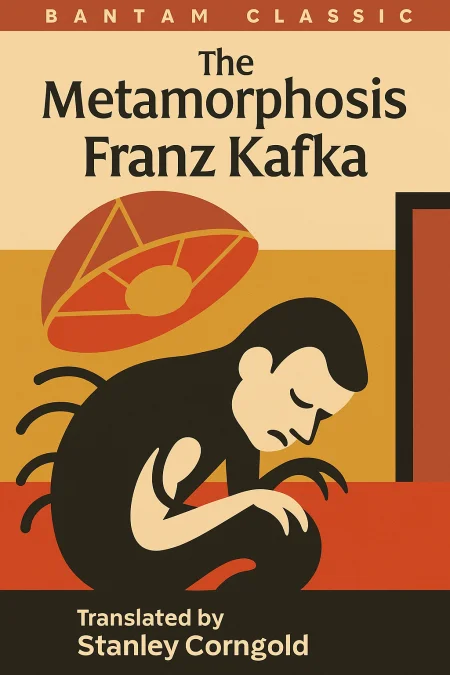
The Metamorphosis
A Novella on the Effects of Alienation on the Mind and Body
byFranz Kafka, Stanley Corngold
Book Edition Details
Summary
In the haunting opening of Franz Kafka's "The Metamorphosis," Gregor Samsa awakens not as the man he was, but as a monstrous insect, his new reality both grotesque and darkly comedic. Struggling with a body that defies his human instincts, Gregor becomes a living allegory of alienation, trapped in a world that no longer recognizes him. This surreal transformation casts him adrift from his family and his own identity, probing the absurdity of existence and the crippling weight of societal expectations. Kafka's novella is a profound exploration of the human condition, a tale where the extraordinary meets the mundane, challenging readers to confront the fragility of self and the isolating nature of change. Dive into this timeless masterpiece that continues to resonate as a mirror to modern life's existential dilemmas.
Introduction
One morning, a traveling salesman awakens to find himself transformed into a monstrous insect, his human form replaced by a hard carapace and many thin legs. This shocking opening plunges readers into a world where the impossible becomes mundane, where family bonds are tested by the grotesque, and where the burden of existence takes on literal, physical weight. Written in 1912, this masterpiece of modern literature emerged from the pen of a Prague writer who understood intimately the suffocating pressures of duty, work, and family obligation. The story unfolds as both a darkly comic nightmare and a profound meditation on what it means to be human when stripped of human form. Through its protagonist's bizarre transformation, the narrative exposes the fragile foundations of love, responsibility, and identity that govern our daily lives. The tale reveals how quickly compassion can turn to revulsion, how duty can become burden, and how the very people we sacrifice for may ultimately wish us gone. This exploration of alienation and family dynamics offers readers a mirror to examine their own relationships and the price of selfless devotion in a world that values productivity above humanity.
The Transformation: Gregor's Shocking Awakening
Gregor Samsa's morning begins like any other until he discovers his body has betrayed him in the most fundamental way. Where once lay a hardworking traveling salesman now rests a creature with a hard, segmented belly and numerous thin legs that wave helplessly in the air. His first concern is not horror at his condition, but anxiety about missing his train and disappointing his employer. This telling priority reveals the depth of his enslavement to work and duty, even as his very humanity has been stripped away. The family's discovery unfolds with mounting tension as his mother calls through the door, his father pounds with increasing urgency, and his sister pleads for him to open up. When Gregor finally manages to turn the key with his mouth, the revelation of his new form sends his mother into a faint, his father into rage, and his sister into tears. The general manager from his company, who has arrived to investigate his absence, flees in horror after witnessing the transformation. What follows is a grotesque chase as Gregor's father drives him back into his room with a newspaper and walking stick, treating his own son like a dangerous pest to be contained. The apple that lodges in Gregor's back, thrown by his father in a moment of violent revulsion, becomes a festering wound that will plague him for the remainder of his shortened life. This brutal rejection by the very people he has sacrificed everything to support marks the beginning of his isolation and slow decline. The transformation serves as both literal plot device and powerful metaphor for the dehumanization that comes from a life devoted entirely to others' needs. Gregor's monstrous form merely makes visible what his selfless labor had already accomplished: the erasure of his individual identity and worth.
Family Burden: Adaptation and Growing Resentment
Initially, Grete takes on the care of her transformed brother with touching dedication, bringing him food and cleaning his room while the parents remain too horrified to enter. She discovers his new preferences for rotting vegetables and moldy cheese, accommodating his insect nature with the same devotion he once showed the family. The door to the living room is left open in the evenings, allowing Gregor to observe family life from the shadows, a ghostly presence in his own home. As weeks pass, the family's financial situation forces dramatic changes. The father, previously an invalid living off Gregor's earnings, dons a bank porter's uniform and returns to work with surprising vigor. The mother takes in sewing, and Grete finds employment as a salesgirl while studying stenography and French in the evenings. They rent out rooms to three stern lodgers, further cramping their living space and adding to the household's tension. Gradually, Grete's care becomes perfunctory, then neglectful. Gregor's room fills with unwanted household items, becoming a storage space rather than a bedroom. The family's initial shock gives way to routine indifference, then to active resentment. The wound from his father's apple attack festers, weakening him physically as his spirit deteriorates from isolation and the growing awareness that he has become not a beloved family member in need of care, but an embarrassing burden to be hidden away. The three lodgers represent the outside world's judgment, their presence a constant reminder of the family's shame. When they finally discover Gregor during his sister's violin performance, their horrified departure precipitates the final crisis that will determine his fate.
The Final Rejection: Death and Liberation
The crisis reaches its peak when Gregor, drawn by his sister's violin playing, ventures into the living room where the lodgers are dining. His appearance sends the tenants fleeing in disgust, threatening the family's already precarious financial stability. This public humiliation proves to be the final straw for Grete, who has grown from a caring girl into a young woman hardened by months of burden and sacrifice. In a scene of devastating emotional brutality, Grete declares that the creature in Gregor's room is no longer her brother, that the real Gregor would have recognized the impossibility of his situation and left voluntarily. She demands that they find a way to get rid of "it," refusing even to acknowledge the creature's humanity with a name. Her parents, worn down by months of struggle and shame, offer no resistance to this final rejection. Gregor, overhearing this conversation, accepts his sister's verdict with heartbreaking resignation. He retreats to his room for the last time, his body finally giving way to the accumulated damage of his transformation and the festering apple wound. As dawn breaks, he dies quietly, his last thoughts filled with love and tenderness for the family that has just disowned him. The charwoman discovers his body the next morning, announcing his death with casual indifference. The family's reaction is not grief but relief, as they immediately begin planning a brighter future. They dismiss the lodgers, take a day off work, and venture into the countryside together for the first time in months. As they ride the tram into the sunshine, they notice how Grete has blossomed into a beautiful young woman, and they begin discussing her marriage prospects, their conversation full of hope and renewed vitality now that their burden has been lifted.
Summary
This haunting tale transforms a fantastic premise into a profound examination of family dynamics, sacrifice, and the thin line between love and obligation. Through its protagonist's literal dehumanization, the story exposes how easily compassion can curdle into resentment when care becomes burden. The narrative's genius lies in its ability to generate sympathy for all its characters while simultaneously revealing their capacity for cruelty and selfishness. The family's initial horror gives way to adaptation, then to neglect, and finally to the desire for liberation from their transformed loved one. Yet their reaction, while harsh, reflects a recognizable human truth about the limits of unconditional love when tested by impossible circumstances. The story's enduring power comes from its unflinching portrayal of how duty and affection can become chains that bind both the giver and receiver, and how death can sometimes represent the only escape from relationships that have become prisons. In its darkly comic way, this masterpiece illuminates the complex negotiations of dependency and independence that define all human relationships, asking uncomfortable questions about the price of devotion and the nature of family bonds when stripped of their sentimental pretenses.
Related Books
Download PDF & EPUB
To save this Black List summary for later, download the free PDF and EPUB. You can print it out, or read offline at your convenience.
By Franz Kafka
