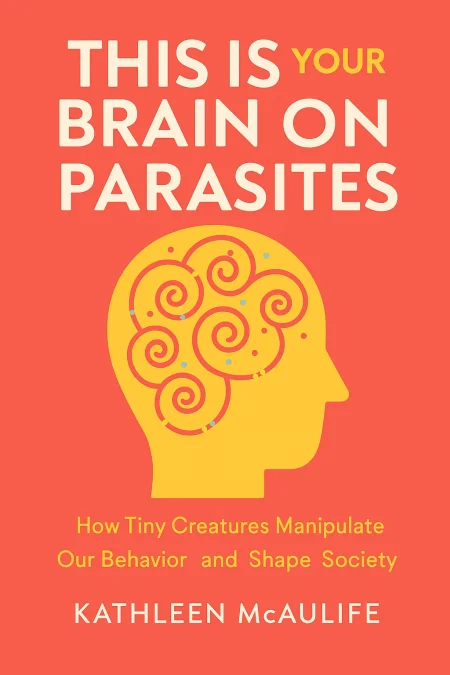
This Is Your Brain on Parasites
How Tiny Creatures Manipulate Our Behavior and Shape Society
Book Edition Details
Summary
Hidden realms teem within us, guiding our desires, fears, and even the rise and fall of civilizations. In "This Is Your Brain on Parasites," McAuliffe unveils a startling dimension where microscopic puppeteers wield immense power over humanity. These cunning parasites, ancient as the stars, are not just our unseen companions—they are influential architects of our evolution and behavior. Imagine parasites as unseen forces shaping cultures, fueling political divides, and even dictating the nuances of human emotions. With a narrative reminiscent of the grand scientific explorations of Jared Diamond and Neil Shubin, this book doesn't just inform; it transforms our understanding of what it means to be human, revealing the unseen battles within and their profound impact on the world we know.
Introduction
Imagine discovering that your pet cat might be subtly influencing your personality, or that the bacteria in your gut could be affecting whether you feel anxious or adventurous. What if some of our most fundamental behaviors—from whom we find attractive to how we react in dangerous situations—aren't entirely under our conscious control? The hidden world of parasites and microbes living within and around us represents one of the most fascinating frontiers in modern science, challenging our most basic assumptions about free will and human behavior. This remarkable journey into the microscopic realm reveals how tiny organisms have been quietly shaping not just our individual minds, but entire cultures and societies throughout human history. From single-celled parasites that can make mice attracted to cats, to beneficial bacteria that influence our moods and food cravings, these invisible passengers are far more sophisticated than we ever imagined. You'll discover how some parasites have evolved elaborate strategies to manipulate their hosts' behavior for their own reproductive success, while others work symbiotically with us, potentially offering benefits for our mental and physical health. Perhaps most intriguingly, you'll learn how our brains have evolved powerful defense systems against these microscopic manipulators—systems that may explain everything from our food preferences to our political beliefs and social prejudices.
Nature's Mind Control: When Parasites Hijack Animal Behavior
The natural world is filled with what appear to be acts of inexplicable madness. Crickets that normally fear water suddenly leap headfirst into ponds and streams. Ants abandon their colonies to climb grass blades and clamp their jaws shut, remaining frozen until death. Spiders that have spent their lives weaving perfect circular webs suddenly create bizarre, asymmetrical structures that look like abstract art. These aren't random acts of nature gone wrong—they're the result of some of the most sophisticated biological manipulations on Earth. These behaviors are orchestrated by parasites that have evolved remarkable abilities to hijack their hosts' nervous systems. Take the hairworm that infects crickets: this aquatic parasite must somehow convince a land-dwelling insect to seek out water so it can complete its life cycle. The worm accomplishes this feat by producing neurochemicals that mimic the cricket's own brain signals, essentially speaking the insect's language to issue commands. Even more impressively, the parasite appears to alter the cricket's visual system, making it attracted to light—and what's the brightest thing a forest-dwelling cricket might see at night? Moonlight reflecting off water. The precision of these manipulations is staggering. A fungus that infects carpenter ants doesn't just make them climb—it compels them to ascend exactly one foot up a plant stem, move to the northwestern side, and clamp onto the main vein of a leaf at precisely solar noon. This specificity isn't accidental; it creates the perfect conditions of temperature and humidity for the fungus to grow and spread its spores. Meanwhile, parasitic wasps perform actual neurosurgery on cockroaches, using their stingers like precision instruments to inject venom into specific brain regions that control decision-making, effectively turning their victims into compliant zombies. What makes these discoveries so profound is their implication for our understanding of behavior itself. For centuries, we've assumed that animals act according to their own interests and instincts. But parasitic manipulations reveal that much of what we observe in nature may actually be the result of invisible puppet masters pulling the strings. This realization is forcing scientists to reconsider fundamental questions about free will, consciousness, and the nature of behavior—questions that become even more unsettling when we consider that humans, too, might be subject to similar influences.
The Toxoplasma Effect: How Cat Parasites Alter Human Psychology
Perhaps no parasite has captured scientific attention quite like Toxoplasma gondii, a single-celled organism that has infected an estimated one-third of the world's human population. This microscopic hitchhiker, which can only reproduce sexually in cats, has developed an extraordinary strategy for getting back to its feline hosts: it appears to manipulate the behavior of infected rodents, making them lose their natural fear of cats and even become attracted to cat odors. But the most unsettling discovery is that this same parasite may be quietly altering human behavior and personality. The story begins with Czech biologist Jaroslav Flegr, who noticed his own puzzling fearlessness in dangerous situations and wondered if it might be connected to his Toxoplasma infection. His subsequent research revealed striking personality differences between infected and uninfected people. Infected men tended to be more suspicious, rule-breaking, and introverted, while infected women showed the opposite pattern, becoming more outgoing and trusting. Both groups showed slower reaction times and reported feeling less fear in dangerous situations—traits that might explain why infected people are significantly more likely to be involved in traffic accidents. The mechanism behind these behavioral changes is becoming clearer through animal research. Scientists have discovered that Toxoplasma cysts in the brain produce dopamine, a crucial neurotransmitter involved in pleasure, motivation, and fear responses. The parasite essentially sets up dopamine factories throughout the brain, potentially altering everything from risk assessment to sexual behavior. In male rodents, the infection increases testosterone levels and makes them more attractive to females, while simultaneously making cat odors smell appealing rather than threatening—a deadly attraction that serves the parasite's reproductive needs. The implications for human health are still being investigated, but early findings are concerning. People with Toxoplasma infections show higher rates of schizophrenia, and brain scans reveal that infected individuals with the mental illness have specific patterns of missing gray matter. The parasite has also been linked to increased suicide rates and various mood disorders. While most infected people show no obvious symptoms, the subtle personality changes and increased accident rates suggest that this "dormant" infection may be far from benign. As researchers continue to unravel Toxoplasma's effects on the human brain, we're confronted with the uncomfortable possibility that our thoughts, emotions, and decisions may be influenced by a microscopic parasite that most of us don't even know we carry.
Bacterial Emotions: How Gut Microbes Shape Our Mental State
Your gut contains a bustling metropolis of microorganisms—over 100 trillion bacteria, viruses, and other microbes that collectively weigh about as much as your brain. Far from being passive passengers, these microscopic residents are active participants in your mental and emotional life, producing many of the same neurotransmitters that regulate mood, anxiety, and behavior. This discovery is revolutionizing our understanding of the connection between body and mind, suggesting that the phrase "gut feeling" may be more literal than we ever imagined. The evidence for this gut-brain connection is compelling. Mice raised in sterile environments without gut bacteria display dramatically altered behavior: they're fearless in situations that would terrify normal mice, show little curiosity about their surroundings, and have poor memory and learning abilities. When these "germ-free" mice receive transplants of normal gut bacteria, many of these behavioral abnormalities disappear—but only if the transplant occurs early in life, suggesting that gut microbes help shape the developing brain. Even more remarkably, researchers can essentially perform "personality transplants" by moving gut bacteria between different strains of mice, causing calm animals to become agitated and aggressive mice to become docile. The mechanisms behind these effects are beginning to emerge. Gut bacteria produce virtually every major neurotransmitter found in the brain, including serotonin, dopamine, and GABA. They communicate with the brain primarily through the vagus nerve, a major neural highway that carries more information from the gut to the brain than in the reverse direction. When this nerve is severed in laboratory animals, many of the behavioral effects of gut bacteria disappear, confirming the importance of this communication pathway. The bacteria also influence the immune system and produce various metabolites that can affect brain function. Clinical applications of this research are already showing promise. Studies of probiotics—beneficial bacteria found in yogurt and supplements—suggest they may help treat anxiety and depression. In one experiment, people who consumed probiotic-rich yogurt for four weeks showed reduced brain activity in regions associated with negative emotions when viewing angry or fearful faces. The composition of our gut microbiome may even influence our food cravings and body weight, with some bacteria appearing to promote obesity while others seem protective against it. As we learn more about these microbial influences, we may need to reconsider fundamental questions about the nature of self and identity—after all, if 90 percent of the cells in your body belong to microorganisms, how much of "you" is really you?
Cultural Parasites: How Microbes Influence Societies and Civilizations
The influence of parasites extends far beyond individual behavior to potentially shape entire cultures and civilizations. Emerging research suggests that the prevalence of infectious diseases in different regions of the world may help explain some of the most fundamental differences between societies—from political systems and religious practices to social norms and cultural values. This "parasite-stress theory" proposes that many aspects of human culture evolved as collective defense mechanisms against the threat of infectious disease. Consider the striking global pattern of individualism versus collectivism. Societies in pathogen-rich environments, particularly those near the equator, tend to emphasize group cohesion, tradition, and conformity. People in these cultures are more likely to be religious, authoritarian, and suspicious of outsiders. In contrast, societies in regions with historically low pathogen loads, such as Scandinavia and northern Europe, tend to be more individualistic, democratic, and open to new experiences. This pattern holds true even when controlling for factors like wealth, education, and climate. The theory suggests that when infectious diseases pose a constant threat, cultural practices that minimize contact with potential sources of contagion become adaptive. Strong in-group loyalty, adherence to traditional practices, and wariness of foreigners all serve to reduce exposure to novel pathogens. Religious rituals emphasizing cleanliness, dietary restrictions, and sexual morality may have evolved as public health measures disguised as spiritual practices. Even something as basic as the use of spices in cooking may reflect an evolutionary arms race against food-borne pathogens. This perspective offers a radically different lens through which to view human history and contemporary global politics. The rise of democracy, women's rights, and liberal social values in the developed world may be partially attributed to improvements in sanitation, vaccination, and disease control that occurred throughout the 20th century. Conversely, ongoing conflicts and authoritarian regimes in pathogen-rich regions may be perpetuated by the very diseases that create conditions favoring such systems. The implications for foreign policy and international development are significant, suggesting that efforts to promote democracy and human rights might be more effective if they prioritized public health infrastructure and disease prevention.
Summary
The emerging field of neuroparasitology reveals a startling truth: we are not the autonomous beings we imagine ourselves to be, but rather complex ecosystems whose thoughts, emotions, and behaviors are continuously influenced by microscopic organisms living within and around us. This perspective fundamentally challenges our understanding of free will and individual agency, suggesting that many of our most personal decisions may be shaped by the evolutionary agendas of our microbial passengers. Yet this knowledge also offers unprecedented opportunities for improving human health and well-being. As we decode the language of microbial communication with our brains, we may develop new treatments for mental illness, obesity, and other conditions that have long puzzled medical science. The question that emerges from this research is profound: if our behavior is partially controlled by microbes, what does this mean for concepts of personal responsibility and moral accountability? How might society need to adapt as we learn more about the hidden influences shaping human behavior? For readers fascinated by the intersection of biology, psychology, and philosophy, this field offers a compelling glimpse into the complex reality of what it truly means to be human in a microbial world.
Related Books
Download PDF & EPUB
To save this Black List summary for later, download the free PDF and EPUB. You can print it out, or read offline at your convenience.
By Kathleen McAuliffe
