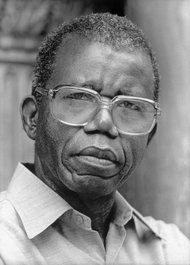
Chinua Achebe
Chinua Achebe, a luminary of African literature, was born in 1930 in the Igbo town of Ogidi in southeastern Nigeria. Raised by Christian parents, Achebe's upbringing was a blend of traditional African roots and Western influences, a duality that profoundly shaped his literary voice. Excelling in academics, he earned a scholarship to pursue undergraduate studies, where his fascination with world religions and indigenous cultures ignited his passion for storytelling. Achebe's career in broadcasting took him to Lagos, a vibrant metropolis, which further exposed him to the complexities of post-colonial Nigerian society. His staunch advocacy for Biafra during the Nigerian Civil War underscores his commitment to his people, a dedication that saw him serve as an ambassador for the secessionist state. Achebe's magnum opus, "Things Fall Apart" (1958), remains a cornerstone of modern African literature, celebrated for its poignant exploration of the collision between traditional Igbo society and European colonial forces. This seminal novel, alongside his other acclaimed works such as "No Longer at Ease" (1960), "Arrow of God" (1964), "A Man of the People" (1966), and "Anthills of the Savannah" (1987), cemented his status as a leading voice in post-colonial discourse. His critique of imperialism and exploration of identity resonate deeply, earning him international recognition and a place in literary canon. Achebe's fearless critique of Joseph Conrad in his controversial 1975 lecture, "An Image of Africa: Racism in Conrad's 'Heart of Darkness,'" further amplified his influence as a formidable critic of colonial narratives. Renowned for his masterful integration of the Igbo oral tradition, Achebe’s narrative style is characterized by its lucid prose, rich with proverbs and folklore. His works deftly navigate themes of cultural conflict, identity, and moral complexity, offering profound insights into the human condition. Achebe's eloquence and intellectual rigor contributed significantly to the global understanding of African perspectives and histories. As a professor at Brown University, he imparted his wisdom to future generations, leaving an indelible legacy that continues to inspire and challenge readers worldwide.


by Paul J. Zak
by Rory Vaden
by Robert C. Solomon, Fernando Flores
by Brett Gardner
by Dennis S. Reina
by Julian Baggini
by Larry Downes, Omar Abbosh, Paul Nunes
by Jacqueline Woodson
by Kevin Oakes
by Lindsey Pollak, Kimberly B. Cummings, Kimberly Brown
