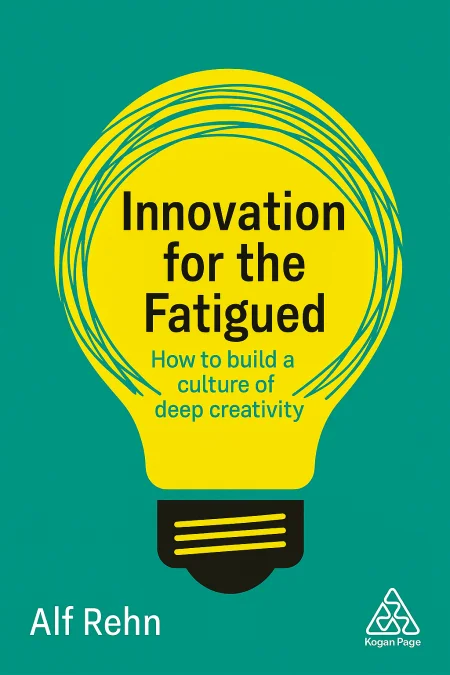
Innovation for the Fatigued
How to Build a Culture of Deep Creativity
byAlf Rehn
Book Edition Details
Summary
Innovation fatigue—a malaise plaguing modern enterprises, drowning them in hollow buzzwords and unfulfilled promises. "Innovation for the Fatigued" by Alf Rehn slices through the superficial noise, offering a compelling remedy for businesses weary of ineffectual change. This book is not just a critique; it's a manifesto for reinvigorating true innovation by fostering a culture where imagination, empathy, and audacity are paramount. Rehn's insights delve into the pitfalls of fleeting trends, providing a refreshing blueprint for sustainable creativity that genuinely impacts the bottom line. Through engaging examples and a pragmatic approach, this guide champions the art of meaningful innovation, inviting leaders to reawaken their company's potential and navigate the ever-evolving market landscape with renewed vigor.
Introduction
The modern corporate landscape has become paradoxically exhausted by the very force it claims to celebrate most: innovation. While organizations pour unprecedented resources into innovation initiatives, consultants, and theatrical displays of creative thinking, employees increasingly experience a profound fatigue with the relentless demands to "innovate or die." This systematic burnout reveals a fundamental disconnect between shallow innovation performance and the deeper cultural foundations required for genuine creative breakthrough. The crisis extends beyond individual companies to encompass entire industries trapped in cycles of superficial novelty-seeking. Organizations mistake the appearance of innovation for its substance, confusing buzzwords and frameworks for the patient cultivation of ideas. This phenomenon reflects a broader failure to understand innovation not as a discrete activity but as an emergent property of organizational cultures built on respect, reciprocity, and meaningful purpose. Through rigorous analysis of corporate case studies and organizational psychology research, a compelling argument emerges that genuine innovation cannot be commanded into existence through management directives or consultant-led workshops. Instead, it requires leaders who understand themselves as cultivators rather than commanders, tending to the conditions that allow human creativity to flourish naturally and sustainably over time.
The Crisis of Shallow Innovation
Contemporary business culture has transformed innovation from a meaningful change agent into empty corporate theater. The relentless proliferation of innovation books, consultants, and initiatives has created a paradoxical situation where organizations claiming to prioritize innovation systematically kill ideas through neglect, bureaucratic indifference, and micro-aggressive behaviors that signal disrespect for creative thinking. The death of ideas in modern corporations rarely occurs through dramatic rejection but through subtle erosion. A poorly timed yawn during a presentation, identical form emails acknowledging submissions, or the unconscious adoption of dismissive body language can devastate an employee's willingness to share future innovations. These seemingly minor interactions compound over time, creating organizational cultures where people withdraw their cognitive contributions despite official policies encouraging creativity. This dysfunction reflects deeper structural problems in how business leaders understand innovation processes. The innovation industry has commodified creativity into purchasable methodologies and replicable frameworks, fundamentally misunderstanding innovation as something that can be installed rather than cultivated. Organizations consume innovation content voraciously while remaining mystified by their inability to generate breakthrough thinking internally. The broken windows theory applies directly to innovation cultures. Small signs of neglect toward ideas signal broader organizational indifference, creating cascading effects that discourage risk-taking and creative exploration. Companies inadvertently train their employees to avoid sharing unconventional thinking through patterns of non-engagement disguised as professional neutrality, ultimately squandering their most valuable resource: human imagination applied to meaningful problems.
Building Deep Innovation Cultures Through Respect and Purpose
Deep innovation cultures distinguish themselves through four fundamental cultural values that create sustainable foundations for creative work: respect, reciprocity, responsibility, and reflection. These elements function synergistically to establish psychological safety while demanding intellectual rigor, moving beyond superficial creativity exercises toward substantive cultural transformation that honors both ideas and the people who generate them. Respect in innovation contexts encompasses both interpersonal dignity and serious engagement with ideas regardless of their source. Organizations must learn to distinguish between criticism and disrespect, understanding that rigorous questioning of proposals demonstrates greater respect than polite dismissal. This requires leaders who model productive disagreement while maintaining fundamental regard for contributors' intelligence and good faith efforts. Reciprocity demands that organizations provide genuine support for innovation rather than merely demanding it. When companies expect employees to innovate without allocating time, resources, or meaningful feedback mechanisms, they create innovation stress that ultimately diminishes creative output. Successful innovation cultures understand that creative work requires different rhythms and support structures than operational activities, necessitating deliberate design of organizational slack and experimental spaces. Responsibility and reflection create accountability for innovation culture maintenance while preventing stagnation through continuous questioning of assumptions and methods. These values encourage both individual ownership of creative contributions and collective examination of why certain approaches succeed while others fail. Organizations practicing deep reflection regularly challenge their own innovation orthodoxies, remaining open to fundamentally different approaches rather than mechanically repeating familiar patterns regardless of their effectiveness.
Embracing Diversity and Imaginative Thinking
Innovation requires cognitive diversity that transcends demographic representation to encompass different thinking styles, problem-solving approaches, and cultural perspectives. Monocultures, regardless of their apparent sophistication, inherently limit creative potential by constraining the range of questions asked and solutions considered. The most innovative organizations actively cultivate multiple forms of diversity while developing cultural brokerage capabilities that help different perspectives intersect productively. Imagination represents the deepest level of creative thinking, requiring sustained effort to access beyond routine problem-solving and analytical frameworks. Unlike creativity workshops that operate within comfortable parameters, genuine imagination demands willingness to abandon familiar conceptual frameworks entirely. This process resembles archaeological excavation more than ascension to higher planes, requiring patient digging through layers of conventional thinking to reach bedrock insights that reshape entire problem definitions. Play serves as a critical pathway to imaginative thinking, though adults often struggle to engage authentically with playful exploration in professional contexts. True play involves accepting alternative internal logics that suspend normal operational constraints, creating spaces where impossible combinations become possible. Organizations serious about innovation must design legitimate opportunities for such exploration rather than relegating playfulness to superficial team-building exercises. Curiosity functions as the engine driving imaginative exploration, but organizational structures often inadvertently discourage the questioning behaviors that fuel creative discovery. Companies claiming to value innovation while discouraging employees from asking fundamental questions create contradictory environments that frustrate rather than liberate creative potential. Sustainable innovation cultures systematically reward curiosity while providing diverse inputs that fuel ongoing questioning rather than confirming existing assumptions.
Overcoming Innovation Theatre Through Meaningful Practice
Innovation theater represents perhaps the most insidious threat to genuine organizational creativity, creating elaborate performances of innovative activity that consume resources while producing minimal meaningful change. This phenomenon emerges when organizations prioritize the appearance of innovation over its substance, leading to cycles of consultant-led initiatives that generate excitement without sustainable cultural transformation or breakthrough solutions to significant problems. Meaningful innovation requires clear purpose that transcends profit maximization to address problems worth solving. Organizations trapped in innovation theater often mistake novelty for impact, celebrating marginal improvements or technological sophistication without questioning whether their efforts address genuine human needs. This shallow focus explains why so many well-funded innovation initiatives produce trivial applications rather than solutions to pressing social or environmental challenges. Courage emerges as an essential leadership quality for transcending theatrical innovation, encompassing the courage to allow genuine experimentation, the courage to say no to superficial initiatives, and the courage to govern with long-term perspective despite short-term pressures. These forms of courage require leaders who understand that sustainable innovation often looks unimpressive in its early stages while requiring patient support through inevitable periods of uncertainty and apparent failure. Innovation ambition provides the necessary counterweight to theatrical tendencies by establishing standards for meaningful impact rather than mere novelty. Organizations with appropriate innovation ambition regularly examine whether their creative efforts justify the resources invested, asking hard questions about whether their innovations serve broader purposes beyond internal satisfaction. This discipline helps distinguish between innovations that matter and innovations that merely exist, focusing limited creative resources on problems whose solutions could genuinely improve human conditions.
Summary
The path beyond innovation fatigue requires organizations to abandon their addiction to innovation performance in favor of patient cultivation of cultural conditions that naturally produce creative breakthroughs. This transformation demands leaders who understand themselves as farmers rather than performers, focusing on soil quality rather than dramatic harvests, creating environments where human creativity can flourish sustainably over extended periods rather than in artificial bursts of mandated innovation activity. Such organizations discover that genuine innovation emerges most reliably when it stops being the primary focus and becomes instead the natural expression of cultures built on respect, purpose, and meaningful engagement with problems worth solving.
Related Books
Download PDF & EPUB
To save this Black List summary for later, download the free PDF and EPUB. You can print it out, or read offline at your convenience.
By Alf Rehn
