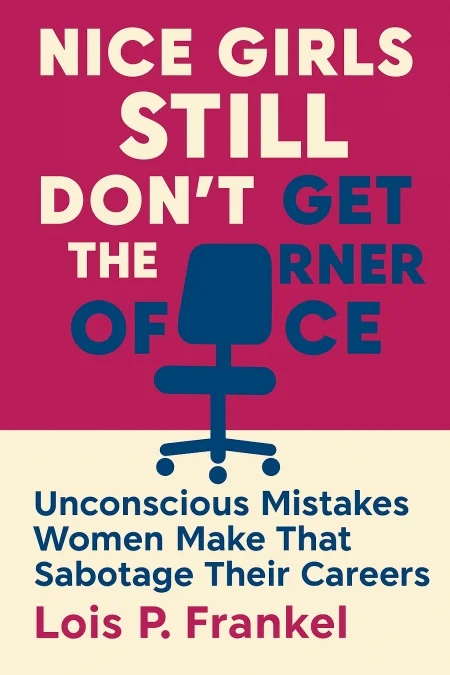
Nice Girls Don’t Get the Corner Office
Unconscious Mistakes Women Make That Sabotage Their Careers
Book Edition Details
Summary
In a world where ambition meets unspoken barriers, "Nice Girls Don't Get the Corner Office" serves as a candid guide for women ready to rewrite their own professional narratives. Celebrated executive coach Dr. Lois P. Frankel offers an empowering arsenal of strategies to dismantle the subtle self-sabotage lurking in everyday workplace behaviors. With wit and wisdom, Frankel reveals how to navigate office politics, negotiate with confidence, and embrace assertiveness without apology. This newly updated edition, marking its triumphant 10th anniversary, challenges women to confront the covert habits that hinder their climb to the top. Prepare for a transformative journey that turns aspirations into realities and equips you with the tools to claim your rightful place in the executive suite.
Introduction
Picture this: you're sitting in yet another meeting where your brilliant idea gets overlooked, only to watch a male colleague present the same concept ten minutes later to enthusiastic applause. Or perhaps you've been working overtime for months, delivering exceptional results, yet the promotion goes to someone with half your experience. If these scenarios feel painfully familiar, you're not alone. Countless capable, intelligent women find themselves trapped by invisible barriers that seem to keep success just out of reach. The truth is, many of the behaviors we learned as girls—being polite, accommodating, and modest—can actually sabotage our professional advancement. While these qualities served us well in childhood, they often work against us in the business world. The workplace operates by a different set of rules, and understanding these unspoken dynamics is crucial for any woman who wants to achieve her full potential. This isn't about becoming someone you're not; it's about recognizing which habits are holding you back and developing new strategies that honor both your authentic self and your professional ambitions.
Master the Game of Business
Success in business isn't just about working hard or being the smartest person in the room. It's about understanding that the workplace operates like a strategic game with its own rules, boundaries, and winning tactics. Many women approach work as if it's a collaborative event where everyone should play nicely together, but this mindset can inadvertently put them at a disadvantage. Consider Sandra, a director of operations who was invited to sit on her company's executive committee—a prestigious opportunity that could significantly advance her career. Instead of recognizing this as a crucial strategic move, she declined the invitation because she had attended similar meetings before and found them to be "a waste of time." Sandra was focusing on the immediate inconvenience rather than the long-term career benefits of being visible to senior leadership. This decision cost Sandra dearly. By turning down the opportunity, she missed the chance to build relationships with key decision-makers, showcase her expertise, and position herself for future promotions. Meanwhile, her male colleagues understood intuitively that showing up and being present at high-level meetings is essential for career advancement, regardless of how productive the meetings actually are. The key to mastering the business game lies in shifting your perspective from task-focused to strategy-focused thinking. Start by observing the successful people in your organization—notice how they navigate office dynamics, build alliances, and position themselves for opportunities. Then identify the unwritten rules in your workplace and learn to play within those boundaries while pushing toward the edges where real advancement happens. Remember, playing the game doesn't mean compromising your values or authenticity. It means understanding the environment you're operating in and adapting your approach to maximize your effectiveness and impact.
Build Your Professional Brand
Your professional brand is the promise of value you deliver and the reputation that precedes you into every room. Yet many women struggle to define and promote their unique professional identity, often defaulting to modest self-descriptions that undersell their capabilities and achievements. Take the example of Debra, an executive in minority recruitment at a major entertainment company. At a networking event, instead of simply stating her job title, she delivered a compelling elevator pitch that highlighted her impact: she explained how her programs had increased minority hires by 22 percent and reduced attrition by 8 percent, all while expressing genuine enthusiasm for her work. Her authentic passion and specific results made such an impression that someone at her table offered her a better position the very next day. Contrast this with the countless women who introduce themselves with phrases like "I just manage a legal office" or "I'm only an administrative assistant." These self-minimizing descriptions not only fail to capture their true value but actually reinforce others' tendency to overlook their contributions. Every job in an organization exists because it's necessary—your role matters, and how you describe it shapes how others perceive both you and your work. Building your brand starts with identifying your unique strengths and the specific ways you add value to your organization. Consider the problems you solve, the skills you bring, and the results you deliver. Then practice articulating these elements in a clear, confident manner that reflects your genuine pride in your work. Your brand should also extend to your online presence, networking efforts, and day-to-day interactions. Consistency across all these touchpoints creates a powerful, memorable impression that opens doors and creates opportunities for advancement.
Communicate with Authority and Impact
The way you communicate doesn't just convey information—it establishes your credibility, demonstrates your confidence, and influences how others perceive your leadership potential. Many women unconsciously adopt communication patterns that diminish their authority, even when they have valuable insights to share. One of the most common patterns is couching statements as questions. Instead of saying "I recommend we increase our development budget," many women say "Don't you think we should consider increasing our development budget?" This approach might feel safer and less confrontational, but it signals uncertainty and invites others to dismiss or override your ideas. Consider Anne, who struggled with this exact issue. She would present her ideas as tentative questions, hoping to avoid seeming too aggressive. However, when colleagues like Pete responded with contrary opinions, she found herself in weak negotiating positions because she had framed her expertise as mere suggestions rather than informed recommendations. The solution wasn't to become more aggressive, but to own her ideas by presenting them as clear, confident statements backed by solid reasoning. Transform your communication by eliminating apologetic preambles, speaking with appropriate volume and clarity, and using direct language that reflects your expertise. Instead of saying "I think maybe we might want to consider," try "I recommend" or "My analysis shows." These small changes can dramatically impact how others receive and respond to your ideas. Practice pausing before you speak to organize your thoughts, and aim for concise, impactful delivery rather than over-explaining your reasoning. Remember, your goal isn't to sound harsh or demanding—it's to communicate with the authority that matches your knowledge and experience.
Respond with Confidence and Power
How you respond to challenges, setbacks, and inappropriate treatment reveals your professional maturity and influences how others interact with you in the future. Many women have been socialized to avoid conflict and maintain harmony at all costs, but this approach can sometimes enable poor treatment and limit career growth. Take the case of Ebonisha, who waited over two months for a computer she needed to perform her job. Her initial approach was understanding and accommodating—she wrote polite notes acknowledging the IT department's challenges and gently requesting assistance. When this soft approach failed, she needed to escalate her communication to include specific deadlines and clear consequences, ultimately stating that she would involve both their supervisors if the issue wasn't resolved promptly. This shift from passive hoping to active problem-solving transformed her situation. Instead of continuing to accept unreasonable delays, she took control by setting boundaries and expectations. The key was maintaining professionalism while demonstrating that she valued her own time and work requirements. Developing confident responses requires practicing assertiveness in low-stakes situations first. Use "I" statements to express your needs without attacking others, such as "I need this equipment to do my job effectively" rather than "You never follow through on your promises." This approach addresses problems while preserving working relationships. Remember that tolerating inappropriate treatment doesn't make you a team player—it often encourages more of the same behavior. By responding with appropriate firmness and clear expectations, you demonstrate self-respect and professional standards that others will learn to honor and match.
Summary
The path from nice girl to corner office isn't about abandoning your authentic self or adopting artificial behaviors. It's about recognizing that the skills that served you well in childhood may not be the same ones that will propel your career forward. As Eleanor Roosevelt wisely noted, "You are braver than you believe, stronger than you seem, and smarter than you think." The challenge lies not in your capabilities, but in learning to showcase them effectively within the realities of today's business environment. Your next step is simple but powerful: choose one specific behavior from your professional interactions and commit to changing it this week. Whether it's speaking up earlier in meetings, stating your ideas as recommendations rather than questions, or finally asking for that overdue promotion, take action now. Small changes in how you present yourself can create surprisingly significant shifts in how others perceive and respond to you, opening doors you didn't even realize were there.
Related Books
Download PDF & EPUB
To save this Black List summary for later, download the free PDF and EPUB. You can print it out, or read offline at your convenience.
By Lois P. Frankel
