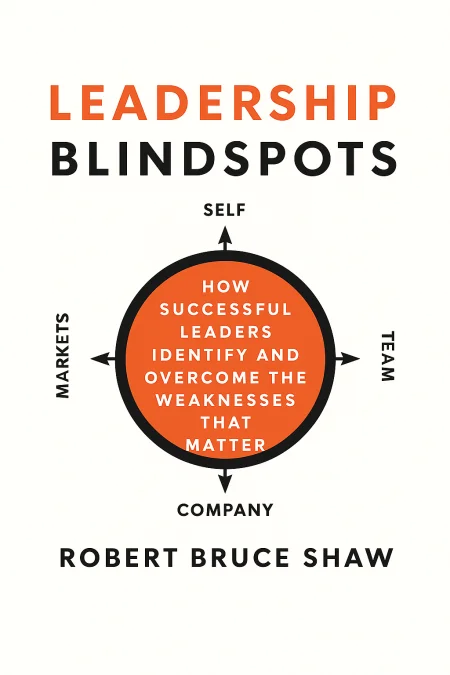
Leadership Blindspots
How Successful Leaders Identify and Overcome the Weaknesses that Matter
Book Edition Details
Summary
Beneath the polished veneer of confident leadership lies a hidden battlefield where even the most seasoned leaders can stumble. In "Leadership Blindspots: How Successful Leaders Identify and Overcome the Weaknesses That Matter," a veteran leadership consultant unearths the silent saboteurs—those unseen weaknesses that can derail careers and erode trust. Through incisive case studies and interactive tools, this book offers a mirror to the soul of leadership, revealing how overconfidence and deferential teams can blur the vision of even the best. By providing a strategic framework and actionable insights, it empowers leaders to illuminate their own blindspots before they cast a shadow over success. This isn't just a guide—it's a clarion call for leaders to engage in a relentless pursuit of self-awareness and mastery.
Introduction
Why do accomplished leaders sometimes make decisions that appear obviously flawed in retrospect? The paradox lies not in what leaders know, but in what remains invisible to them about their own capabilities, organizational dynamics, and competitive landscapes. Leadership blindspots represent a systematic framework for understanding how unrecognized weaknesses operate beneath conscious awareness, creating vulnerabilities that can undermine even the most successful executives. This theoretical approach challenges the conventional assumption that experience automatically generates wisdom and that authority naturally produces accurate self-perception. Instead, it reveals how success itself can create cognitive barriers that obscure critical information and distort decision-making processes. The framework operates at the intersection of cognitive psychology and organizational behavior, providing structured methods for identifying and addressing the inevitable gaps in leadership awareness. The exploration addresses fundamental questions about leadership consciousness: How do proven strengths become limiting blindspots? What mechanisms allow intelligent leaders to simultaneously possess and lack crucial self-knowledge? How can individuals and organizations develop sustainable systems for surfacing hidden vulnerabilities before they become destructive forces?
The Nature and Impact of Leadership Blindspots
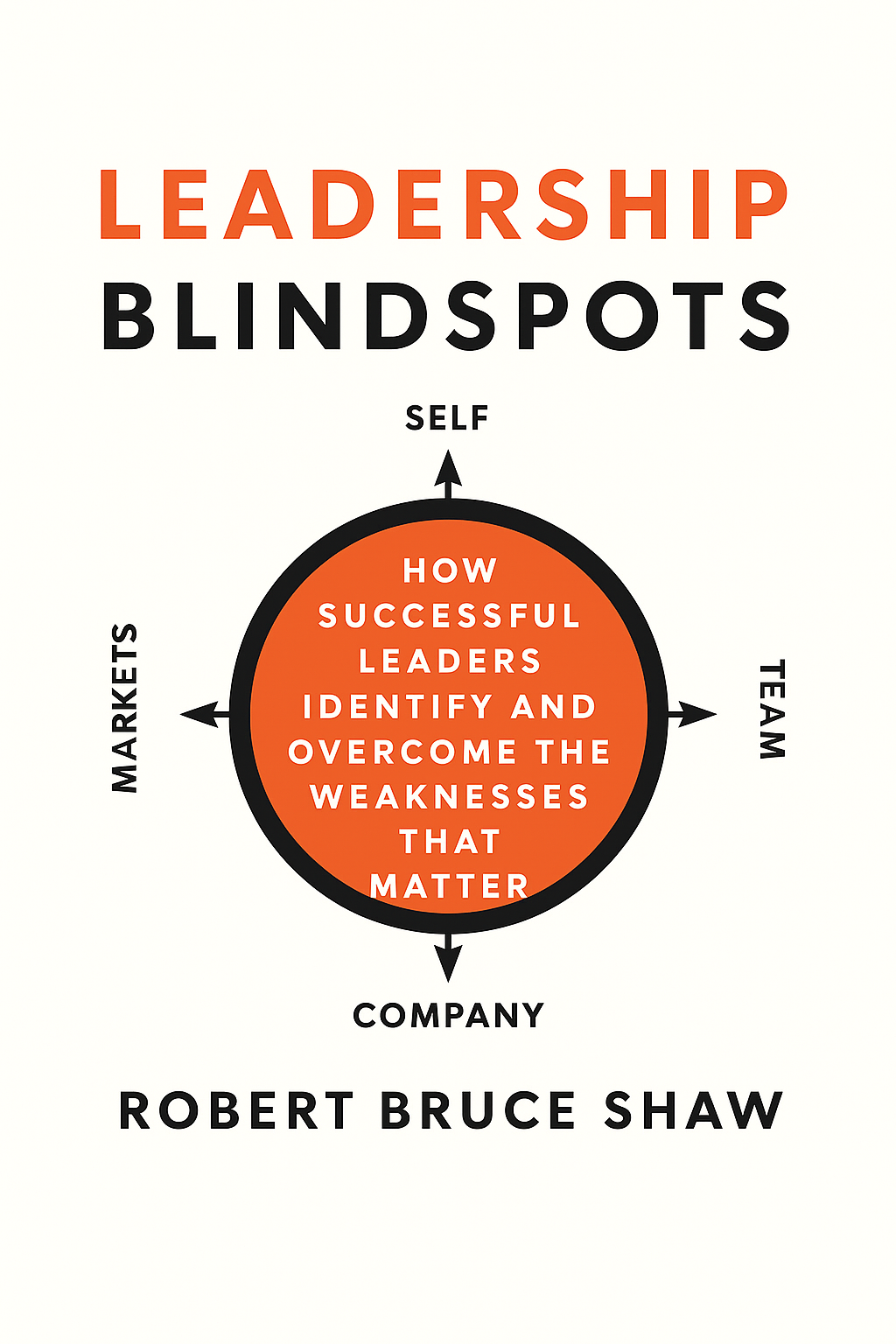
Leadership blindspots constitute a distinct category of cognitive limitation where leaders remain unaware of significant weaknesses or environmental threats that could harm their effectiveness or organizational performance. Unlike simple knowledge gaps that can be filled through education or experience, blindspots involve information that exists within reach but remains invisible due to psychological and structural barriers that systematically filter out disconfirming evidence. The architecture of blindspots operates across four interconnected domains that create comprehensive vulnerability patterns. Personal blindspots involve misperceptions about one's own impact, capabilities, and behavioral patterns. Team blindspots emerge from incomplete understanding of group dynamics, individual performance levels, and collective effectiveness measures. Organizational blindspots develop when leaders lose connection with operational realities, cultural shifts, and systemic dysfunction. Market blindspots manifest as failure to recognize competitive threats, customer evolution, and industry transformation signals. The destructive potential of blindspots lies not in their mere existence, which is inevitable for all leaders, but in their persistence and invisibility. Consider how successful retail executives dismissed e-commerce for years, not due to lack of intelligence, but because their mental models filtered out signals that contradicted established beliefs about consumer behavior and market dynamics. These blindspots create dangerous feedback loops where initial success reinforces the very cognitive patterns that eventually lead to strategic failure. The framework reveals that blindspots function paradoxically as both protective mechanisms and sources of vulnerability. They can shield leaders from paralyzing doubt and enable bold action in uncertain environments, while simultaneously exposing them to catastrophic risks when reality diverges significantly from perception. Understanding this duality allows leaders to harness the motivational benefits of selective confidence while implementing systematic safeguards against dangerous self-deception.
The Blindspot Matrix: A Framework for Self-Assessment
The blindspot matrix provides a systematic diagnostic tool that categorizes leadership awareness across four critical quadrants: known strengths, known weaknesses, unknown strengths, and blindspots themselves. This theoretical model moves beyond simple self-evaluation toward a nuanced understanding of awareness gaps that affect leadership effectiveness. The matrix challenges leaders to map their consciousness across these domains and develop targeted strategies for each category. Known strengths represent areas of proven competence where leaders can operate with justified confidence, leveraging established capabilities to drive results. Known weaknesses constitute recognized limitations that can be managed through strategic delegation, targeted development efforts, or conscious avoidance of situations that expose these vulnerabilities. The identification and honest acknowledgment of known weaknesses often represents a significant leadership strength in itself. Unknown strengths present a counterintuitive category where leaders possess capabilities they fail to recognize or fully utilize. These hidden assets often represent natural talents that leaders take for granted or undervalue due to their apparent effortlessness. The systematic identification and activation of unknown strengths can significantly expand leadership capacity without requiring extensive new skill development, representing one of the most efficient paths to enhanced effectiveness. Blindspots occupy the most dangerous quadrant, representing unrecognized weaknesses that create vulnerability precisely because they operate outside conscious awareness. The matrix distinguishes between degrees of blindness, from complete lack of awareness to faulty assessment of known issues to failure to act on recognized problems. This graduated understanding allows leaders to apply appropriate interventions based on the specific nature of their awareness gaps, whether they need fundamental consciousness-raising or simply better execution of acknowledged insights.
Five Strategic Systems for Surfacing Hidden Vulnerabilities
Effective blindspot management requires systematic approaches that compensate for the inherent limitations of individual perception and the information distortion that occurs within organizational hierarchies. The framework emphasizes five interconnected mechanisms that work synergistically to create multiple channels for surfacing hidden weaknesses and environmental threats before they become critical failures. Direct observation involves leaders actively engaging with frontline realities through customer interactions, employee conversations, and operational process witnessing. This approach counters the natural isolation that accompanies senior positions and the information filtering that occurs as data moves up hierarchical levels. Effective direct observation requires structured protocols that encourage honest feedback while minimizing power dynamics that typically inhibit candid communication about problems or concerns. Disconfirming data collection requires leaders to actively seek information that challenges their existing beliefs and assumptions about themselves, their teams, and their markets. This systematic approach to intellectual humility involves creating devil's advocate processes, tracking decision accuracy over time, and implementing rigorous assessment mechanisms that surface contrary evidence. The framework recognizes that confirmation bias represents one of the most persistent cognitive barriers to accurate perception. Peripheral vision development focuses attention on weak signals and subtle behavioral cues that often precede major problems or opportunities. Leaders learn to read the emotional and political climate of their organizations, recognizing early warning signs that something significant is shifting beneath the surface of apparent normalcy. This capability requires cultivating sensitivity to patterns and anomalies that might otherwise be dismissed as insignificant noise. Trusted advisor networks provide external perspectives that can identify blindspots invisible to internal systems. These advisors serve as cognitive extensions, offering viewpoints across different domains of leadership responsibility. The most effective advisor networks include individuals with diverse backgrounds, experiences, and relationship dynamics with the leader, creating multiple lenses through which hidden weaknesses can be detected and addressed.
Building Self-Aware Leadership for Sustainable Success
Self-aware leadership represents the culmination of blindspot management, where leaders develop the capacity to operate effectively while acknowledging the inherent limitations of their own perspective and judgment. This approach transcends simple self-knowledge to encompass systematic practices for maintaining cognitive flexibility and organizational responsiveness in the face of uncertainty and continuous change. The foundation of self-aware leadership rests on accepting the fundamental paradox that confidence and humility must coexist within the same individual. Leaders must project sufficient certainty to inspire action and provide direction while maintaining enough intellectual doubt to remain open to new information and alternative perspectives. This delicate balance requires sophisticated emotional regulation and the ability to distinguish between productive confidence that enables bold action and destructive overconfidence that blocks learning and adaptation. Self-aware leaders develop what can be understood as optimal margins of illusion, maintaining just enough positive bias to fuel ambitious goals while avoiding the dangerous extremes of either paralyzing self-doubt or delusional overconfidence. They create personal and organizational practices that regularly challenge their assumptions, test their beliefs against external reality, and adjust their strategies based on emerging evidence rather than defending predetermined positions. The practical implementation of self-aware leadership involves creating comprehensive feedback systems, establishing regular reality-testing mechanisms, and developing organizational cultures that support honest communication about problems and limitations. These leaders understand that their primary responsibility is not to be correct about everything, but to create systems and environments that can function effectively even when their individual judgment proves inadequate. They recognize that sustainable success depends not on eliminating blindspots entirely, but on building organizational resilience against their inevitable consequences through distributed decision-making and systematic error detection.
Summary
The essence of effective leadership lies not in achieving perfect self-knowledge, which remains impossible, but in building robust systems that can function despite the inevitable limitations of human perception and judgment. This framework offers leaders a pathway toward sustainable effectiveness by acknowledging cognitive constraints while providing practical tools for managing their consequences, ultimately suggesting that the most successful organizations will be those that build blindspot management into their fundamental operating systems rather than relying solely on individual leader wisdom.
Related Books
Download PDF & EPUB
To save this Black List summary for later, download the free PDF and EPUB. You can print it out, or read offline at your convenience.
By Robert Bruce Shaw
