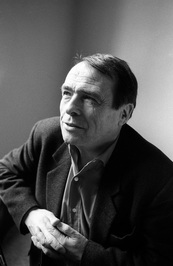
Pierre Bourdieu
Pierre Bourdieu, a towering figure in the realm of sociology, hailed from France and left an indelible mark on the academic world with his pioneering theories and investigative frameworks. Born in 1930, Bourdieu's intellectual journey was profoundly shaped by his education and the intellectual climate of post-war Europe. His work delved into the intricacies of power dynamics within society, drawing inspiration from philosophical giants such as Ludwig Wittgenstein, Maurice Merleau-Ponty, and Karl Marx. Bourdieu's profound engagement with the works of Blaise Pascal culminated in his reflective opus, *Pascalian Meditations*, underscoring his critical stance against the notion of the intellectual as a prophetic figure, a mantle he felt was epitomized by figures like Jean-Paul Sartre. Among Bourdieu's celebrated contributions to sociology, *Distinction: A Social Critique of the Judgment of Taste* stands as a cornerstone text, earning high praise for its incisive analysis of how aesthetic preferences are deeply intertwined with social hierarchies. This seminal work, peppered with empirical data from surveys, photographs, and interviews, challenges the conventional understanding of taste as a mere personal preference, revealing instead its roots in one's social position. Bourdieu's unique method of weaving together rigorous social theory with empirical investigation has cemented his reputation as a trailblazer in sociological thought. Bourdieu's literary style is characterized by its analytical rigor and an unparalleled ability to synthesize complex ideas into coherent frameworks. His exploration of concepts such as cultural, social, and symbolic capital, alongside his elucidation of habitus and field theory, has provided scholars with essential tools for examining the interplay between individual agency and structural forces. Through his extensive body of work, Bourdieu has not only enriched our understanding of social dynamics but has also challenged dominant Western philosophical traditions, advocating for a more nuanced and embodied understanding of human practice and perception.


by Paul J. Zak
by Rory Vaden
by Robert C. Solomon, Fernando Flores
by Brett Gardner
by Dennis S. Reina
by Julian Baggini
by Larry Downes, Omar Abbosh, Paul Nunes
by Jacqueline Woodson
by Kevin Oakes
by Lindsey Pollak, Kimberly B. Cummings, Kimberly Brown
