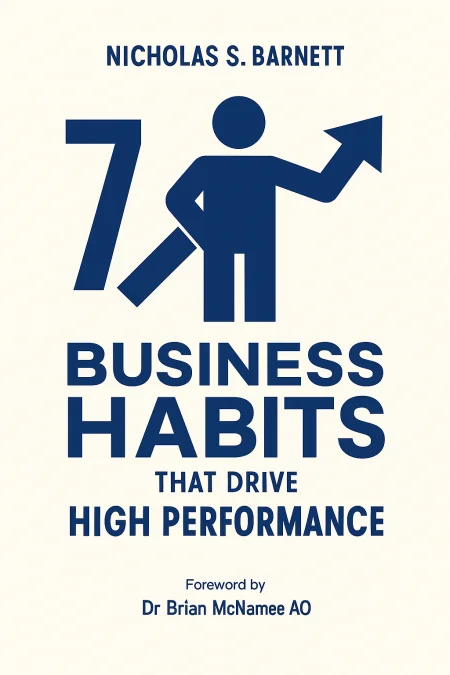
7 Business Habits That Drive High Performance
Organizational values and behaviors that drive success
Book Edition Details
Summary
In the fast-paced world of business, what truly sets the titans apart from the rest? This book uncovers the seven transformative habits that fuel the engine of success for high-performing organizations. Drawing from an extensive study of over 100,000 employees across diverse sectors, these insights reveal how interconnected habits can elevate performance and create a thriving workplace. By integrating these practices, your organization can not only boost its bottom line but also enhance employee satisfaction, customer loyalty, and innovative prowess. No matter the industry or size—public, private, or nonprofit—these principles are your blueprint for enduring excellence and resilience. Prepare to revolutionize your company’s potential and carve out a path to unparalleled achievement.
Introduction
Every leader dreams of creating an organization where employees are passionate about their work, customers remain loyal, and performance consistently exceeds expectations. Yet many organizations struggle with disengaged teams, high turnover, and stagnant growth despite having talented people and adequate resources. The difference between high-performing organizations and those that merely survive lies not in luck or market conditions, but in the habits they cultivate daily. Through extensive research involving over 100,000 employees across 200 organizations, a clear pattern emerges: the most successful organizations share seven fundamental habits that become so deeply embedded in their culture that they define how business gets done. These habits aren't quick fixes or temporary strategies, but enduring practices that create sustainable competitive advantage and transform ordinary workplaces into extraordinary engines of performance.
Live an Inspiring Vision That Energizes Your Team
An inspiring vision serves as the magnetic force that draws employees toward a compelling future, providing the essential "why" behind every action and decision. When employees understand and connect with their organization's deeper purpose, they find meaning in their daily work that transcends mere paycheck collection. This connection transforms routine tasks into contributions toward something greater. Consider the story of a global health organization that deliberately chose the phrase "reduce needless suffering" instead of "improve health" as their core purpose. This seemingly small change in wording created profound emotional resonance throughout the organization. Employees could visualize the faces of people whose pain would be alleviated through their work, whether they were researchers in laboratories, administrators processing claims, or customer service representatives helping patients navigate complex systems. The vision became personal and urgent rather than abstract and clinical. The transformation was remarkable as teams began referring to this vision in meetings, connecting their quarterly objectives to reducing suffering, and making decisions through the lens of their higher purpose. When budget cuts threatened certain programs, employees rallied around initiatives that most directly supported their vision, creating natural prioritization and focus. New hires were attracted to the organization specifically because of this compelling mission, while existing employees found renewed energy and commitment. To create your own inspiring vision, engage employees throughout the organization in meaningful dialogue about what future they want to create together. Use storytelling and vivid imagery rather than corporate jargon, ensuring the vision connects with both hearts and minds. Most importantly, reference this vision consistently in communications, link major decisions back to it, and celebrate achievements that advance the organization toward this inspiring future. When a vision becomes the foundation for everything else, it transforms from words on a wall into the driving force of organizational excellence.
Develop, Recognize and Care for Your People
High-performing organizations understand that their greatest asset walks out the door every evening and, hopefully, returns the next morning. These leaders approach people development with the intensity of an Olympic coach, believing deeply in human potential and dedicating themselves to unlocking it within every team member. They recognize that developing people isn't just about training programs, but about creating an environment where individuals can flourish and reach heights they never thought possible. The story of Benjamin Zander, conductor of the Boston Philharmonic Orchestra, exemplifies this commitment to human potential. Zander set as his goal "the maximum capacity that people have" and settled for no less, becoming what he called "the relentless architect of the possibility of human beings." Under his leadership, musicians didn't just play their parts; they discovered capabilities within themselves that transformed both their performance and their experience of music itself. Zander's approach went beyond technical instruction to encompass genuine care for each musician's growth as both an artist and person. This philosophy created a cascade of excellence as musicians began supporting each other's development, taking risks in their playing, and contributing innovations that elevated the entire orchestra's performance. The recognition they received wasn't just for hitting the right notes, but for stretching beyond their comfort zones and supporting their colleagues' growth. The care demonstrated through patient mentoring and individual attention created loyalty and engagement that extended far beyond contractual obligations. To implement this approach, start by genuinely believing in the potential within each team member, even when they don't see it themselves. Create development opportunities through challenging assignments, mentoring relationships, and cross-functional experiences that stretch people's capabilities. Recognize not just achievements but effort, growth, and character development. Show authentic care by taking interest in people's whole lives, understanding their aspirations, and supporting them through challenges. Remember that developing people is a long-term investment that pays dividends through increased engagement, retention, and performance across your entire organization.
Build Customer-Centric Systems and Processes
Organizations achieve sustainable high performance when their systems and processes work seamlessly together to serve both employees and customers effectively. Like a world-class performance where every element harmonizes perfectly, truly effective systems enable people to focus on creating value rather than fighting against frustrating obstacles. When systems align with customer needs and support employee success, they become powerful enablers of organizational excellence. A large Australian retailer discovered this truth when they recognized that their diversified business units were being held back by heavy corporate systems designed for their core grocery operations. Dick Smith electronics, operating under the retailer's centralized approach, struggled to develop the agile culture necessary for success in the competitive electronics market. The corporate systems, while perfect for grocery operations, created friction and bureaucracy that prevented the electronics division from responding quickly to market opportunities and customer needs. When Dick Smith was sold to private equity buyers, the transformation was remarkable. Freed from the constraints of systems designed for a different business model, the electronics retailer rapidly developed customer-focused processes and agile decision-making capabilities. Within twelve months, the company's value increased five-fold as employees could finally focus on serving customers effectively rather than navigating cumbersome internal systems. The new owners invested heavily in systems that supported the electronics business model, creating processes that made it easy for customers to do business with them. To build truly customer-centric systems, start by mapping your processes from the customer's perspective, identifying every friction point and unnecessary step. Involve frontline employees in system design since they understand daily operational realities and customer pain points. Ensure your technology investments align with your business strategy rather than simply upgrading existing systems. Most importantly, remember that installing new systems is only the first step; changing workflows, training people, and embedding new habits takes time and sustained commitment. When systems truly serve both employees and customers, they become the foundation for sustainable high performance.
Transform Habits Into Sustainable High Performance
The journey from good intentions to sustainable high performance requires transforming the seven business habits from occasional practices into the organization's natural way of operating. Like building physical fitness, developing organizational habits demands consistency, persistence, and the willingness to push through resistance until new behaviors become automatic. High-performing organizations understand that these habits are interconnected and mutually reinforcing, creating a powerful system that drives excellence across every aspect of operation. Peter Acheson, CEO of Peoplebank Australia Limited, observed this interconnection firsthand as he noted that their highest performing business units consistently demonstrated all seven habits simultaneously. These units had the highest employee engagement scores, customer satisfaction ratings, and contractor satisfaction levels while also delivering the best financial results and maintaining the lowest staff turnover. The correlation wasn't coincidental but reflected the cumulative power of embedded habits working together to create excellence. The transformation process required treating habit development like any other major change initiative, with clear measurements, dedicated resources, and unwavering leadership commitment. Business units that tried to implement only some habits or treated them as temporary programs failed to achieve sustainable results. However, those that embraced all seven habits with genuine commitment and persistence discovered that the compound effect created momentum that made further improvement easier and more natural. To successfully transform these habits into your organizational DNA, begin by measuring your current state and setting specific improvement targets for each habit. Treat this as a comprehensive change program with dedicated resources, clear accountability, and regular progress reviews. Most importantly, demonstrate unwavering commitment through both good times and challenges, as employees will watch for any sign that these habits are merely the latest management fad rather than fundamental commitments. When these seven habits become so deeply ingrained that they define how your organization naturally operates, you will have created the foundation for sustainable high performance that can weather any storm and capitalize on every opportunity.
Summary
The path to sustainable high performance isn't found in complex strategies or expensive technologies, but in the disciplined cultivation of seven fundamental business habits that transform how organizations operate at their core. As the research clearly demonstrates, these habits are interdependent and essential, requiring complete commitment rather than selective implementation. The organizations that embrace this truth and persistently embed these habits into their cultural DNA discover that excellence becomes not just an aspiration but their natural way of being. Frederick Nietzsche's insight that "he who has a why to live can bear almost any how" captures the essence of this transformation, where inspiring vision provides the foundation for everything else. Begin today by honestly assessing where your organization stands on each of these seven habits, then commit to the patient, persistent work of making them your organization's defining characteristics.
Related Books
Download PDF & EPUB
To save this Black List summary for later, download the free PDF and EPUB. You can print it out, or read offline at your convenience.
By Nicholas S. Barnett
