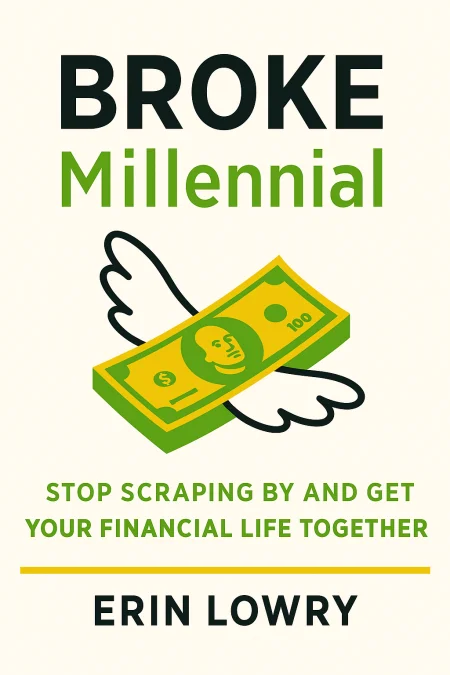
Broke Millennial
Stop Scraping By and Get Your Financial Life Together
Book Edition Details
Summary
Money woes got you tangled up in knots? Break free from the paycheck-to-paycheck grind with Erin Lowry's "Broke Millennial," your ultimate guide to turning financial chaos into confidence. This isn't your typical snooze-fest of a finance book—it's a lively, down-to-earth roadmap crafted for the digitally savvy twenty- or thirty-something who's ready to transform their money mindset. With wit and wisdom, Lowry navigates the quirks and quagmires of modern money matters: from decoding your cash-courting habits to tackling student loans without the cold sweats, and even surviving those awkward bill-splitting dinners. Packed with relatable anecdotes and savvy tips, this book equips you with the knowledge and courage to face finances head-on. So, ditch the fear and discover how to become the financial boss of your own life. #GYFLT
Introduction
Your relationship with money doesn't have to be a constant source of anxiety and overwhelm. Right now, you might be checking your bank balance with one eye closed, avoiding credit card statements, or feeling paralyzed by financial decisions that seem too complex to navigate. Perhaps you're living paycheck to paycheck despite having a decent income, or watching your student loan balance grow larger each month while feeling powerless to change your situation. These struggles are real, but they don't define your future. Money is simply a tool that gives you choices, and when you understand how to use this tool effectively, you transform from someone controlled by financial circumstances into someone who confidently makes decisions that align with your values and dreams. This journey from financial anxiety to empowerment doesn't require perfection or a finance degree. It requires practical knowledge, proven strategies, and the courage to start exactly where you are today. Every small action you take toward understanding and managing your money better is an investment in your freedom, your peace of mind, and your ability to create the life you truly want to live.
Break Free from Financial Anxiety and Build Smart Foundations
Financial anxiety stems from feeling out of control, but the foundation of financial wellness lies in understanding that your relationship with money is deeply personal and shaped by experiences that began long before you received your first paycheck. These early patterns influence every financial choice you make, from how you budget to whether you negotiate your salary. Consider Emily's story, a college graduate who found herself trapped in a cycle of credit card debt that began innocently with textbook purchases. Despite working part-time at McDonald's during school, Emily continued using credit cards as a financial safety net for everything from moving expenses to groceries. By age 27, she had accumulated over $4,000 in credit card debt across three cards with interest rates ranging from 17 to 24 percent. What seemed like small, manageable purchases had snowballed into a significant financial burden costing her hundreds of dollars in interest each month. Emily's breakthrough came when she received a raise and committed to putting every extra penny toward debt repayment, successfully reducing her balance to just over $1,000 by December. However, her exclusive focus on debt elimination left her completely unprepared when someone hit her parked car two days before Christmas. The $4,000 in repairs wiped out an entire year of progress, forcing her back onto credit cards to cover her insurance deductible. The key to building strong financial foundations lies in creating multiple pillars of financial health simultaneously. Start by calculating your net worth and tracking your spending for at least two weeks to identify patterns and opportunities. Establish both debt repayment and emergency savings goals, recognizing that financial wellness isn't about perfection but about building systems that can weather life's inevitable surprises.
Crush Your Debt and Master Credit Like a Pro
Debt elimination requires both strategic thinking and emotional resilience, but understanding the difference between mathematical optimization and psychological motivation can accelerate your journey to financial freedom. The most successful debt eliminators choose strategies that match their personality and stick with them consistently. Andrew Josuweit's journey illustrates the power of systematic debt elimination combined with strategic thinking. He graduated with $74,000 in student loan debt spread across 16 different loans, but unable to find stable employment immediately after graduation, he put his loans into deferment and forbearance. This decision caused his principal balance to balloon to $107,000 due to accumulated interest, adding an additional $33,000 to his original debt. Rather than panic about the increased balance, Josuweit treated the additional $33,000 as his version of graduate school tuition and focused on building his business, Student Loan Hero, while systematically attacking his debt. He used a hybrid approach combining both the Debt Avalanche method, which targets highest interest rates first, and the Debt Snowball method, which focuses on smallest balances to create psychological wins that build momentum. Your debt elimination strategy should include negotiating with creditors, exploring balance transfer options for high-interest credit card debt, and potentially consolidating multiple debts into a single, lower-interest payment. Always pay more than the minimum required, even if it's just an additional $10 per month, as this can save thousands in interest and shave years off your repayment timeline. Consider increasing your income through side hustles while simultaneously cutting expenses to maximize the amount you can direct toward debt elimination.
Save Smart and Invest for Your Future Success
Building wealth requires moving beyond basic saving into strategic investing, but you don't need extensive financial knowledge or large amounts of money to start building a portfolio that will grow over time. The power of compound interest makes time your greatest ally, which means starting early with small amounts is more valuable than waiting until you can invest large sums. Kristin Wong discovered the importance of automated investing when she started her first job with an employer-sponsored 401(k). Despite earning barely more than $10 per hour, her coworkers convinced her to set up automatic contributions from her paycheck. Though hesitant to reduce her already modest take-home pay, she found that she never missed the money that was automatically directed to her retirement account. After just a few years of consistent contributions, Wong had accumulated nearly $10,000, which provided tremendous encouragement and confidence in her ability to build wealth over time. Her experience illustrates the magic of paying yourself first through automated systems. When money is directed to savings and investments before you have a chance to spend it, you naturally adapt to living on the remainder, removing the temptation to skip contributions when other expenses arise. Start by maximizing any employer match in your retirement plan, as this represents an immediate 100% return on your investment. Next, build an emergency fund of three to six months of expenses in a high-yield savings account. Once you have this foundation, begin investing in low-cost index funds that provide broad market exposure without requiring you to pick individual stocks. Consider opening a Roth IRA for tax-free growth, and gradually increase your investment contributions as your income grows.
Navigate Money Relationships and Level Up Your Career
Money conversations in relationships require the same honesty and vulnerability as other intimate discussions, yet many couples avoid financial topics until crisis forces the conversation. Proactive financial communication strengthens relationships and aligns partners toward shared goals, transforming potential sources of conflict into opportunities for teamwork. Imagine a couple where one person graduated debt-free while the other carries $40,000 in student loans. Without open discussion, the debt-free partner might feel resentful about lifestyle limitations, while the indebted partner feels ashamed and defensive. When they finally have honest conversations sharing specific numbers and repayment plans, they can work together toward solutions rather than harboring individual anxieties about their financial future. The transformation happens when financial transparency becomes a source of collaboration rather than judgment. Couples who discuss money regularly report less stress and more confidence in their financial decisions. They can plan for major purchases, navigate income changes, and support each other through financial challenges while building toward shared dreams and goals. Begin financial conversations with your partner by discussing values and goals rather than specific numbers. Ask questions like "What does financial security mean to you?" and share your own financial history gradually, including both successes and mistakes. When you're ready for full disclosure, exchange credit reports, debt balances, and account information. Create a plan for managing money together and schedule regular money meetings to stay aligned and prevent small issues from becoming major conflicts.
Summary
Financial empowerment isn't about achieving perfection or unlimited wealth, but about understanding how money works and making intentional choices that support your values and goals. As one expert reminds us, "Money gives you choices," and when you master basic financial skills, you're creating the foundation for a life where you can take calculated risks, pursue meaningful opportunities, and weather unexpected challenges without panic or desperation. Every small action you take builds momentum toward greater financial confidence and security, transforming you from someone who feels controlled by circumstances into someone who confidently navigates financial decisions. Your journey begins with choosing one specific action from this guide and taking it within the next 24 hours, whether that's checking your credit score, setting up an automatic transfer to savings, or having an honest money conversation with your partner. Remember that every financial expert started exactly where you are now, and that first step you take today moves you closer to the financial freedom and peace of mind you deserve.
Related Books
Download PDF & EPUB
To save this Black List summary for later, download the free PDF and EPUB. You can print it out, or read offline at your convenience.
By Erin Lowry
