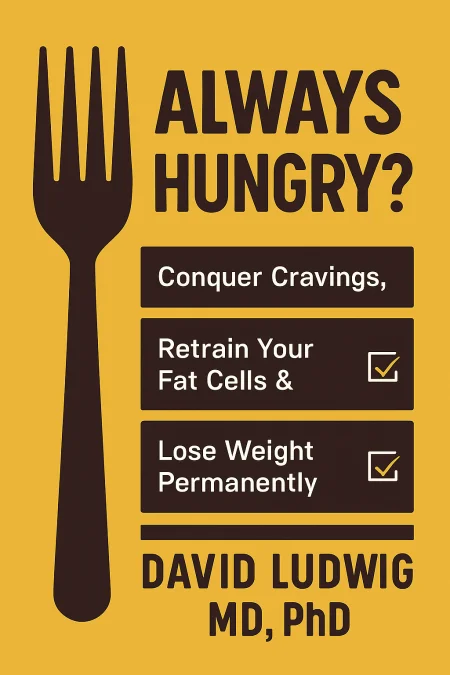
Always Hungry?
Conquer Cravings, Retrain Your Fat Cells And Lose Weight Permanently
Book Edition Details
Summary
Tired of diets that leave you battling hunger and guilt? "Always Hungry?" offers a groundbreaking perspective that flips conventional wisdom on its head, empowering you to harness the power of calories rather than fear them. Dr. Ludwig's revolutionary plan dismantles the myth that all calories are created equal and introduces a three-phase journey to reclaim your relationship with food. This isn't a fleeting diet; it's a transformative lifestyle shift that liberates you from the tyranny of low-fat, flavorless meals. Dive into a world where you can savor real, delicious food and still train your body to burn fat efficiently. Get ready to conquer cravings and unlock a vibrant, healthier you.
Introduction
Have you ever wondered why you can follow a diet perfectly for weeks, only to find yourself overwhelmed by cravings that seem impossible to resist? Why does your body seem to fight against every attempt at weight loss, leaving you feeling hungrier and more obsessed with food than ever before? The answer isn't found in your lack of willpower or discipline, but in a fundamental misunderstanding of how your body actually regulates weight and hunger. What if everything you've been told about calories and portion control has been leading you down the wrong path? What if the key to permanent weight loss isn't about eating less, but about eating in a way that works with your biology rather than against it? This revolutionary approach reveals how to escape the cycle of constant hunger and food obsession by addressing the root cause at the cellular level, transforming your fat cells from energy hoarders into willing partners in your weight loss journey.
Quality Over Calories: Transform Your Metabolic Programming
The foundation of lasting weight loss lies not in counting calories or restricting portions, but in understanding how different foods fundamentally alter your body's hormonal environment and metabolic programming. When you consume processed carbohydrates and refined foods, you trigger a cascade of insulin responses that essentially lock your fat cells into storage mode, creating a biological state where your body hoards calories while simultaneously demanding more food. Lisa, a 52-year-old nurse practitioner, had spent years meticulously tracking every calorie and choosing low-fat options, yet found herself constantly battling afternoon energy crashes and irresistible cravings for sugary snacks. Despite her medical knowledge and disciplined approach, her weight remained stubbornly high, and she often felt like her body was working against her at every turn. Her breakthrough came when she shifted her focus from calorie counting to food quality, replacing her fat-free yogurt and granola breakfast with full-fat Greek yogurt, nuts, and berries. Within days of this simple change, Lisa noticed her afternoon energy crashes had disappeared, and she found herself naturally satisfied between meals without the constant mental preoccupation with food that had plagued her for years. When she replaced her low-fat turkey sandwich with a hearty salad featuring avocado, olive oil dressing, and grilled chicken, the transformation became even more pronounced. Her body finally felt nourished rather than deprived, and the relentless hunger that had defined her relationship with food began to fade. To implement this transformation, start by identifying and eliminating the processed carbohydrates that trigger insulin spikes throughout your day. Replace refined grains, sugary snacks, and low-fat processed foods with whole, natural alternatives rich in healthy fats and high-quality proteins. Choose foods that exist in nature rather than those manufactured in factories, focusing on olive oil over margarine, nuts over crackers, and full-fat dairy over processed alternatives. Remember that this approach isn't about restriction but about providing your body with the nutrients it truly needs to function optimally. When you nourish yourself with quality foods that stabilize your blood sugar and hormones, hunger naturally diminishes and cravings fade, creating a sustainable path to weight loss that feels effortless rather than forced.
The Three-Phase Solution: Conquer, Retrain, and Maintain
Sustainable weight loss requires a systematic approach that allows your body to gradually adapt to new metabolic patterns while ensuring these changes become permanent fixtures in your life. This three-phase methodology recognizes that different stages of transformation require different nutritional strategies, moving from initial metabolic reset through gradual reintroduction to long-term lifestyle integration. Matthew, a 36-year-old professional, was initially skeptical about Phase 1's requirement to increase his fat intake to approximately 50% of daily calories while eliminating all processed carbohydrates. After years of low-fat dieting, the idea of consuming generous amounts of nuts, avocados, and olive oil seemed counterintuitive and potentially dangerous. His concerns quickly dissolved when he experienced something unprecedented in his dieting history: the complete absence of food obsession and constant hunger that had previously dominated his thoughts. Within the first week, Matthew discovered he would sometimes forget to eat lunch because he simply wasn't hungry, a stark contrast to his previous experience of spending much of his workday planning his next meal or snack. When he did eat, he felt satisfied for hours afterward, and by the end of the two-week Phase 1, he had lost 8 pounds without experiencing the hunger and irritability that had sabotaged every previous diet attempt. Phase 2 introduced carefully selected whole grains and natural starches while maintaining his metabolic improvements, and Phase 3 allowed him to personalize his approach based on his body's unique responses. To succeed with this systematic approach, commit fully to each phase without attempting to modify or accelerate the process based on impatience or past dieting experiences. Trust that your body needs adequate time to reset its metabolic programming and develop new patterns of hormone regulation. Track your hunger levels, energy fluctuations, and mood changes rather than obsessing over daily weight variations, as these indicators provide more meaningful feedback about your progress. View this journey as an educational process about your body's unique needs and responses rather than a temporary restriction you must endure. Each phase builds upon the previous one, creating lasting metabolic flexibility that allows you to maintain your results without constant vigilance or deprivation.
Reprogram Fat Cells: Work With Your Biology
The revolutionary breakthrough in permanent weight loss centers on understanding that fat cells are not passive storage containers but active, hormonally-responsive organs that can be influenced to release rather than hoard energy. When you provide the right nutritional environment, you can essentially reprogram these cells to work in your favor, creating a metabolic state where weight loss occurs naturally without the constant battle against hunger and cravings. Nancy, a 64-year-old woman from Minnesota, had experienced years of yo-yo dieting that left her feeling metabolically damaged and defeated. Her fat cells had been receiving constant signals from elevated insulin levels to store incoming calories and resist releasing stored energy, creating a vicious cycle where her body perceived starvation despite abundant stored fat reserves. This metabolic confusion led to increased hunger, decreased energy expenditure, and the frustrating experience of weight regain despite her best efforts. Nancy's transformation began when she stopped fighting her fat cells and started working with them by eliminating foods that kept her insulin levels chronically elevated. By replacing these insulin-triggering foods with nutrient-dense alternatives, she noticed changes within days: her energy levels stabilized, her mood improved, and for the first time in years, she could go hours between meals without thinking about food. Over sixteen weeks, Nancy lost 14.5 pounds and 7 inches from her waist, but more importantly, she regained a sense of control over her eating that she thought was permanently lost. The key to successful fat cell reprogramming lies in creating sustained periods of lower insulin levels throughout your day by eating meals that combine high-quality proteins, healthy fats, and low-glycemic carbohydrates while avoiding processed foods that cause insulin spikes. Focus on whole foods like eggs, fish, nuts, vegetables, and fruits while eliminating bread, pasta, sugary snacks, and processed convenience foods that disrupt your hormonal balance. Support this metabolic reprogramming with lifestyle factors that enhance insulin sensitivity, including prioritizing quality sleep, incorporating gentle movement after meals, and managing stress levels. Be patient with this cellular transformation process, as meaningful changes take time but create lasting results that make weight maintenance feel effortless rather than forced.
Sustainable Success: End the Hunger Cycle Forever
The hallmark of truly effective weight loss is the absence of constant hunger and deprivation, indicating that your body's natural regulatory systems are functioning optimally rather than being overridden by willpower and restriction. When weight loss occurs without relentless hunger, it signals that your metabolism is working efficiently and your approach is genuinely sustainable for long-term success. Donna, a 51-year-old woman from Washington, discovered this counterintuitive truth when she began eating more calories than she had consumed on previous diets yet lost 22 pounds and 5 inches from her waist. Her success came from understanding that her body had been trapped in chronic starvation mode despite her excess weight, as years of low-calorie dieting had taught her fat cells to hoard every available calorie while her metabolism slowed dramatically to conserve energy. When Donna began eating satisfying meals rich in healthy fats and proteins, her metabolism gradually returned to normal function, and she found herself naturally eating less without conscious effort or restriction simply because her body finally felt nourished and secure. Traditional calorie-restricted approaches had triggered her body's starvation response, leading to increased hunger hormones, decreased metabolic rate, and intense food cravings that made long-term success virtually impossible. To achieve hunger-free weight loss, focus on eating until you feel genuinely satisfied at each meal rather than stopping at arbitrary calorie limits or predetermined portion sizes. Choose foods that provide sustained energy and natural satiety, such as eggs with vegetables cooked in olive oil, salads with nuts and full-fat dressing, or fish with roasted vegetables that nourish your body at the cellular level. Create a supportive environment by removing processed foods that trigger cravings and keeping nourishing options readily available for when hunger naturally arises. Plan your meals in advance to avoid making food decisions when you're hungry, stressed, or emotionally vulnerable, and most importantly, trust the process while allowing your body adequate time to heal from years of metabolic damage caused by restrictive dieting approaches.
Summary
The path to permanent weight loss lies not in battling your body through restriction and deprivation, but in working harmoniously with your natural metabolic processes to create lasting transformation from within. As this approach demonstrates, "when we fill up on luscious, satisfying foods, there's little room left for the other stuff." The revolutionary insight is that your fat cells can be reprogrammed to release rather than store calories when you provide your body with the right nutritional environment and supportive lifestyle practices that honor your biological needs. Your journey toward effortless weight maintenance begins with a single meal and a fundamental shift in perspective. Today, choose one meal to focus on food quality rather than calorie counting, replacing processed carbohydrates with healthy fats, adding high-quality protein, and including plenty of non-starchy vegetables that truly nourish your body. Notice how this meal affects your hunger, energy, and mood over the following hours, and use this awareness to guide your next food choice with confidence and self-compassion.
Related Books
Download PDF & EPUB
To save this Black List summary for later, download the free PDF and EPUB. You can print it out, or read offline at your convenience.
By David Ludwig
