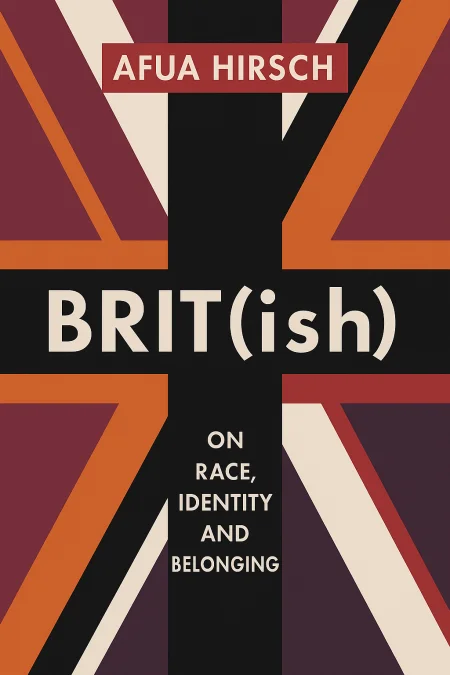
Brit(ish)
On Race, Identity and Belonging
Book Edition Details
Summary
Afua Hirsch is British—an identity woven through her ancestry, upbringing, and relationships. Yet, the hue of her skin turns her sense of belonging into a battleground. In "Brit(ish)," Hirsch crafts a riveting tapestry of personal memoir and sharp social commentary, confronting the chasm between Britain's self-image and its historical realities. As she navigates the tensions of race, national identity, and immigration, Hirsch exposes a society in denial, clinging to the glory of abolition while shadowed by the specters of slavery and empire. This is not just a narrative of personal discovery but a clarion call for a nation to awaken to its past and redefine its future. Here lies an urgent dialogue for a Britain that must reconcile with its truths to truly embrace fairness and belonging for all.
Introduction
In the privileged enclaves of Wimbledon, where tennis courts gleam white and conversations flow in measured tones, a young girl with coffee-colored skin and questioning eyes learned her first lessons about belonging. Afua Hirsch, born to a Ghanaian mother and Jewish father, would grow up straddling worlds that seemed perpetually at odds—navigating the corridors of elite British institutions while carrying the weight of ancestral memories from both Africa and Europe. Her story unfolds against the backdrop of modern Britain's ongoing struggle with its multicultural identity, where the promise of diversity often collides with the reality of exclusion. Through Hirsch's eyes, we witness the complex choreography of race, class, and identity in contemporary Britain. Her journey from the manicured suburbs of south London to the red earth of Ghana, from Oxford's dreaming spires to the newsrooms of national media, reveals the intricate ways that heritage shapes destiny. In her experiences, we discover not just one woman's quest for belonging, but a mirror reflecting Britain's own unresolved relationship with its imperial past and multicultural present. Her story illuminates three profound truths: that identity is never as simple as it appears on the surface, that the search for home can lead us to unexpected places, and that understanding where we come from is essential to knowing where we belong.
Between Worlds: Growing Up Mixed-Race in Elite Britain
The manicured lawns and tennis courts of Wimbledon provided an unlikely backdrop for a young girl's awakening to the complexities of racial identity. Afua Hirsch's childhood unfolded in this bastion of British respectability, where her mixed heritage made her a visible anomaly among the predominantly white, upper-middle-class families who called this corner of south London home. The daughter of a Ghanaian academic mother and Jewish father, she found herself constantly navigating questions about where she truly belonged—questions that would follow her throughout her formative years. At her private school, Hirsch encountered the subtle but persistent reminders of her otherness. Teachers and classmates alike seemed unable to reconcile her academic achievements with their preconceptions about black students. She was alternately exoticized and marginalized, praised for being "articulate" in ways that suggested surprise, or subjected to casual comments about her appearance that revealed deep-seated assumptions about beauty and belonging. These experiences planted the seeds of a lifelong struggle with identity, as she grappled with feeling simultaneously too black for some spaces and not black enough for others. The teenage years brought particular challenges as Hirsch began to actively seek out her black identity, working at the Voice newspaper and immersing herself in African and Caribbean culture. Yet even in these spaces, her privileged background and mixed heritage sometimes made her feel like an outsider. She found herself caught between worlds—too posh for some black spaces, too black for white ones, and always carrying the burden of representation that comes with being one of the few. These early experiences in Wimbledon shaped Hirsch's understanding of how identity is constructed and contested in modern Britain. They revealed the ways that belonging is not simply about birthplace or citizenship, but about the daily negotiations of acceptance and recognition. Her childhood taught her that identity is not fixed but fluid, constantly shaped by the expectations and prejudices of others, and that the search for authentic selfhood often requires rejecting the narrow categories that society attempts to impose.
Searching for Home: From Oxford to Ghana and Back
Oxford University represented both the pinnacle of British academic achievement and another space where Hirsch felt profoundly out of place. Surrounded by the privileged sons and daughters of Britain's elite, she experienced the familiar sensation of being simultaneously visible and invisible—noticed for her difference yet overlooked for her humanity. The ancient stones of her college seemed to whisper of centuries of exclusion, reminding her daily that spaces like these were not built with people like her in mind. The isolation of Oxford drove Hirsch to seek belonging elsewhere, leading her on a transformative journey to West Africa. First in Senegal, then later in Ghana, she attempted to reconnect with what she imagined would be her authentic cultural home. Working for the Open Society Foundation in Dakar, she threw herself into African life with the fervor of someone trying to fill a void that had haunted her since childhood. She learned local languages, formed friendships with young Senegalese intellectuals, and embraced the rhythms of West African urban life. Yet Africa, too, proved more complex than her romantic imaginings. In Senegal, she discovered that her British accent, education, and relative wealth marked her as irreducibly foreign. Local colleagues saw her as another privileged expatriate, while the poverty and inequality she witnessed challenged her idealized notions of African solidarity. A violent attack on a Dakar beach shattered her sense of safety and belonging, forcing her to confront the reality that skin color alone could not bridge the vast differences in experience and opportunity. Ghana offered a different kind of homecoming, particularly given her family's deep roots in the country. Living there with her young daughter, she attempted to build the bridge between past and present that had eluded her family for generations. Yet even in her ancestral homeland, Hirsch found herself navigating the complex dynamics of the diaspora returnee—welcomed but not quite accepted, familiar yet forever foreign. Her journey through Africa taught her that belonging cannot be found in geography alone, but must be constructed through the patient work of understanding oneself and one's place in the world.
Breaking Barriers: Law, Journalism and Racial Dynamics
Returning to Britain with a deeper understanding of her own complexity, Hirsch entered the overwhelmingly white worlds of law and journalism. As one of the few black barristers in London's ancient Inns of Court, she navigated spaces steeped in centuries of tradition and exclusion. The horsehair wigs and formal gowns of the legal profession provided both armor and disguise, allowing her to claim authority while highlighting the absurdity of a system that seemed designed to exclude people who looked like her. Her transition into journalism revealed new dimensions of Britain's racial dynamics. Working for major news organizations, she encountered the subtle but persistent ways that diversity remained more aspiration than reality in British media. She observed how stories about race were often relegated to specialist correspondents, while mainstream news remained the province of white journalists. The burden of representation weighed heavily—every article she wrote, every television appearance she made, carried the implicit responsibility of speaking for an entire community. Through her reporting, Hirsch documented the everyday realities of racism in modern Britain, from the disproportionate use of stop-and-search powers against young black men to the microaggressions faced by professionals in corporate environments. She witnessed how the language of diversity and inclusion often masked deeper structural inequalities, and how the celebration of individual success stories could obscure systemic failures. Her work revealed the ways that racism had evolved from overt hostility to more subtle forms of exclusion and othering. The Brexit referendum and its aftermath provided a stark illustration of Britain's unresolved relationship with diversity and belonging. Hirsch observed how the campaign unleashed forces of nationalism and xenophobia that had long simmered beneath the surface of polite British society. The vote revealed the extent to which many white Britons felt that their country had been transformed beyond recognition, and their willingness to embrace a vision of Britain that explicitly excluded people like her from full membership in the national community.
Redefining Britishness: Identity, Heritage and New Narratives
Hirsch's journey ultimately led her to a more nuanced understanding of what it means to be black and British in the twenty-first century. She recognized that the old categories of identity—British versus African, black versus mixed-race, immigrant versus native—were inadequate to capture the complexity of contemporary experience. Instead, she embraced a more fluid understanding of identity that acknowledged multiple belongings and rejected the demand to choose sides in false binaries. Her experiences raising a daughter in London provided new insights into how identity is transmitted across generations. Watching her child navigate questions of heritage and belonging, Hirsch understood that each generation must forge its own relationship with identity, building on but not bound by the struggles of their parents. She saw how young black Britons were creating new forms of cultural expression and political engagement that transcended traditional boundaries. The emergence of movements like Black Lives Matter in Britain demonstrated the ways that a new generation was refusing to accept the limitations that previous generations had endured. These young activists were not seeking permission to belong but demanding recognition of their inherent right to full citizenship. They were redefining what it meant to be British by insisting that Britishness itself must expand to accommodate their experiences and aspirations. Through her work and personal journey, Hirsch contributed to this redefinition by refusing to accept the narrow confines of traditional identity categories. She demonstrated that being black and British was not a contradiction to be resolved but a complexity to be embraced. Her story showed that belonging is not something granted by others but something claimed through the courageous act of living authentically in the face of exclusion and misunderstanding. The shadows of empire stretch long across contemporary Britain, shaping attitudes and assumptions in ways both subtle and profound, yet her generation was writing new chapters in the ongoing story of what it means to call Britain home.
Summary
Afua Hirsch's remarkable journey reveals that true belonging is not found in the approval of others but in the courage to embrace one's full complexity and refuse the limitations that society attempts to impose. Her story demonstrates that identity is not a problem to be solved but a rich tapestry to be woven from the threads of multiple heritages, experiences, and aspirations. Through her navigation of Britain's racial landscape, she shows us that the path to authentic selfhood often requires rejecting false choices and embracing the contradictions that make us human. From her experiences, we can learn the importance of questioning the categories that society uses to define us and the value of seeking understanding across difference. Her journey suggests that real progress on issues of race and belonging requires not just individual resilience but collective commitment to creating spaces where complexity is celebrated rather than feared. For anyone struggling with questions of identity and belonging, particularly those from mixed heritage backgrounds or immigrant communities, Hirsch's story offers the profound insight that home is not a place we find but a space we create through the patient work of understanding ourselves and demanding recognition of our full humanity. Her work will resonate especially with readers interested in contemporary discussions of race, identity politics, and the ongoing evolution of multicultural societies in an increasingly connected world.
Related Books
Download PDF & EPUB
To save this Black List summary for later, download the free PDF and EPUB. You can print it out, or read offline at your convenience.
By Afua Hirsch
