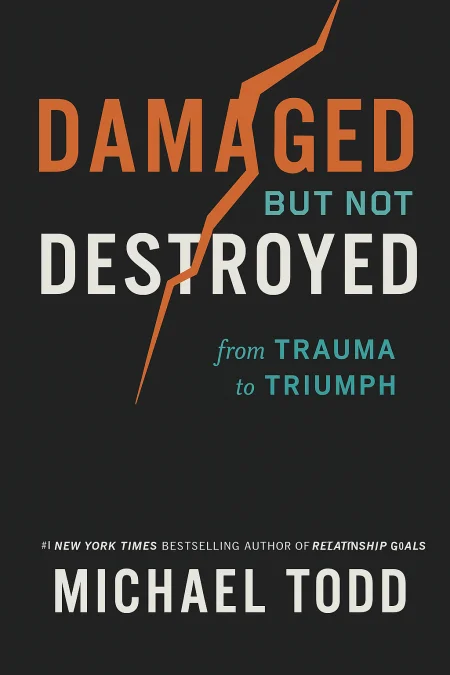
Damaged but Not Destroyed
From Trauma to Triumph
Book Edition Details
Summary
In the realm of life's chaos and imperfection, "Damaged but Not Destroyed" emerges as a beacon of hope and redemption. Michael Todd, acclaimed author and pastor, lays bare his own scars from past mistakes, generational traumas, and personal battles. Through a blend of heart-stirring narratives and biblical insights, he invites readers to embrace a life of authenticity and transformation. This book is not just about survival—it's about redefining your narrative and uncovering the indestructible worth woven into your very being. For those feeling weighed down by past failures or current struggles, Todd's words offer a lifeline, urging you to rise, heal, and step boldly into the future that awaits. Your worth is unshakable, your journey is sacred, and your potential is limitless.
Introduction
When Pastor Michael Todd wiped spit on his brother's face during a sermon in January 2022, the internet erupted. The clip went viral on TMZ, trending on Twitter, and sparked outrage across social media platforms. Yet this moment of public humiliation became a turning point that revealed the deeper truth of Todd's ministry: that healing comes not from hiding our brokenness, but from embracing it. Born and raised in Tulsa, Oklahoma, Todd represents a new generation of Christian leaders who refuse to sanitize their struggles or present a perfect facade. His journey from a dropout community college student struggling with pornography addiction to leading one of America's fastest-growing churches offers a raw, unfiltered look at what it means to be "damaged but not destroyed." Through Todd's transparent storytelling, readers encounter not just the mechanics of personal healing, but the revolutionary idea that our wounds can become our greatest ministry tools. His approach challenges traditional notions of pastoral perfection, showing instead how vulnerability becomes strength, how failure transforms into purpose, and how even our most shameful moments can be redeemed for divine glory.
The Weight of Wounds: Acknowledging Life's Inevitable Hits
Life has a way of delivering unexpected blows that leave lasting marks on our souls. Todd's story begins with a simple truth that resonates across all human experience: everyone gets hit, and those hits leave damage. His childhood memory of being knocked unconscious by his brother's boxing glove serves as a metaphor for the deeper wounds we all carry. Some hits are self-inflicted, like Todd's insurance fraud that landed him in jail while serving as a youth pastor. Others come from external sources beyond our control, like the sexual abuse he suffered as a child and only remembered decades later through prayer and spiritual healing. The pastor introduces his concept of the "dartboard of damage," explaining how words, actions, exposure, and environment become weapons that pierce our emotional and spiritual well-being. These darts hit different domains of our lives: disappointments, false teachings, wrong choices, abuse, neglect, and rejection. The equation is simple yet profound: dart plus domain equals damage. This framework helps readers identify not just what happened to them, but how those experiences continue to shape their present reality. Todd's vulnerability in sharing his own equation of damage creates permission for readers to examine their own wounds without shame. He describes the delayed hit of childhood sexual abuse, the direct hit of pornography addiction, and the disguised hit of success that nearly destroyed his family relationships. Each example demonstrates that damage comes in many forms, often when we least expect it, and always with the potential to derail our destiny if left unhealed. The chapter establishes that acknowledging our damage isn't about wallowing in victimhood or making excuses for poor behavior. Instead, it's about creating an honest inventory of our pain points so that healing can begin. Todd emphasizes that the value remains within us regardless of how battered our external circumstances may appear, setting the foundation for the restoration journey ahead.
From Hiding to Healing: The Five-Step Journey to Restoration
True healing requires a systematic approach that moves beyond surface-level fixes to address the root causes of our pain. Todd outlines his five-step process that emerged from his own journey from brokenness to wholeness: Remember the Hit, Recognize the Hurt, Realize the Hindrance, Reset to Humility, and Receive God's Healing. This framework provides practical handles for what can often feel like an overwhelming emotional and spiritual process. The first step, remembering the hit, involves more than simple recall. Todd introduces the acronym H.U.S.H. (Hear from God, Understand progressively, Share intimately, Heart of the matter) as a method for going deeper into our pain rather than running from it. His breakthrough came during a conversation with mentor Tim Ross at Cracker Barrel, where he traced his obsession with greatness back to a thirteen-year-old boy who was never allowed to play drums in "big church." This rejection became the engine driving decades of unhealthy perfectionism and people-pleasing behavior. Recognizing the hurt requires learning to "say ouch" when something genuinely wounds us. Todd challenges the toxic masculinity that teaches people, especially men, to suppress their emotions rather than express them healthily. He explains how unexpressed emotions turn inward and manifest as depression, anxiety, and rage. The courage to admit "it hurt" becomes the doorway to authentic healing rather than continued pretense. The remaining steps involve realizing how our unhealed damage becomes a hindrance to our present and future, resetting to humility by acknowledging our need for help, and finally receiving God's healing as a gift rather than something we can manufacture through willpower alone. This process isn't linear or neat, but it provides a roadmap for anyone serious about moving beyond survival mode into the abundant life God intends.
At the King's Table: Finding Identity Through Divine Grace
The story of Mephibosheth, grandson of King Saul, becomes Todd's central metaphor for understanding how God transforms damaged people. Found hiding in Lo-debar, a place with no pasture, Mephibosheth represents every person stuck in barren circumstances, defined by their wounds rather than their worth. His physical disability from a childhood accident mirrors the emotional and spiritual paralysis many experience after trauma. Yet King David's pursuit of Jonathan's son demonstrates God's relentless grace toward those society has written off as damaged goods. Todd emphasizes that elevation doesn't automatically equal healing. Mephibosheth moves from poverty to palace, but his identity remains anchored in shame rather than his royal heritage. When David offers him kindness, land, and a permanent seat at the king's table, Mephibosheth can only see himself as a "dead dog." This response reveals how deeply damage can distort our self-perception, making us unable to receive the very blessings God offers. The king's table becomes the place of transformation. Not through the food itself, but through consistent exposure to grace, kindness, and acceptance. Todd explains that Mephibosheth's physical disabilities were hidden under the table, irrelevant to his standing with the king. Similarly, our damage doesn't disqualify us from God's presence or purposes. The daily practice of sitting at God's table through prayer, worship, and Scripture study gradually rewrites the lies we've believed about ourselves. This sustained intimacy with the King replaces the scarcity mindset of Lo-debar with the abundance mentality of the palace. Todd shares how his own time at God's table through what he calls the "Thirsty Thirty" (ten minutes each of Bible reading, prayer, and worship) began transforming his obsession with greatness into contentment with God's approval alone. The table represents not just a place of provision, but of identity restoration where we learn to see ourselves as God sees us rather than through the lens of our wounds.
Designer Damage: How God Transforms Pain into Purpose
The final movement in Todd's narrative reveals the ultimate purpose of the healing journey: discovering that God can use even our damage for his glory and others' good. Like designer shoes that are intentionally distressed to create value, our scars become evidence of authenticity rather than disqualification from service. Todd explains that while God doesn't cause our damage, he refuses to waste any of our experiences, instead transforming them into tools for ministry and vehicles for his grace. The concept of "designer damage" challenges typical Christian narratives that suggest following Jesus eliminates all problems. Instead, Todd presents a theology that acknowledges ongoing struggle while maintaining hope for redemption. His public humiliation over the spitting incident becomes a case study in real-time healing. Rather than allowing shame to drive him into hiding, he applied his five-step process: remembering the hit of public misunderstanding, recognizing the hurt of being judged by people he considered friends, realizing how defensiveness could hinder his ministry, resetting to humility through apology and accountability, and receiving God's healing through community support and spiritual disciplines. This framework allows Todd to view even fresh wounds through the lens of God's redemptive purposes. The very experiences that seem most likely to destroy us become the raw material for our greatest contributions to others' healing. Todd's pornography addiction informs his ministry to men struggling with sexual sin. His experience of family crisis around his son's autism diagnosis creates empathy for parents facing similar challenges. His public failures become bridges of connection with others who feel like damaged goods. The book concludes with Todd's vision of generational transformation. When we choose healing over hiding, we break cycles of dysfunction that might otherwise pass to our children and grandchildren. The work of facing our damage becomes not just personal restoration but a gift to future generations. Like the Venetian mirrors that gain value through their authentic aging process, our healed wounds become proof of divine craftsmanship rather than evidence of worthlessness.
Summary
Michael Todd's journey from damaged to destined reveals that authentic healing happens not by hiding our wounds but by bringing them into the light of God's grace. His transparent account of sexual abuse, addiction, public failure, and the ongoing work of restoration offers hope to anyone who has ever felt too broken for redemption. The five-step healing process he outlines provides practical tools for moving beyond victimhood into victory, not through denial of pain but through honest engagement with it. Todd's ministry demonstrates that our greatest qualifications for helping others often emerge from our deepest wounds, transformed by divine grace into instruments of healing. For readers struggling with their own damage, whether from childhood trauma, personal failures, or life's unexpected hits, Todd's story offers both companionship in the journey and confidence that no wound is beyond God's ability to redeem. His example encourages anyone who has ever felt like damaged goods to pull up a chair at the King's table, where grace covers every flaw and love transforms every scar into a story of hope.
Related Books
Download PDF & EPUB
To save this Black List summary for later, download the free PDF and EPUB. You can print it out, or read offline at your convenience.
By Michael Todd
