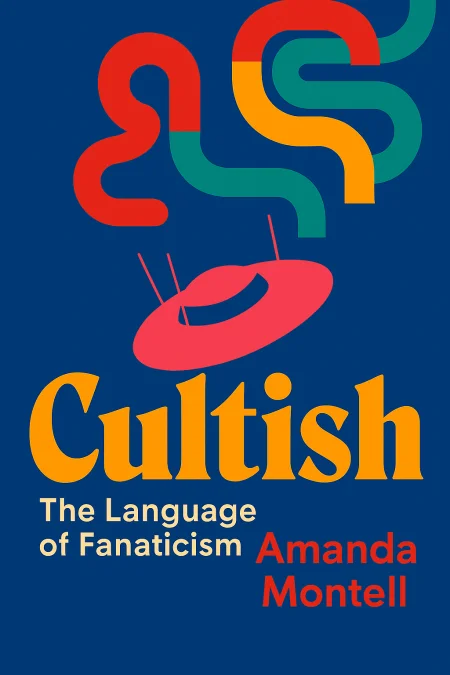
Cultish
The Language of Fanaticism
Book Edition Details
Summary
Underneath the shiny veneer of spin classes and social media influencers lies a linguistic web spun with precision and purpose. In "Cultish," Amanda Montell peels back the layers of mesmerizing language that shape our beliefs and behaviors, from notorious cults like Jonestown and Heaven's Gate to everyday environments like start-ups and online communities. This book isn't just about history's infamous groups; it's an exploration of how words weave power in our lives right now. Montell's sharp wit and groundbreaking research reveal how language creates a sense of belonging—and how it can manipulate us without us even realizing it. Whether it’s a cult leader or a charismatic CEO, the power to persuade is in their words, and Montell shows you exactly how they do it. Prepare to question everything you thought you knew about influence and discover how deeply the cultish lexicon penetrates our daily lives.
Introduction
Language possesses an extraordinary power to shape human behavior and belief systems, often in ways we fail to recognize. This exploration delves into how charismatic leaders across diverse contexts—from notorious cult figures to fitness instructors to multilevel marketing executives—employ remarkably similar linguistic techniques to attract, retain, and influence their followers. The phenomenon extends far beyond the stereotypical image of isolated communes or religious extremism; it permeates everyday experiences including workout studios, social media platforms, corporate environments, and spiritual wellness communities. The investigation challenges conventional assumptions about who falls prey to manipulative influence and why, revealing that susceptibility often correlates more with optimism and idealism than with desperation or psychological instability. Through systematic analysis of conversion tactics, conditioning mechanisms, and coercive language patterns, a comprehensive framework emerges for understanding how words function as the primary tools of influence across the spectrum of human devotion. The examination spans from historically documented tragedies to contemporary digital phenomena, offering insights into how language creates alternate realities that can either nurture genuine community or exploit fundamental human needs for belonging and meaning.
How Linguistic Manipulation Creates and Controls Devoted Followers
The mechanics of cultish influence operate through three distinct phases of language-based manipulation: conversion, conditioning, and coercion. Conversion begins with love-bombing, where potential followers receive intense personalized attention and validation that makes them feel uniquely chosen or understood. This initial phase employs inspirational buzzwords and calls for vulnerability that create an immediate emotional connection, often described by survivors as a moment when something simply "clicks." The conditioning phase introduces specialized terminology and thought-terminating clichés that gradually reshape followers' worldview and decision-making processes. Groups create exclusive vocabularies—from Heaven's Gate's "vehicles" and "graduation" to Scientology's complex dictionary of technical terms—that serve multiple functions: they foster an us-versus-them mentality, create feelings of intellectual superiority among insiders, and provide euphemistic cover for questionable practices. These linguistic tools work by obscuring meaning rather than clarifying it, making followers doubt their own perceptions and defer to leadership for interpretation of reality. Coercion emerges when this specialized language becomes weaponized to justify increasingly extreme behaviors and silence dissent. Leaders employ loaded language that carries intense emotional charges, transforming ordinary words into triggers for fear, guilt, or euphoria. The most dangerous groups eliminate the boundaries of "ritual time," ensuring that followers never escape the linguistic framework that maintains their allegiance, ultimately making alternative ways of thinking and living seem impossible or threatening.
The Spectrum of Cultish Influence: From Fitness Studios to Religious Extremism
Understanding cultish influence requires recognizing it exists along a continuum rather than as a binary classification. At one extreme lie historically documented tragedies like Jonestown and Heaven's Gate, where linguistic manipulation facilitated mass death through systematic reality distortion and coercive control. These cases demonstrate how euphemisms for death and suicide, combined with apocalyptic rhetoric and thought-stopping clichés, can override individuals' survival instincts when embedded within a comprehensive ideological framework. Modern fitness communities occupy a markedly different position on this spectrum, employing many similar linguistic techniques but within bounded contexts that generally preserve individual autonomy. SoulCycle's mantras about personal transformation and CrossFit's military-inspired motivational language create intense loyalty and behavioral modification, yet participants typically maintain the ability to disengage without catastrophic consequences. The key distinction lies in whether groups respect "ritual time"—allowing members to code-switch back to normal social language and relationships outside the community context. Corporate environments and multilevel marketing organizations present intermediate cases where cultish language serves to maintain employee compliance and mask exploitative practices. Amazon's Leadership Principles and Amway's prosperity gospel rhetoric demonstrate how organizational ideologies can become totalizing belief systems that reshape workers' entire identities and life priorities. The gradual erosion of boundaries between professional and personal identity, facilitated by specialized corporate vocabularies, reveals how cultish influence adapts to contemporary economic structures while maintaining its fundamental psychological mechanisms.
Digital Age Gurus and the Democratization of Cult Leadership
Social media platforms have fundamentally transformed how cultish influence operates by eliminating traditional barriers to leadership and community formation. Instagram, YouTube, and similar platforms enable virtually anyone to develop devoted followings by mastering algorithmic engagement strategies and crafting compelling personal brands around spiritual or wellness authority. This democratization has produced thousands of digital gurus who may lack traditional credentials or genuine spiritual insights but possess sophisticated understanding of online marketing and human psychological vulnerabilities. The phenomenon manifests across diverse contexts, from conspiratorial wellness influencers promoting dangerous health advice to Instagram witches commodifying spiritual practices for profit. These figures exploit the same linguistic patterns identified in historical cults—loaded language, us-versus-them thinking, and thought-terminating clichés—but deploy them through carefully curated content designed to maximize engagement and monetization. The result is a fragmented landscape of micro-cults where followers can simultaneously belong to multiple ideological communities without necessarily recognizing the contradiction. QAnon represents perhaps the most significant evolution of this digital cult phenomenon, demonstrating how decentralized belief systems can achieve massive influence without traditional organizational structures. The movement's constantly evolving vocabulary of coded language and euphemisms allows it to adapt to platform restrictions while maintaining ideological coherence across diverse sub-communities. This case illustrates how social media algorithms themselves function as a kind of ultimate cult leader, reinforcing existing beliefs and creating echo chambers that make critical evaluation increasingly difficult.
Recognizing and Resisting Exploitative Language While Preserving Community
Developing resistance to cultish manipulation requires understanding the specific linguistic warning signs while maintaining openness to legitimate forms of community and meaning-making. Red flags include excessive use of absolutist language, pressure to adopt new vocabularies that distance members from outside relationships, and systematic suppression of questions or criticism through thought-terminating clichés. Healthy communities welcome scrutiny, encourage members to maintain diverse social connections, and respect individual autonomy even while promoting shared values. The challenge lies in distinguishing between beneficial group experiences and exploitative ones, as both may employ similar linguistic techniques for very different purposes. Legitimate communities use specialized language to foster connection and shared purpose while maintaining transparency about their goals and methods. They allow members to participate casually without demanding total life reorganization, and they support rather than undermine members' independent critical thinking and personal relationships outside the group. Effective resistance also requires recognizing the fundamental human needs that make cultish groups appealing—desires for belonging, purpose, transcendence, and certainty during uncertain times. Rather than simply avoiding all forms of group commitment, individuals can seek communities that fulfill these needs while maintaining healthy boundaries and preserving personal autonomy. The goal is not to eliminate the capacity for faith or communal belonging, but to develop the discernment necessary to engage with various forms of "cultish" experience while retaining one's essential identity and freedom of choice.
Summary
The pervasive influence of cultish language in contemporary society reveals how fundamental human needs for community, meaning, and transcendence can be both genuinely fulfilled and systematically exploited through nearly identical linguistic mechanisms. The key insight lies not in avoiding all forms of group belonging or shared belief, but in developing sophisticated awareness of how language functions to shape consciousness and behavior across diverse contexts. This understanding enables individuals to participate meaningfully in communities while maintaining the critical faculties necessary to recognize when linguistic influence crosses the line from inspiration into manipulation, ultimately preserving both the benefits of collective experience and the autonomy essential for human flourishing.
Related Books
Download PDF & EPUB
To save this Black List summary for later, download the free PDF and EPUB. You can print it out, or read offline at your convenience.
By Amanda Montell
