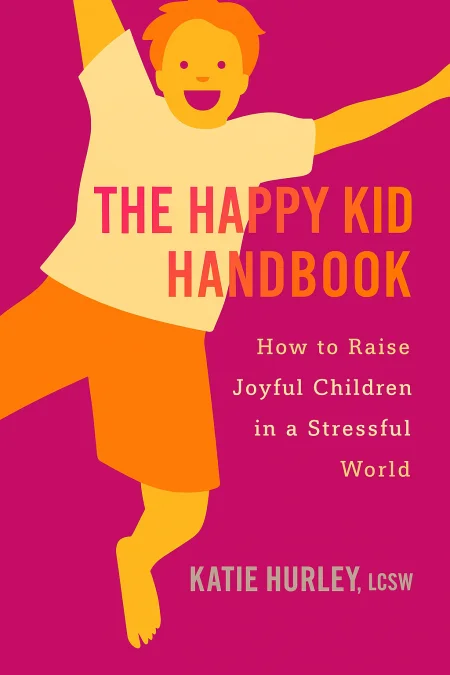
The Happy Kid Handbook
How to Raise Joyful Children in a Stressful World
Book Edition Details
Summary
In a world where parenting advice can feel like an avalanche of conflicting doctrines, "The Happy Kid Handbook" emerges as a beacon for nurturing authentic joy in children. Forget the dizzying array of parenting styles; this book by child and adolescent psychotherapist Katie Hurley cuts through the noise with a singular focus: raising genuinely happy kids. More than a guide, it's an invitation to connect with your child's unique personality, be they introverted or extroverted, and to cultivate happiness as the foundation for their growth. By understanding their social-emotional needs, parents can unlock the secrets to raising confident, capable individuals. With warmth and wisdom, this handbook offers practical strategies to help children manage stress, navigate emotions, and find tranquility in a chaotic world. For any parent seeking to prioritize joy over perfection, "The Happy Kid Handbook" is not just a read—it's a revelation.
Introduction
Every parent has witnessed that magical moment when their child's face lights up with pure, unfiltered joy. Perhaps it was watching them build an elaborate fort out of couch cushions, or seeing them tenderly care for a wounded spider they insisted on relocating rather than squashing. These glimpses of authentic happiness remind us that childhood should be filled with wonder, laughter, and the freedom to simply be. Yet in our well-intentioned efforts to prepare our children for an increasingly competitive world, we often find ourselves caught in a whirlwind of activities, expectations, and anxieties that can overshadow the simple joy of being a kid. The journey of raising happy children isn't about perfecting parenting techniques or following the latest expert advice. It's about understanding that each child comes into this world with their own unique temperament, needs, and ways of experiencing joy. Some children are natural performers who thrive in the spotlight, while others find their bliss in quiet moments of solitary play. Some process emotions internally, while others wear their hearts on their sleeves. The key lies not in molding our children into predetermined shapes, but in meeting them exactly where they are and helping them flourish as the individuals they're meant to become. This exploration reveals that true happiness in childhood emerges when we create space for genuine emotional expression, meaningful play, and authentic connection. When we teach our children to embrace their feelings, forgive themselves and others, show empathy, and pursue their passions with confidence, we give them the tools to navigate life's inevitable challenges while maintaining their inner light. The path to raising joyful children begins with understanding that happiness isn't the absence of difficulty, but rather the presence of resilience, self-acceptance, and the unwavering belief that they are worthy of love exactly as they are.
Understanding Your Child: From Liam's Drums to Riley's Spider Rescue Program
At age four, Liam had just one item on his birthday wish list: a set of cymbals for his drum kit. His mother had begged his father not to bring drums into their home, fearing the chaos it might create. But when she watched her son sit at his kit, playing along to Coldplay and John Mayer, counting beats and expressing himself with pure joy, she realized something profound. This wasn't about music lessons or future career aspirations. This was about honoring who Liam truly was in that moment. Where his sister Riley needed to write, draw, and live in imaginary worlds, Liam needed to play drums. Soon after, he developed a new passion for piano, showing his mother that supporting one interest often opens doors to others. Meanwhile, Riley had developed her own unique way of seeing the world. She believed deeply in what she called her "spider rescue program," carefully relocating eight-legged creatures rather than allowing anyone to harm them. When questioned about a friend who received special help at school, Riley thoughtfully concluded, "She must be happy to get her teacher all to herself. That's something that's good about her brain." Her natural inclination was to find the positive in every difference she encountered. These stories illuminate a fundamental truth about child-rearing: there is no one-size-fits-all approach to parenting because there are no one-size-fits-all children. Each child enters the world with their own temperament, processing style, and emotional needs. Some are natural introverts who recharge through solitude, while others are extroverts who draw energy from social interaction. Some experience emotions intensely and need help managing big feelings, while others internalize their experiences and require gentle encouragement to express themselves. The path to raising happy children begins with the radical act of truly seeing and accepting each child as the unique individual they are, then adapting our parenting approach to meet their specific needs rather than forcing them to conform to our expectations.
Building Emotional Intelligence: When Tantrums Become Teaching Moments
Seven-year-old Jake had mastered the art of appearing perpetually happy, flashing his contagious smile and making classmates laugh with his endless antics. Yet beneath this cheerful facade lay a different reality. Daily complaints of stomachaches, headaches, and various aches revealed a child struggling to understand and process his emotions. When presented with feelings identification cards, Jake labeled every single emotion as "happy," unable to recognize the anxiety that was manifesting in physical symptoms throughout his body. During a family trip to see the Easter Bunny, a different kind of emotional drama unfolded. Toddler after toddler melted down in terror at the sight of the costumed figure, their parents pushing forward despite the obvious distress, focused more on capturing the perfect photo than understanding their children's genuine fear. The contrast was striking: one child confidently identifying all emotions as "happy" while suppressing his true feelings, and others expressing raw terror but having their emotions dismissed as dramatic overreaction. These scenarios reveal the delicate balance required in emotional development. Children aren't born knowing how to identify, understand, or cope with the complex array of feelings they experience daily. They may encounter excitement, frustration, disappointment, anxiety, and joy all within a single afternoon, yet lack the vocabulary or tools to process these experiences. When we dismiss their emotions as "no big deal" or expect them to simply "get over it," we inadvertently teach them that their inner world doesn't matter. However, when we acknowledge their feelings, provide them with emotional language, and teach them healthy coping strategies, we give them the foundation for a lifetime of emotional intelligence and resilience. The goal isn't to eliminate difficult emotions, but to help children understand that all feelings are valid and manageable, creating space for authentic happiness to flourish alongside the full spectrum of human experience.
Nurturing Empathy and Kindness: Stories from the Playground and Beyond
When Liam's preschool welcomed a new student, he came home bubbling with excitement about a potential friend who shared his love of trucks and tag. But their second encounter told a different story. The new boy teased Liam about his curly hair and threatened to falsely report him to the teacher. By their third meeting, Liam was sobbing, declaring he never wanted to return to his beloved school. His mother's first instinct was pure mama bear protectiveness, but when she discovered that this five-year-old had never attended preschool before and had never socialized with other children, she chose a different path. Instead of focusing on the negative behavior, she helped Liam consider what it might feel like to be new to a school where everyone else had been together all year. They talked about how children sometimes try to get attention in ways that hurt others, and explored the loneliness and fear that might drive such behavior. This conversation planted seeds of empathy that soon bloomed. The following week, Liam's mother found him playing quietly with that same boy on the classroom rug, their conflict transformed into connection through the power of understanding. At just seven years old, Riley had formed friendships across a wonderfully diverse spectrum of children from different backgrounds, cultures, abilities, and interests. She learned bits of Mandarin from one friend and Spanish from another, fascinated by a boy who seemed to know everything about computers and wishing she could join another friend's speech therapy sessions. When she finally asked why her friend with special needs had an aide and was pulled from class so often, her mother explained simply that her friend's brain worked differently and needed extra support. Riley's response revealed the natural empathy children possess when given the right guidance: "She must be happy to get her teacher all to herself." These stories demonstrate that empathy isn't just an innate trait some children possess and others lack. Rather, it's a skill that can be nurtured and developed through patient guidance and modeling. When we help children step into others' shoes, understand different perspectives, and see challenges as opportunities for connection rather than reasons for division, we cultivate their natural capacity for compassion and create a foundation for genuine happiness that comes from meaningful relationships with others.
Managing Stress and Anxiety: Happy Parents, Happy Kids
Jessica appeared at the therapist's office without an appointment, exhausted and apologetic, dark circles rimming her eyes. She launched into a detailed account of her older daughter's defiant behavior, constant aggression toward her sister, and refusal to follow directions. Both girls were struggling at school, bringing home behavioral reports that left Jessica feeling helpless. She was certain therapy wouldn't work because her children didn't need to talk, they needed to behave. She wanted a quick fix for what seemed like an impossible situation. But when the therapist responded with empathy rather than solutions, acknowledging how hard things must be and how exhausted Jessica appeared, the tears began to flow. The real story emerged: Jessica and her husband were constantly at odds, unsure how to help their children. She found herself yelling at the girls daily, unable to control her reactions to small frustrations like messy rooms and homework battles. Jessica was drowning in stress, and that stress was cascading down to her children like a waterfall of tension throughout their home. This family's struggle illustrates a crucial truth: children are incredibly sensitive to the emotional climate of their environment. Even when parents think they're hiding their stress, children absorb and internalize the tension around them. When Jessica learned to recognize her own stress triggers and develop healthier coping mechanisms, her daughters' behavior began to improve dramatically. The girls hadn't needed behavioral modification as much as they had needed a calmer, more emotionally regulated parent who could respond to their needs with patience rather than reactivity. The journey toward raising happy children cannot ignore the fundamental importance of parental well-being. When parents are overwhelmed, exhausted, and reactive, children feel unsafe and uncertain, leading to the very behavioral challenges that increase parental stress. Breaking this cycle requires honest self-reflection, appropriate boundary-setting, and the courage to seek support when needed. Happy parents don't have perfect lives or stress-free days, but they have developed the tools to manage their own emotional responses, creating a stable foundation from which their children can explore the world with confidence and joy.
Summary
The path to raising truly happy children is both simpler and more complex than our culture often suggests. It doesn't require perfect parenting techniques, endless activities, or constant vigilance against every possible challenge. Instead, it demands something far more profound: the willingness to truly see, accept, and nurture each child as the unique individual they are. Through countless stories of children finding their way through difficulties, we discover that happiness isn't the absence of struggle, but rather the presence of understanding, support, and the tools needed to navigate life's inevitable challenges. The most powerful gift we can give our children is emotional intelligence—the ability to recognize, understand, and healthily express their feelings. When we create safe spaces for big emotions, teach empathy through our own modeling, and help children develop coping strategies for stress and disappointment, we equip them with lifelong skills that extend far beyond childhood. We learn that supporting a child's passion for drums or respect for spiders matters more than conforming to external expectations, and that addressing our own stress and emotional regulation directly impacts our children's ability to thrive. Ultimately, raising happy children is an act of faith in their inherent goodness and potential. It requires patience when they struggle, celebration of their unique gifts, and the wisdom to know when to step in with support and when to step back and let them discover their own strength. When we embrace this approach, we create families where authenticity is valued over perfection, where differences are celebrated rather than corrected, and where the simple joy of being fully known and loved provides the foundation for a lifetime of resilience and happiness.
Related Books
Download PDF & EPUB
To save this Black List summary for later, download the free PDF and EPUB. You can print it out, or read offline at your convenience.
By Katie Hurley
