
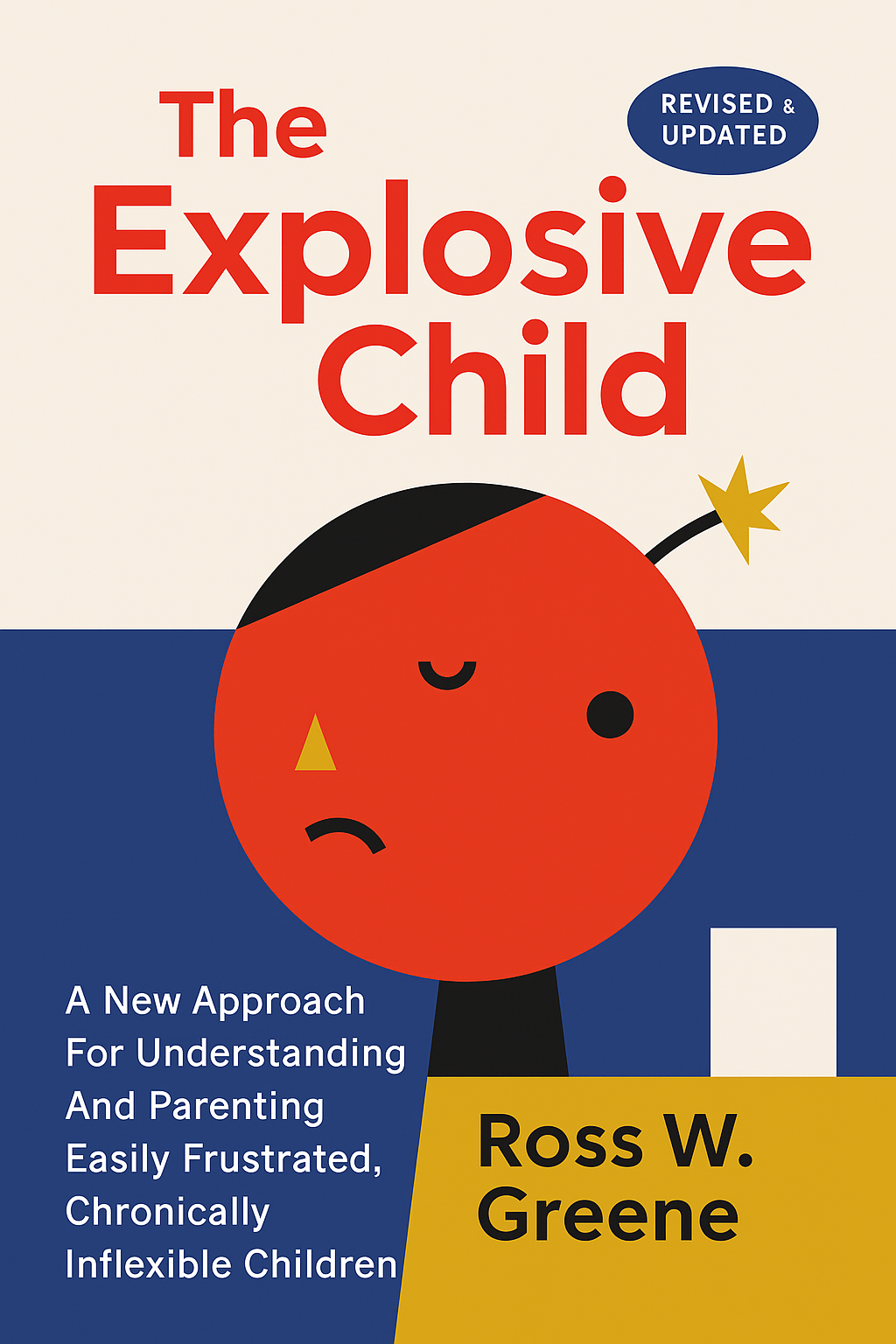
The Explosive Child
A New Approach for Understanding and Parenting Easily Frustrated, Chronically Inflexible Children
Book Edition Details
Summary
When temper tantrums erupt like mini-volcanoes, "The Explosive Child" emerges as an essential guide for parents navigating the tumultuous terrain of extreme childhood reactions. This isn't just another parenting manual; it’s a revelation in understanding the unseen neurological factors that fuel intense outbursts. With the keen insight of a seasoned therapist, the book delves deep into the neuroscience underpinning these behaviors, offering a fresh lens through which to see and soothe the storm within. Here, the focus shifts from mere symptoms to root causes, empowering parents with compassionate, brain-based strategies that transform frustration into peace. It's a lifeline for those desperate for calm amidst chaos, turning explosive challenges into opportunities for growth and connection.
Introduction
Every parent has been there, standing in the aftermath of yet another explosive moment, wondering where they went wrong. Your child's meltdown over something seemingly trivial leaves you questioning everything you thought you knew about parenting. The traditional approaches feel like pushing against a brick wall, and the advice from well-meaning friends and experts seems to miss something fundamental about your unique child. What if the problem isn't that your child won't behave, but that they can't? This revolutionary perspective shifts our understanding from viewing challenging behaviors as willful defiance to recognizing them as signals that a child lacks crucial skills. When we embrace the truth that kids do well if they can, we open the door to collaborative solutions that transform both our children and our relationships with them.
Understanding Lagging Skills and Unsolved Problems
The foundation of helping challenging children lies in recognizing that concerning behaviors aren't choices but symptoms of missing skills. Traditional thinking labels these children as manipulative, attention-seeking, or willfully defiant, but research reveals a different truth. These children lack crucial abilities in flexibility, frustration tolerance, and problem-solving that most of us take for granted. Consider Jennifer, whose explosive reaction to her brother wanting waffles wasn't about control or manipulation. Her rigid thinking made it impossible for her to adapt when her breakfast plan changed unexpectedly. Like many children with concerning behaviors, Jennifer had significant lagging skills in areas like handling transitions, managing emotions under stress, and considering alternative solutions to problems. Jennifer's parents, Debbie and Kevin, had spent years trying traditional discipline methods, feeling increasingly frustrated as nothing seemed to work. The breakthrough came when they stopped focusing on Jennifer's explosive behaviors and started identifying the specific situations that triggered them. They discovered that Jennifer consistently struggled with unpredictability, sharing decisions with her brother, and managing her need for control over her environment. The Assessment of Lagging Skills and Unsolved Problems becomes your roadmap for understanding your child. Start by identifying which skills your child is missing, such as difficulty expressing concerns in words, trouble considering consequences of actions, or challenges with black-and-white thinking. Then pinpoint the specific expectations your child repeatedly fails to meet, wording them as unsolved problems rather than behaviors. Remember that identifying these patterns requires patience and careful observation. Track when concerning behaviors occur most frequently and what specific expectations your child struggles with consistently. This systematic approach transforms your understanding from seeing random outbursts to recognizing predictable challenges that can be addressed proactively.
Mastering Plan B: The Three-Step Collaborative Solution
Plan B represents a revolutionary approach to solving problems with children through collaboration rather than coercion. This three-step process empowers both parent and child to work together toward mutually satisfactory solutions, transforming adversarial relationships into partnerships. The process begins with the Empathy Step, where parents gather information about what makes it difficult for their child to meet specific expectations. When Debbie approached Jennifer about their TV-watching conflicts, she discovered that Jennifer's resistance wasn't about being difficult but about her need to watch specific shows that helped her unwind after school. This revelation only emerged because Debbie asked genuine questions and listened without immediately proposing solutions. The second step, Define Adult Concerns, involves clearly articulating why the expectation matters. Debbie explained that family harmony was important and that Riley also deserved time to watch his preferred programs. The final Invitation Step brought them together to brainstorm solutions. Jennifer surprised everyone by proposing a schedule system and even suggesting she could record her shows if needed. Begin practicing Plan B with one specific, recurring problem. Start conversations with phrases like "I've noticed that it's difficult for you to..." and genuinely listen to your child's perspective. Resist the urge to jump to solutions immediately. Instead, use reflective listening and ask clarifying questions to truly understand your child's concerns. The key to successful Plan B implementation is timing and preparation. Choose calm moments for these discussions, not during crisis situations. Give your child advance notice that you'd like to understand a problem better, and approach the conversation with curiosity rather than frustration. Remember that this process builds skills in both you and your child over time.
From Family to School: Building Better Relationships
The principles of collaborative problem-solving extend far beyond the home, transforming relationships in schools and communities. When adults shift from controlling children to partnering with them, the ripple effects touch every aspect of a child's life. Sandra's son Frankie had been suspended repeatedly from school, with each punishment driving him further from engagement and success. The breakthrough came when a hospital social worker, Ms. Brennan, helped Sandra learn to listen to Frankie's concerns about his special education placement. For the first time, Frankie felt heard when he explained that he didn't want to be labeled as different and that he missed having friends in regular classes. Through patient Plan B conversations, Sandra and Frankie began rebuilding their relationship. Frankie revealed fears about his future, struggles with feeling out of control, and his deep desire to be seen as capable. Sandra learned to manage her own anxiety about his school performance so she could truly listen to his perspective. Their fights decreased dramatically as problems got solved rather than punished. Schools that embrace collaborative problem-solving see remarkable transformations. Teachers learn to view disruptive students as children lacking skills rather than motivation. Instead of sending students to the office for consequences, educators work with them to understand what makes certain expectations difficult and develop realistic solutions together. Start by identifying one relationship in your child's life that could benefit from collaborative problem-solving. Share these concepts with teachers, coaches, or other caregivers who interact regularly with your child. Help them understand that your child's challenging behaviors communicate unmet needs rather than defiance. Practice Plan B in family meetings, allowing all members to voice concerns and participate in solutions.
Summary
The journey from explosive conflicts to collaborative partnerships requires courage to abandon old assumptions about children's motivations and embrace a fundamentally different approach. As the research clearly demonstrates, "Kids do well if they can," which means our role shifts from enforcing compliance to building skills and solving problems together. When we recognize that concerning behaviors signal missing capabilities rather than character flaws, we can respond with compassion and effectiveness rather than frustration and punishment. The transformation begins the moment you choose to see your child as a problem-solving partner rather than an adversary. Start today by identifying one recurring conflict and approach it with genuine curiosity about your child's perspective. Listen with the intent to understand rather than to fix, and watch as your relationship evolves from battleground to collaborative team.
Related Books
Download PDF & EPUB
To save this Black List summary for later, download the free PDF and EPUB. You can print it out, or read offline at your convenience.
By Ross W. Greene
