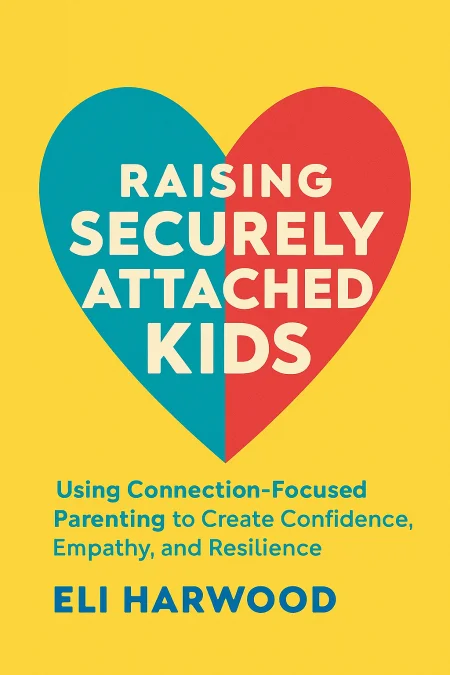
Raising Securely Attached Kids
Use Connection-Focused Parenting to Build Confidence and Empathy
Book Edition Details
Summary
In a world where parenting advice often feels like a cacophony of conflicting theories, Eli Harwood—known to many as the insightful Attachment Nerd—offers a beacon of clarity with "Raising Securely Attached Kids." This enlightening guide is not just about nurturing children but about revolutionizing the way we bond with them. Harwood dives deep into attachment theory, transforming it into a practical tool for fostering self-assured, empathetic young individuals. Here, the magic ingredient is a secure connection: when children are truly understood, they flourish. Harwood provides more than just theory; she equips you with the skills to heal past wounds, cultivate emotional resilience, and forge unbreakable bonds. By choosing connection over control, parents can lay the foundation for their children's lifelong emotional health. This book is a lifeline for anyone determined to break cycles of detachment and empower the next generation with the gift of unwavering trust and love.
Introduction
Imagine a world where your child runs toward you when they're struggling instead of pushing you away. Picture moments where discipline becomes collaboration, where conflicts deepen trust rather than break it, and where your relationship becomes their greatest source of strength. This isn't a parenting fantasy—it's the profound reality of secure attachment. In our culture obsessed with techniques and quick fixes, we often miss the fundamental truth: children don't need perfect parents, they need connected ones. The quality of your relationship with your child shapes everything—their confidence, resilience, and ability to form healthy relationships throughout their life. When we shift from trying to control our children to truly connecting with them, we discover that love isn't just nice to have, it's the most powerful tool for raising emotionally healthy, capable humans.
Understanding Secure Attachment as Your Child's Foundation
Secure attachment is your child's emotional home base—a safe haven they can return to when the world feels overwhelming, and a secure launching pad that gives them confidence to explore. Think of yourself as your child's airplane mechanic rather than the pilot. You're not flying their plane, but you're ensuring it's safe, fueled, and ready for takeoff. This foundational relationship becomes the lens through which your child sees themselves and the world. Consider Alison, a mother whose four-year-old daughter Gina had intense emotional reactions. When Gina melted down, Alison would freeze or become reactive herself. Growing up with an angry father, Alison had learned to make herself small and compliant. Now, her daughter's fiery temperament triggered those old childhood fears, leaving Alison feeling like a powerless child rather than a confident parent. The breakthrough came when Alison recognized that her past was hijacking her present parenting. Instead of seeing Gina's emotions as threatening, she began to understand them as communication. When Gina had her next meltdown, Alison took a deep breath, got down to her daughter's level, and said, "You're feeling really big feelings right now. I'm here with you." Rather than trying to stop the tears, she offered her presence as an anchor. To build this secure foundation, start by examining your own childhood attachment experiences. Notice when you feel triggered by your child's emotions or behavior—these moments reveal where your own healing work needs attention. Practice staying calm and present when your child is distressed, remembering that your regulated nervous system helps regulate theirs. Most importantly, see every challenging moment as an opportunity to show your child they can count on you, especially when things get hard.
Connection-Based Parenting: From Control to Cooperation
Connection-based parenting recognizes a profound truth: we cannot control our children, but we can profoundly influence how they feel about themselves and their relationship with us. This shift from a control mindset to a connection mindset transforms daily power struggles into opportunities for cooperation and learning. When children feel genuinely seen and understood, they naturally want to work with us rather than against us. The bedtime battles in the Harwood household perfectly illustrate this transformation. Instead of the nightly struggle where parents desperately tried to enforce sleep while children resisted, there was a shift toward understanding the underlying needs. One evening, when three-year-old daughter kept asking to sleep in Mom's bed, claiming it was "more comfortable," the real truth emerged through gentle questioning: "You're there," she said. She wasn't seeking a better mattress—she was seeking connection. That night, instead of another bedtime battle, they created a special snuggle arrangement. The next evening, after her need for closeness had been met, bedtime became dramatically easier. The child's resistance wasn't defiance—it was communication about an unmet emotional need. Begin by questioning your automatic responses to challenging behavior. Instead of asking "How do I make them stop?" ask "What might they need right now?" Practice the connection-before-correction approach: address the emotion first, then the behavior. When conflicts arise, take a breath and remind yourself that you and your child are on the same team. Your job isn't to win battles but to preserve the relationship while teaching important lessons.
Emotional Intelligence and Building Your Child's Confidence
True confidence isn't built through praise or rewards—it's cultivated through feeling genuinely known and accepted, especially during emotional storms. Children develop emotional intelligence when their feelings are received with empathy rather than dismissed or fixed. Your child needs to know that all of their emotions have a place and purpose, and that you can handle whatever they're feeling without becoming overwhelmed yourself. Jacob, a seemingly perfect teenager with awards and achievements, was secretly struggling with suicidal thoughts. Despite external success, he felt trapped in performance mode. His parents had meant well, rewarding good behavior and grades, but Jacob had learned that only his accomplishments were lovable. His messy, uncertain parts felt like improvement projects rather than natural aspects of being human. The turning point came when his therapist said simply, "You don't look like you're feeling so hot." Jacob's shocked response—"How did you know that?"—revealed how rarely anyone had truly seen his inner world. For the first time, someone was paying attention to who he was rather than what he produced. This experience of being genuinely known began to heal his fractured sense of self. Focus on delighting in your child's presence rather than their performance. Practice the phrase "I love being with you" more than "I'm proud of you." When your child is emotional, resist the urge to fix or dismiss. Instead, offer simple empathy: "This is really hard for you" or "I can see how upset you are." Create daily moments of pure connection—eye contact, physical affection, and undivided attention that communicates their inherent worth.
Navigating Challenges While Staying Securely Connected
The ultimate test of secure attachment isn't perfect behavior—it's how you navigate the inevitable storms together. Conflict isn't the enemy of connection; it's an opportunity to deepen trust and teach crucial life skills. When you approach challenges with curiosity rather than control, you model resilience and problem-solving while preserving the relationship that matters most. During a park departure that went awry, when a three-year-old bolted toward the street and mom fell while chasing her, both felt strong emotions. Instead of blame or punishment, they sat together in the car and talked through what happened. "Let's talk about what just happened there," mom said gently. They explored the child's sadness about leaving, mom's fear about safety, and the resulting chaos—all without shame or blame. Together, they created a plan for next time: the daughter could say "I'm sad to leave" and ask for a hug, while mom could make transitions more playful. This wasn't just conflict resolution—it was secure accountability, where taking responsibility becomes learning together rather than someone being the "bad guy." When challenges arise, pause and breathe before reacting. Ask yourself what your child might be feeling or needing in that moment. Use conflicts as discovery opportunities, staying curious about what's really happening beneath the surface behavior. Remember that your calm presence is more powerful than any consequence. End every difficult moment with reconnection, showing your child that your love remains constant even when their behavior needs work.
Summary
Secure attachment isn't about perfect parenting—it's about showing up consistently with love, understanding, and genuine connection. As the research beautifully demonstrates, "The capacity for self-soothing is born out of hundreds and hundreds of instances of being soothed by someone else." Your child doesn't need you to have all the answers or never make mistakes. They need to know that when they run to you in their moments of greatest need, they'll find a safe harbor and a launching pad for their next adventure. Start today by simply being present with your child's emotions, offering your calm strength as their anchor, and trusting that connection truly is the most powerful form of influence you possess.
Related Books
Download PDF & EPUB
To save this Black List summary for later, download the free PDF and EPUB. You can print it out, or read offline at your convenience.
By Eli Harwood
