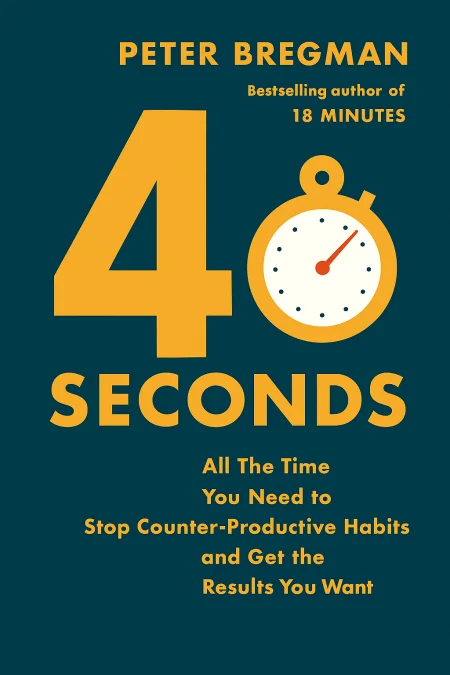
Four Seconds
All the Time You Need to Stop Counter-Productive Habits and Get the Results You Want
Book Edition Details
Summary
In the relentless chaos of modern life, what if a mere breath could be your secret weapon? Peter Bregman, celebrated author of 18 Minutes, presents Four Seconds, a transformative guide to breaking free from the self-sabotage that plagues our daily existence. This book isn't just about slowing down; it's about recalibrating your reactions and rewriting your story. Imagine harnessing the power of a single breath to reshape your interactions, sharpen your focus, and cultivate peace of mind. Bregman unravels the paradoxes of productivity, revealing why less is often more, and how stepping back can catapult you forward. Dive into a world where intentional pauses lead to profound change, and discover how a few seconds can redefine the way you live, work, and connect.
Introduction
Picture this: you're about to lose your temper at a colleague, send a hasty email you'll regret, or make a decision that undermines your best interests. What if the difference between success and self-sabotage was just four seconds? In our hyperconnected, always-on world, we've developed countless knee-jerk reactions that seem helpful in the moment but actually work against us. That heated response to criticism, the urge to multitask during important conversations, or the impulse to say yes when we should say no—these automatic behaviors create more problems than they solve. The remarkable truth is that transformation doesn't require months of therapy or years of practice. Sometimes, all we need is a single breath—four seconds of pause—to shift from reaction to intention, from autopilot to awareness. This brief moment of conscious choice can revolutionize how we think, connect with others, and lead our lives.
Master Your Mental Defaults in Four Seconds
At its core, mastering your mental defaults means learning to interrupt the automatic patterns that run your life. These defaults are the unconscious responses we've developed over years—the way we handle stress, react to setbacks, or approach challenges. Most of the time, we're not even aware these patterns exist until they've already created damage. Consider the story of Peter Bregman himself, sitting in his writing chair when his seven-year-old daughter Sophia burst in yelling "The kitchen is flooded!" His five-year-old son Daniel had left the tap running, and water was everywhere. Peter's immediate impulse was to yell at both children—an understandable but ultimately destructive response. Instead, he took four seconds to breathe, looked at their faces, and saw fear rather than carelessness. They already knew something was very wrong. This moment of pause transformed everything. Instead of adding shame and anger to an already stressful situation, Peter said, "Okay, quick, what do we need to do?" Together, they turned off the water, gathered towels, and cleaned up the mess while laughing. Later, they went downstairs to apologize to neighbors whose apartment had been affected by the leak. What could have been a relationship-damaging explosion became a teaching moment about responsibility and teamwork. The four-second technique works by creating space between stimulus and response. When you feel that familiar surge of anger, frustration, or overwhelm, you pause for one breath cycle. In that brief moment, you can ask yourself: "What does this situation actually need?" Rather than reacting from your emotional state, you respond from wisdom and intention. Practice this by setting a gentle reminder to check in with yourself throughout the day. When you feel triggered, breathe deeply and notice what's really happening—both inside you and in the situation. This simple pause gives you access to responses you never knew you had.
Build Stronger Relationships Through Mindful Response
Building stronger relationships isn't about grand gestures or perfect communication skills—it's about how you show up in the small moments when emotions run high. The key lies in shifting from reactive patterns to mindful responses that honor both your needs and the other person's experience. Take the evening when Eleanor, Peter's wife, asked him to pack some shampoo for their weekend trip while he was working on a deadline. His automatic response was irritation: "Can't you just put the shampoo in the bag? It doesn't seem like a big deal." But Eleanor's sharp "Fine!" told him he'd missed something important. The request wasn't really about shampoo—it was about feeling alone in managing family logistics, about equality in their partnership, and deeper questions about how she was using her education and talents. When Peter recognized his mistake, he stopped defending and started listening. He went to Eleanor and asked if she was feeling alone in preparing the family for the trip. Her relief was immediate. By acknowledging her experience rather than explaining his behavior, he transformed a potential fight into a moment of connection. From then on, he was less likely to be late because he truly understood how his actions affected her. The practice here involves three steps: First, notice when someone's reaction seems bigger than the situation warrants—there's usually something deeper happening. Second, resist the urge to defend or explain your position. Third, get curious about their experience and reflect back what you hear. Simple phrases like "It sounds like you're feeling..." or "I can see this is frustrating because..." create the safety that allows real communication. Remember that people don't need you to fix their problems or agree with their perspective. They need to feel heard and understood. This mindful approach to difficult conversations doesn't just resolve immediate conflicts—it builds the foundation of trust that makes relationships resilient over time.
Optimize Your Leadership with Intentional Action
Leadership excellence emerges not from having all the answers, but from creating environments where others can do their best work. This requires a fundamental shift from managing tasks to inspiring people, from controlling outcomes to empowering capability. The most effective leaders understand that their primary job is to support others' success, not showcase their own brilliance. Barbara, a highly accomplished technologist, had been passed over for promotion to managing director multiple times despite her exceptional performance. The feedback was that she needed to act "more senior." Her initial response was to promote herself more actively—updating colleagues on her projects, seeking visibility, and positioning herself strategically. But this approach backfired because it signaled junior behavior. Senior leaders don't seek visibility for themselves; they create visibility for others. Once Barbara understood this distinction, she transformed her approach. Instead of keeping star performers on her team, she actively promoted them to other areas where they could grow. Rather than advocating primarily for her department's needs, she considered what was best for the organization as a whole. She asked more questions and explored others' perspectives instead of always offering her own opinions. She celebrated others' achievements and shared credit generously. This shift didn't just make Barbara appear senior—it made her genuinely effective. By focusing on others' development and success, she built loyalty and trust throughout the organization. Her team members became advocates because she had invested in their growth. Other department leaders saw her as a collaborator rather than a competitor. When the next promotion cycle came around, Barbara was ready not just positionally but authentically. The practice of intentional leadership starts with a simple question: "How can I help others succeed?" This doesn't mean being passive or sacrificing your own goals. Instead, it means recognizing that your success is inextricably linked to the success of those around you. Look for opportunities to share credit, develop others' capabilities, and advocate for what's best for the whole rather than just your piece. True leadership influence grows not from self-promotion, but from the trust that comes when people know you're genuinely invested in their success.
Summary
The profound truth running through every page of this wisdom is beautifully captured in one essential insight: "Four seconds is all it takes to stop yourself from a counter-productive knee-jerk reaction and make a more intentional, strategic choice that's more likely to get you where you want to go." This isn't just about managing your temper or avoiding mistakes—it's about fundamentally changing how you move through the world, from unconscious reaction to conscious creation. Every relationship can be strengthened, every challenge can be approached with greater wisdom, and every leadership opportunity can be maximized simply by creating that brief space between what happens to you and how you choose to respond. Your transformation begins today with your very next breath—take four seconds to pause, notice what's really needed in this moment, and choose the response that reflects who you want to be rather than who you've always been.
Related Books
Download PDF & EPUB
To save this Black List summary for later, download the free PDF and EPUB. You can print it out, or read offline at your convenience.
By Peter Bregman
