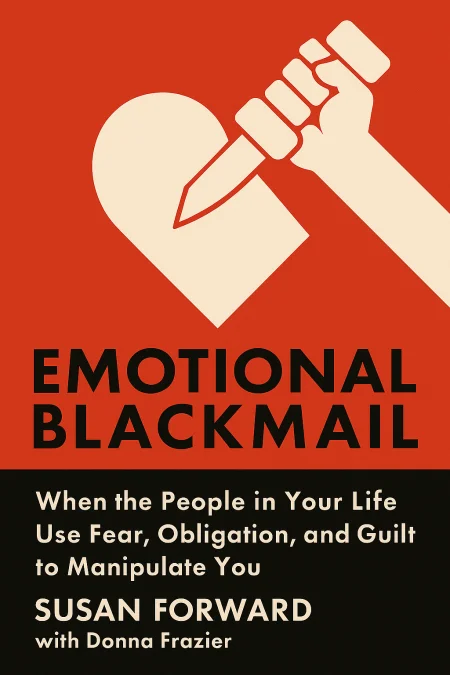
Emotional Blackmail
When the People in Your Life Use Fear, Obligation, and Guilt to Manipulate You
bySusan Forward, Donna Frazier
Book Edition Details
Summary
In the shadows of relationships, manipulation often masquerades as affection. Susan Forward's "Emotional Blackmail" pulls back the curtain on this insidious game where loved ones weaponize intimacy to secure obedience. With precision and empathy, Forward unravels the complex web of emotional extortion, offering victims a lifeline through awareness and action. Her book is a masterclass in reclaiming autonomy, arming readers with clear strategies, insightful checklists, and practical dialogue techniques to dismantle the cycle of coercion. Whether entangled with a persuasive partner, a demanding parent, or a controlling colleague, this essential guide empowers you to break free, heal, and restore balance to your relationships.
Introduction
Emotional blackmail represents one of the most insidious forms of manipulation that occurs within our closest relationships. This psychological dynamic involves the systematic use of fear, obligation, and guilt to control another person's behavior, creating a toxic fog that obscures clear thinking and decision-making. The phenomenon manifests when individuals exploit intimate knowledge of our vulnerabilities, insecurities, and deepest fears to ensure compliance with their demands. What makes this form of manipulation particularly devastating is that it typically emerges from people we trust most - spouses, parents, friends, and colleagues who have access to our emotional core. The manipulation operates through a predictable cycle: a demand is made, resistance is met with escalating pressure, threats are deployed (either explicit or implicit), and compliance is ultimately achieved through the target's inability to withstand the emotional discomfort. This pattern creates a relationship dynamic where one person's needs consistently override another's, establishing a power imbalance that erodes the target's sense of self-worth and autonomy. The most troubling aspect lies in how targets often rationalize their capitulation, believing they are preserving relationships or avoiding conflict, when in reality they are enabling a destructive pattern that damages both parties. Understanding this phenomenon requires examining both the psychological mechanisms that make certain individuals vulnerable to such manipulation and the internal drivers that compel others to employ these tactics. The analysis reveals how childhood experiences, learned behaviors, and deeply ingrained belief systems create the perfect conditions for emotional blackmail to flourish, while also illuminating pathways toward recognition, resistance, and ultimately, healthier relationship dynamics.
Understanding Emotional Blackmail: The FOG of Fear, Obligation, and Guilt
Emotional blackmail operates through three primary emotional weapons that create a disorienting psychological fog around targets. Fear serves as the most primitive tool, exploiting our basic survival instincts and attachment needs. Blackmailers instinctively identify what we most dread losing - love, security, approval, or connection - and weaponize these fears through threats of withdrawal, abandonment, or punishment. The fear may be explicit, such as threats to end relationships or withdraw financial support, or implicit through sulking, silent treatment, or emotional withdrawal that signals impending rejection. Obligation functions as the moral manipulation component, where blackmailers invoke duty, loyalty, and indebtedness to justify their demands. They systematically reframe their wants as righteous expectations, casting resistance as betrayal or ingratitude. This manipulation is particularly effective because it corrupts our genuine sense of responsibility and reciprocity, transforming healthy give-and-take into a one-sided extraction system. Blackmailers excel at maintaining detailed accounts of their contributions, sacrifices, and support while conveniently forgetting their own failings or the target's contributions. Guilt represents the most sophisticated weapon, targeting our conscience and moral self-image. Blackmailers become expert at making us feel responsible for their emotional state, their problems, and even their life circumstances. They paint themselves as victims of our selfishness, indifference, or cruelty, regardless of the reasonableness of their demands. This guilt manipulation is especially potent because it hijacks our capacity for empathy and moral reasoning, making us question our own perceptions and values. The genius of this three-pronged approach lies in how these emotions interact and amplify each other, creating a psychological pressure cooker where clear thinking becomes nearly impossible. Targets find themselves making decisions based on avoiding uncomfortable feelings rather than pursuing their authentic interests or maintaining healthy boundaries. The fog metaphor captures how this emotional manipulation obscures reality, making it difficult to distinguish between legitimate obligations and manipulative demands, reasonable fears and manufactured anxieties, appropriate guilt and undeserved shame.
The Psychology of Blackmailers and Their Vulnerable Targets
Emotional blackmailers are not necessarily malicious individuals but rather people driven by deep insecurities, fears of abandonment, and an inability to tolerate frustration. Their manipulative behaviors often stem from childhood experiences where emotional manipulation was modeled or where direct communication of needs was discouraged or punished. Many blackmailers genuinely believe their tactics are justified because they fear that honest requests might be denied, leaving them vulnerable to loss or deprivation. Their low frustration tolerance means that any resistance to their desires triggers intense anxiety, which they manage by escalating pressure rather than accepting disappointment. The psychology reveals individuals who often lack confidence in their inherent worthiness of love and support. They operate from a scarcity mindset, believing that if they do not actively control outcomes, they will inevitably be abandoned, ignored, or deprived. This creates a perpetual state of vigilance where relationships become strategic rather than authentic. Blackmailers frequently exhibit an external locus of control, viewing their emotional well-being as entirely dependent on others' actions rather than their own choices and responses. Vulnerable targets typically share certain psychological characteristics that make them susceptible to manipulation. These include an excessive need for approval that stems from conditional love in childhood, conflict avoidance patterns that prioritize peace over authenticity, and an overdeveloped sense of responsibility for others' emotional states. Many targets grew up in environments where their value was determined by their ability to please others or manage family dynamics, creating adults who instinctively prioritize others' needs over their own. The psychological dance between blackmailers and targets becomes self-reinforcing. Blackmailers learn which emotional buttons generate compliance, while targets learn that capitulation provides temporary relief from uncomfortable feelings. This creates a feedback loop where both parties become increasingly entrenched in their roles. The blackmailer's desperation for control grows as they experience the temporary relief that manipulation provides, while targets become increasingly disconnected from their own needs and desires as they focus exclusively on managing the blackmailer's emotional state.
Breaking Free: Strategies to Resist Emotional Manipulation
Liberation from emotional blackmail requires a fundamental shift from reactive compliance to conscious choice-making. The first critical step involves recognizing manipulation patterns and refusing to make immediate decisions under pressure. This means developing comfort with disappointing others and tolerating the anxiety that comes with saying no or requesting time to consider demands. Breaking free requires accepting that relationships based on manipulation lack authentic intimacy and that preserving such dynamics ultimately serves neither party's genuine interests. Effective resistance strategies begin with learning to identify and interrupt the automatic thought patterns that lead to capitulation. This involves challenging catastrophic thinking, questioning guilt-inducing messages, and distinguishing between reasonable obligations and manipulative demands. Resistance requires developing what might be called emotional immunity - the ability to remain centered and clear-thinking even when subjected to intense emotional pressure from others. Communication strategies prove essential for breaking these patterns. This includes learning to express needs and boundaries clearly without defensiveness or justification. Effective responses often involve acknowledging the other person's feelings while maintaining firm boundaries about unacceptable behavior. The key lies in refusing to engage with manipulation tactics while remaining open to addressing legitimate concerns through direct, honest communication. The process of breaking free inevitably involves experiencing discomfort as both parties adjust to new dynamics. Blackmailers typically escalate their tactics when initial attempts fail, testing the target's resolve through increased pressure, threats, or emotional appeals. Successful liberation requires persistence through these challenging periods while maintaining clear boundaries about what behaviors will and will not be tolerated. This often means accepting that some relationships may not survive the transition to healthier dynamics, recognizing that connections requiring manipulation for maintenance lack genuine foundation.
Reclaiming Your Integrity: Tools for Long-term Change
Lasting change requires addressing the internal vulnerabilities that made manipulation possible in the first place. This involves examining and challenging core beliefs about self-worth, duty, and relationships that were formed during childhood and reinforced through repeated experiences. Many targets must confront beliefs such as "my value depends on others' approval," "avoiding conflict is more important than honoring my needs," or "I am responsible for others' emotional well-being." Replacing these limiting beliefs with healthier alternatives forms the foundation for sustained resistance to manipulation. Developing emotional resilience becomes crucial for maintaining boundaries over time. This includes learning to tolerate disapproval, anger, or disappointment from others without automatically assuming responsibility for fixing these feelings. Emotional resilience also involves developing internal sources of validation and self-worth that do not depend on others' responses or approval. This might include cultivating relationships with people who respect boundaries, pursuing activities that provide intrinsic satisfaction, or developing spiritual practices that reinforce inherent worth. The process of reclaiming integrity often involves grieving the loss of relationships or relationship dynamics that seemed important but were ultimately unhealthy. This grief is natural and necessary as targets release fantasies of how relationships could be if only they accommodated enough manipulation. Accepting that some people may not be capable of or interested in healthy relationship dynamics allows for more authentic connections with those who are willing to engage respectfully. Building new relationship patterns requires practice and patience as both targets and former blackmailers learn to interact differently. Success often comes through small, consistent changes rather than dramatic confrontations. This might involve expressing preferences more directly, setting small boundaries and maintaining them, or choosing not to engage with guilt-inducing communications. Over time, these small changes accumulate into transformed relationship dynamics where mutual respect and authentic communication replace manipulation and compliance. The ultimate goal is not to eliminate all conflict or difficulty from relationships, but to ensure that interactions are based on honesty, respect, and genuine care rather than fear, obligation, and guilt.
Summary
The journey from victimization to empowerment in emotional blackmail situations ultimately reveals that authentic relationships cannot coexist with systematic manipulation, and that preserving one's integrity requires the courage to risk disapproval, conflict, and even relationship loss in service of genuine connection and self-respect. The analysis demonstrates how manipulation thrives in the gap between our deep need for connection and our willingness to sacrifice authenticity to maintain relationships, but also illuminates how recognizing these patterns opens pathways to more fulfilling interpersonal dynamics. Understanding that both blackmailers and targets are trapped in cycles that serve neither party's genuine well-being provides hope that change is possible when individuals commit to honest self-examination and behavioral modification. The framework for transformation emphasizes that lasting change requires both immediate tactical responses to manipulation attempts and deeper psychological work to address the underlying vulnerabilities and beliefs that make manipulation effective. This dual approach acknowledges that while learning to say no and set boundaries provides immediate relief, sustainable change demands addressing the root causes that made manipulation possible initially. The most profound insight emerges in recognizing that relationships requiring manipulation for maintenance lack the fundamental respect and care that characterize healthy human connections. This exploration offers particular value for readers seeking to understand the subtle dynamics of psychological manipulation in their personal or professional relationships, as well as those working to support others who may be trapped in such dynamics. The systematic analysis of both the mechanisms of manipulation and the pathways to freedom provides practical tools while also fostering the deeper understanding necessary for lasting change and healthier relationship patterns.
Related Books
Download PDF & EPUB
To save this Black List summary for later, download the free PDF and EPUB. You can print it out, or read offline at your convenience.
By Susan Forward
