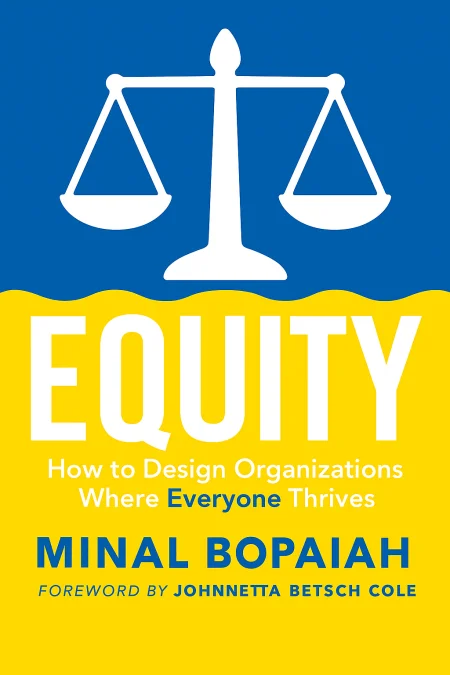
Equity
How to Design Organizations Where Everyone Thrives
byMinal Bopaiah, Johnnetta Betsch Cole
Book Edition Details
Summary
In the bustling corridors of corporate ambition, where inclusion often steals the spotlight, "Equity" by Minal Bopaiah shines a light on the unsung hero of organizational transformation: equity itself. This insightful work challenges leaders to rethink how they harness diversity, spotlighting equity as the catalyst for authentic change. Through vivid anecdotes—such as consulting partners rediscovering their narratives and NPR's innovative diversity initiatives—Bopaiah masterfully illustrates the power of equity-driven policy. With a blend of humor, empathy, and practicality, this guide offers a blueprint for leaders eager to embed equity into the DNA of their business operations. Ready to redefine your organization's core? "Equity" is the key.
Introduction
The pursuit of fairness in organizational life represents one of humanity's most enduring challenges, yet traditional approaches to workplace equity often fail to address the fundamental systems that perpetuate inequality. This exploration reveals how deeply embedded biases shape not only individual behaviors but entire organizational structures, creating invisible barriers that advantage some while systematically excluding others. The conventional wisdom that hard work alone determines success crumbles under scrutiny when we examine how historical design choices continue to influence contemporary workplace dynamics. The analysis presented here challenges readers to move beyond surface-level diversity initiatives toward a more profound understanding of systemic change. By applying human-centered design principles to organizational equity, we can uncover the root causes of workplace inequity and develop sustainable solutions that serve everyone's needs. This approach demands courage from leaders willing to examine their own privilege and power, while also requiring practical tools that make inclusive behavior easier to adopt across entire organizations. The journey ahead involves dismantling myths about individual achievement, recognizing the interdependence that truly drives success, and learning to design systems where differences become sources of strength rather than division. Through this lens, equity emerges not as a moral luxury but as a strategic imperative for organizational survival and innovation in an increasingly complex world.
The Systemic Nature of Bias and Inequity
Bias operates as the invisible architecture of organizational life, shaping every decision from hiring practices to promotion pathways without most participants ever recognizing its influence. These unconscious patterns function like cultural programming, automatically associating certain characteristics with competence, leadership potential, or organizational fit. The myth of meritocracy obscures how systematically these biases advantage those who already hold power while creating seemingly insurmountable obstacles for others. The design of American institutions reveals this bias most clearly through historical analysis. From educational funding tied to local property taxes to immigration policies that extract talent from other nations rather than investing in domestic human development, current systems perpetuate advantages for some while denying opportunities to others. The supposed "American Dream" narrative of individual achievement masks how structural advantages enable certain success stories while structural barriers prevent others from even reaching the starting line. Understanding systemic bias requires recognizing how individual prejudices, when backed by institutional power, transform into racism, sexism, and other forms of oppression. These systems adapt continuously, maintaining inequality through new mechanisms even as old ones become socially unacceptable. The criminal justice system's evolution from slavery to mass incarceration exemplifies this adaptive quality, demonstrating how deeply embedded inequities persist across generations. Organizations seeking equity must confront this reality honestly, acknowledging how their own systems may perpetuate broader societal biases. Only by making these invisible patterns visible can leaders begin the difficult work of redesigning organizational structures to support truly equal opportunity for all participants.
Human-Centered Design for Organizational Equity
Human-centered design offers a powerful framework for addressing organizational inequity by placing the experiences and needs of marginalized individuals at the center of system redesign efforts. This approach challenges the common assumption that well-intentioned leaders can simply imagine their way into understanding others' experiences, instead emphasizing the critical importance of perspective-gathering over perspective-taking. True empathy emerges from listening carefully to those who have been excluded rather than presuming to know their challenges. The design process begins with honest acknowledgment of who has been marginalized within existing organizational structures and why their needs have remained unmet. By conducting thorough diagnosis of obstacles to equitable participation, organizations can identify specific barriers that prevent inclusive behaviors from taking root. These obstacles typically fall into three categories: insufficient motivation to change, unclear direction about what change looks like in practice, and systems that make inclusive behavior cognitively or practically difficult to sustain. Successful equity initiatives require moving beyond awareness-building toward concrete behavioral changes that can be observed, measured, and reinforced through organizational systems. Rather than expecting individual transformation to drive systemic change, this approach recognizes that sustainable equity requires making inclusive behavior the easiest path forward. When organizations redesign their processes to eliminate friction around equitable practices, they create conditions where fairness becomes automatic rather than requiring constant conscious effort. The power of human-centered design lies in its iterative nature, allowing organizations to prototype solutions, gather feedback from those most affected, and continuously refine their approaches based on real-world results rather than theoretical ideals.
Leadership Engagement and Equitable Outcomes
Equitable transformation requires leaders who possess both the courage to examine their own privilege and the skills to redesign systems that have historically served their interests. This journey begins with developing comfort with difference rather than treating diversity as a problem to be managed or minimized. Leaders must progress beyond tolerance toward genuine appreciation for how different perspectives and experiences can strengthen organizational decision-making and innovation capacity. The path toward equitable leadership involves honest self-assessment using tools that reveal how various aspects of identity interact with organizational power structures. Understanding which dimensions of identity provide advantages while others create challenges helps leaders recognize their position within existing systems rather than perpetuating myths about individual achievement. This awareness enables more effective advocacy for those whose experiences differ significantly from their own. Perhaps most importantly, equitable leaders learn to rewrite their personal success narratives to acknowledge the systemic support they received along the way. Rather than crediting luck or minimizing their accomplishments, they become transparent about how policies, networks, relationships, and structural advantages contributed to their achievements. This vulnerability serves a strategic purpose: it helps others understand how systems operate, making previously invisible patterns of advantage and disadvantage visible to entire organizations. When leaders model this level of honesty about privilege and systemic support, they create permission for broader conversations about how organizational structures can be redesigned to provide similar advantages to employees who have historically been excluded from such benefits.
Communication Strategies and Media for Equity
Effective communication about equity requires moving beyond moral arguments toward practical frameworks that help diverse audiences understand their stake in creating more inclusive organizations. The most persuasive approaches focus on shared values rather than attempting to generate uniform beliefs about identity or discrimination. By emphasizing innovation, equal opportunity, and interdependence, communicators can bridge ideological differences while building coalitions for systemic change. The structure of equity communications proves as important as word choice, demanding clear causal explanations that help audiences understand how current systems produce disparate outcomes. Rather than making broad statements about privilege or discrimination, effective communicators trace specific pathways from historical policies through present-day practices to contemporary results. This explanatory approach prevents audiences from attributing group differences to individual characteristics rather than structural factors. Organizations must also recognize their role as media creators in an increasingly connected world, understanding how their communications choices either reinforce or challenge existing stereotypes and biases. Every hiring announcement, marketing campaign, and social media post contributes to broader cultural narratives about who belongs in positions of power and influence. The REACH framework provides practical guidance for screening content across five dimensions: representation, experience, accessibility, compensation, and harm reduction. Sustainable behavior change requires consistent messaging that makes equity feel achievable rather than overwhelming, focusing on specific actions people can take rather than demanding comprehensive attitude transformation from every organizational member.
Summary
Organizations capable of supporting human flourishing require intentional design that acknowledges how historical biases continue shaping contemporary structures and relationships. The path forward demands honest examination of privilege, systematic attention to the experiences of those who have been marginalized, and courage to redesign systems that currently advantage some participants over others. Rather than treating equity as an add-on to existing practices, successful transformation requires centering fairness as a core organizational principle that guides every decision from hiring and promotion to communication and customer service. This approach recognizes that sustainable change emerges from making inclusive behavior easier and more natural rather than depending on individual moral transformation to drive systemic reform.
Related Books
Download PDF & EPUB
To save this Black List summary for later, download the free PDF and EPUB. You can print it out, or read offline at your convenience.
By Minal Bopaiah
