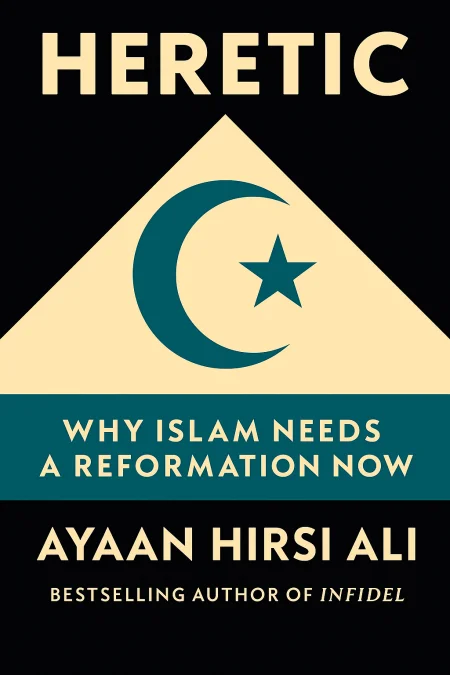
Heretic
Why Islam Needs a Reformation Now
Book Edition Details
Summary
Ayaan Hirsi Ali, with her signature boldness, presents a compelling manifesto for change in "Heretic," challenging the very foundation of Islamic doctrine. Venturing into the contentious intersection of faith and modernity, she examines the entrenched ideologies fueling extremism and posits that a profound reformation is not only necessary but potentially imminent. Amidst the turbulence caused by global terror and cultural clashes, Hirsi Ali illuminates a path towards peace by proposing transformative amendments to Islamic teachings. Her narrative, woven with personal insights and historical parallels, calls for a collective courage to confront political Islam and embrace a future where religion and liberty coexist. This provocative work invites readers to question, debate, and ultimately support a new dawn of tolerance and reform.
Introduction
Islam stands at a critical crossroads in the twenty-first century, facing an urgent need for fundamental reform that parallels Christianity's Protestant Reformation of the sixteenth century. The persistence of violent extremism, systematic oppression of women and minorities, and the incompatibility of orthodox Islamic doctrine with modern democratic values present challenges that cannot be addressed through political solutions alone. These issues stem from core theological concepts within Islam itself, requiring a thorough examination of the religion's foundational texts and practices. The analysis presented here employs a comparative historical approach, drawing parallels between Christianity's transformation through reformation and Islam's potential for similar change. By identifying specific doctrinal elements that impede integration with modern society, this examination offers a framework for understanding why previous reform attempts have failed and what systematic changes might enable Islam to coexist peacefully with contemporary global civilization. The argument unfolds through careful analysis of Islamic scripture, historical precedent, and contemporary evidence, challenging readers to confront uncomfortable truths about religious doctrine while maintaining hope for meaningful transformation.
The Five Pillars of Islamic Extremism
Five fundamental tenets within Islamic doctrine create the theological foundation for extremist interpretation and violent action. These elements work synergistically to resist modernization and reform efforts. The first pillar involves the elevation of Muhammad to semi-divine status and the treatment of the Qur'an as an immutable, literal word of God that cannot be questioned or reinterpreted. This creates an intellectual straitjacket that prevents critical examination of outdated concepts. The second pillar emphasizes the afterlife over earthly existence, fostering a death-focused mentality that glorifies martyrdom while diminishing investment in improving worldly conditions. The third pillar manifests through sharia law's comprehensive claim to govern all aspects of life, superseding secular legal systems and democratic governance. Unlike other religious legal traditions that have adapted to modern jurisprudence, sharia maintains medieval punishments and social structures that conflict with human rights principles. The fourth pillar empowers individual Muslims to enforce religious compliance through the principle of "commanding right and forbidding wrong," creating grassroots vigilantism that stifles dissent and reform movements. The fifth pillar institutionalizes jihad as holy war, providing theological justification for violence against non-Muslims and insufficiently devout Muslims. These interconnected elements form a self-reinforcing system that actively resists change while providing ideological ammunition for extremist groups. Understanding their theological roots reveals why superficial reforms have failed and why comprehensive doctrinal revision becomes necessary for Islam's peaceful evolution.
Why Islam Resists Reform Unlike Christianity
Christianity underwent fundamental transformation through the Protestant Reformation because specific historical conditions enabled theological revolution. Three critical factors facilitated this change: technological innovation through the printing press, an emerging educated urban middle class, and political authorities who benefited from challenging papal power. These elements combined to create space for religious debate and doctrinal reexamination that ultimately transformed Christian practice and belief. Islam faces structural barriers that Christianity did not encounter during its reformation period. The decentralized nature of Islamic authority means no central hierarchy exists to implement systematic reform, yet this same decentralization paradoxically creates rigid conformity through peer enforcement. The doctrine of scriptural immutability treats the Qur'an as God's final, unchangeable word, making textual criticism or reinterpretation tantamount to blasphemy. Historical attempts at Islamic reformation consistently failed because reformers were marginalized, exiled, or executed by orthodox authorities. The concept of bidah, or harmful innovation, actively discourages theological development and adaptation to changing circumstances. This creates a religious culture that views any departure from seventh-century practice as corruption rather than evolution. The fusion of religious and political authority in many Muslim societies eliminates the tension between church and state that enabled Christian reformation. Where secular and religious power remain unified, reform movements threaten both spiritual and temporal authority, intensifying resistance to change. Contemporary technology offers new possibilities for Islamic reformation, but entrenched theological barriers require systematic dismantling before meaningful progress can occur. The printing press democratized Christian scripture; the internet could similarly democratize Islamic interpretation if doctrinal constraints were lifted.
The Human Cost of Religious Orthodoxy
Orthodox Islamic practice exacts devastating human costs that manifest most clearly in the systematic oppression of women, religious minorities, and dissenting voices within Muslim communities. The principle of male guardianship reduces women to legal minors requiring permission for basic activities, while honor violence claims thousands of lives annually as families murder female relatives for perceived transgressions against Islamic modesty codes. These practices persist not as cultural aberrations but as logical extensions of scriptural commands and prophetic precedent. Religious minorities face systematic persecution across the Muslim world, from the ethnic cleansing of Christians in Iraq and Syria to blasphemy laws that criminalize religious dissent in Pakistan and Saudi Arabia. The global war on Christians represents a coordinated campaign rooted in theological imperatives rather than political grievances, yet Western observers consistently minimize the religious motivation behind these atrocities. The enforcement mechanism of "commanding right and forbidding wrong" creates totalitarian social control that begins within families and extends throughout communities. This system transforms every Muslim into a potential religious enforcer, generating surveillance and conformity that stifles intellectual development and individual expression. Honor killings, forced marriages, female genital mutilation, and public executions represent extreme manifestations of this enforcement principle, but subtler forms of coercion affect millions more who live under constant pressure to conform to orthodox Islamic expectations. The economic and social stagnation evident throughout much of the Muslim world reflects this emphasis on conformity over innovation. When questioning becomes heresy and adaptation becomes apostasy, societies lose their capacity for creative problem-solving and progressive development, trapping populations in cycles of poverty and authoritarianism.
Toward a Modified Islam for the Modern World
Reform becomes possible when specific theological modifications address the root causes of Islamic rigidity and extremism. Five fundamental changes could enable Islam's transformation into a faith compatible with modern democratic values and human rights principles. The first modification involves acknowledging the human role in composing Islamic scripture and the Prophet's fallibility, creating space for critical interpretation and contextual understanding. The second change requires redirecting religious focus from afterlife obsession toward improving earthly conditions, encouraging investment in education, economic development, and social progress. The third modification subordinates sharia law to secular legal systems, relegating religious jurisprudence to matters of personal faith while accepting democratic governance and universal human rights as paramount. The fourth change abolishes individual enforcement of religious compliance, replacing grassroots vigilantism with institutional religious authority that operates within democratic constraints. The fifth modification reinterprets jihad as spiritual struggle rather than physical warfare, eliminating theological justification for violence against non-Muslims and religious minorities. These modifications require systematic theological work by Islamic scholars willing to challenge orthodox interpretation and risk accusations of heresy. Historical precedents exist within Islamic scholarship for contextual interpretation and theological development, but reformers need protection and support to develop these traditions. The emergence of political leaders like Egypt's Abdel Fattah el-Sisi who explicitly call for religious revolution suggests growing recognition that theological reform has become essential for political stability and social progress. Success depends on supporting reform-minded Muslims rather than treating all Islamic interpretation as equally valid. Just as the West supported anti-communist dissidents during the Cold War, contemporary policy must distinguish between reformist and extremist Islamic voices, providing platforms and protection for those willing to challenge orthodox doctrine in pursuit of peaceful coexistence.
Summary
The fundamental incompatibility between orthodox Islamic doctrine and modern civilization demands systematic theological reform rather than superficial political accommodation. Five core Islamic concepts create self-reinforcing barriers to modernization that can only be overcome through explicit doctrinal modification that acknowledges scripture's human composition, prioritizes earthly over eternal concerns, subordinates religious law to democratic governance, eliminates vigilante enforcement of religious compliance, and reinterprets holy war as spiritual rather than physical struggle. This transformation parallels Christianity's Protestant Reformation but requires different strategies due to Islam's unique theological and organizational characteristics, suggesting that meaningful change depends on supporting reformist voices within Muslim communities while maintaining clear standards for democratic values and human rights that cannot be compromised in the name of religious sensitivity.
Related Books
Download PDF & EPUB
To save this Black List summary for later, download the free PDF and EPUB. You can print it out, or read offline at your convenience.
By Ayaan Hirsi Ali
