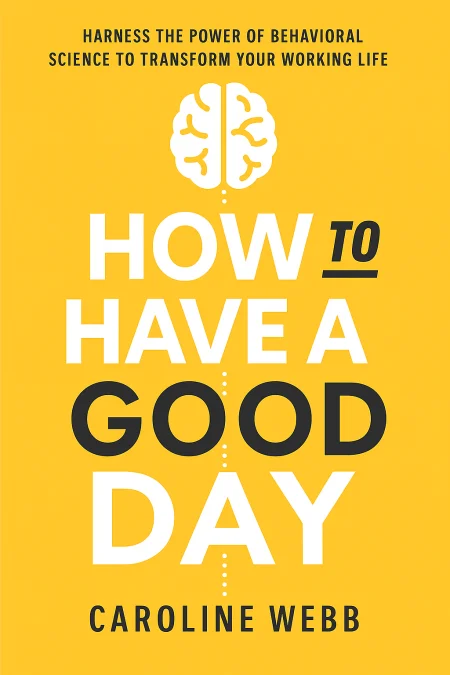
How To Have A Good Day
Think Bigger, Feel Better and Transform Your Working Life
Book Edition Details
Summary
In a bustling world where the workplace often feels like a maze of stress and complexity, Caroline Webb offers a beacon of clarity and empowerment with "How to Have a Good Day." Marrying the wisdom of behavioral economics with cutting-edge insights from psychology and neuroscience, Webb transforms daunting daily tasks into opportunities for triumph. She breaks down the science into actionable strategies, teaching readers how to prioritize, communicate, and thrive with ease. Discover the art of resilience, master the energy game, and redefine what it means to succeed in the modern office. This is not just a guide—it's your personal playbook to infusing every day with satisfaction and accomplishment. For those ready to transcend ordinary workdays, this book promises a lifetime of extraordinary ones.
Introduction
Every morning presents us with a choice that shapes our entire experience: will we drift through the day reacting to whatever comes our way, or will we take deliberate steps to create the kind of day we actually want to have? The difference between these two approaches isn't just about productivity or success—it's about fundamentally transforming how we experience our working lives. When we understand how our brains work and apply insights from behavioral science, we discover that we have far more control over our daily experience than we ever imagined. The secret lies not in working harder or longer, but in working smarter by aligning our actions with how our minds naturally function. This isn't about perfection or unrealistic expectations; it's about making small, science-backed adjustments that compound into dramatically better days, better relationships, and a more fulfilling professional life.
Set Clear Intentions and Master Your Focus
Your brain's automatic system constantly filters reality, showing you only what it deems important while screening out everything else. Without conscious direction, you're essentially letting your subconscious decide what kind of day you'll have. The solution lies in setting clear intentions that act as a compass for your attention throughout the day. Martin, a strategy director at an aircraft manufacturer, discovered this principle during a particularly overwhelming morning. Sitting on his bed, feeling swamped by his responsibilities, he spontaneously began writing about what truly mattered to him and how he wanted to approach his work. The clarity that emerged was transformative. He felt more focused, purposeful, and energized than he had in months. Building on this breakthrough, Martin developed a simple daily routine. Before leaving for the office, he spends just a few minutes clearing his head with deep breathing, then asks himself what's most important for the day and makes brief notes about where he wants to focus his attention. This practice helps him identify his real priorities and choose a constructive approach to challenges, such as thinking longer-term and being more tolerant of delays. The key is to examine three critical areas: your Aim, your Attitude, and your Attention. This simple framework takes just minutes but fundamentally shifts how your brain processes the day ahead. Frame your intentions positively and challenge any negative assumptions you're carrying. When you're clear about your intentions, you're no longer at the mercy of whatever happens to grab your attention first.
Build Strong Relationships and Navigate Difficult People
The quality of your relationships at work fundamentally shapes how each day feels, and you have far more influence over these interactions than you might realize. Every conversation is an opportunity to build connection, resolve tensions, or bring out the best in others. The key lies in understanding that other people's behavior is largely driven by whether their brain perceives you as friend or foe. Peter, an IT consultant, discovered this when his direct, problem-focused communication style was creating tension with clients. Despite his genuine desire to help, his interactions often felt like intellectual combat because he approached conversations with the unconscious intention of proving he was right. This put people on the defensive, making them less receptive to his expertise and less likely to collaborate effectively. Peter's transformation began when he shifted his intentions from demonstrating his knowledge to building trusting relationships. Instead of leading with data and analysis, he started asking genuine questions about his clients' perspectives and challenges. He learned to find common ground, whether through shared professional experiences or mutual concerns about project outcomes. This created an "in-group" feeling that made people more open to his ideas. The foundation of great interactions lies in setting collaborative intentions, asking quality questions that invite people to share their thoughts and feelings, and showing genuine curiosity about others' perspectives. When tensions arise, assume "good person, bad circumstances" and look for the underlying needs or fears that might be driving difficult behavior. Use the "notice-acknowledge-offer" technique when someone seems upset: describe what you've observed neutrally, acknowledge their feelings with empathy, and ask if there's anything you can do to help.
Make Better Decisions and Increase Your Influence
Your ability to think clearly and communicate persuasively determines how effectively you can turn good ideas into real impact. The secret lies in recognizing when your brain's automatic system is taking shortcuts that might lead you astray and having practical tools to engage more deliberate thinking when it matters most. Nayan, a bank CFO, learned this lesson when he was asked to fire an employee on his first day in a new role. The decision had already been made, the case seemed clear, and the easy path would have been to simply execute the directive. But Nayan recognized the danger of accepting the default option without deeper consideration. Instead of proceeding automatically, Nayan paused to examine his assumptions and gather more information. He spoke with the employee's colleagues, explored alternatives beyond the simple fire-or-don't-fire choice, and discovered that the "problem" employee was actually a valuable team member whose direct communication style had been misinterpreted as arrogance. By taking time to think more deliberately, Nayan not only saved someone's career but also gained a reputation for thoughtful leadership. To think more clearly, develop the habit of pausing when facing important decisions. Notice when you're using phrases like "obviously right" or "there's only one option," as these often signal that mental shortcuts are at work. Actively seek out alternative perspectives and consider multiple explanations for situations. When communicating your ideas, make your message easy to process by keeping it simple and concrete, lead with human stories rather than abstract concepts, and always consider what your audience already knows and feels about your topic.
Stay Resilient and Energized Through Any Challenge
Resilience isn't about being tough or emotionless; it's about developing the skills to bounce back from setbacks, stay calm under pressure, and maintain your effectiveness even when things don't go according plan. The secret lies in understanding how your brain responds to stress and having practical tools to shift from defensive mode back to discovery mode when challenges arise. When Anthony hits his weekly "pinch points," he has a reliable routine that consistently helps him regain his equilibrium. First, he takes what he calls a "triangular breath," breathing in for three counts, out for three counts, and pausing for three counts. This simple technique slows his heart rate and signals to his brain that the immediate threat has passed. After this mindful pause, Anthony asks himself a clarifying question: "Do I want to feel like this?" This simple inquiry reminds him that he has choices in how he responds to pressure. He then identifies the most important thing that needs to happen by the end of the day, breaking it down into the smallest possible first step. This approach transforms overwhelming complexity into manageable action. The key to resilience is developing self-awareness about your personal triggers and early warning signs of stress. Create a simple "step back and reset" routine that you can deploy in the moment, combining a physical pause with a question that reengages your deliberate thinking. When facing setbacks, practice the "good person, bad circumstances" mindset and focus on the true facts of what happened rather than your interpretations. Remember that resilience is built through practice—each time you successfully navigate a challenging situation, you're strengthening your capacity to handle future obstacles with grace and effectiveness.
Summary
The path to consistently good days isn't found in working harder or hoping for better circumstances, but in understanding and working with the natural patterns of your remarkable brain. As the research clearly shows, small changes in how you set intentions, manage your mental resources, approach relationships, and handle challenges can create profound improvements in both your performance and your daily experience. The science gives us a roadmap, but the journey begins with a simple decision to be more deliberate about how you want your days to unfold. Start tomorrow morning by taking just two minutes to set clear intentions for your day, and approach your first interaction with genuine curiosity about the other person's perspective. These aren't just productivity techniques—they're the building blocks of a more fulfilling professional life where you consistently show up as your best self and help others do the same.
Related Books
Download PDF & EPUB
To save this Black List summary for later, download the free PDF and EPUB. You can print it out, or read offline at your convenience.
By Caroline Webb
