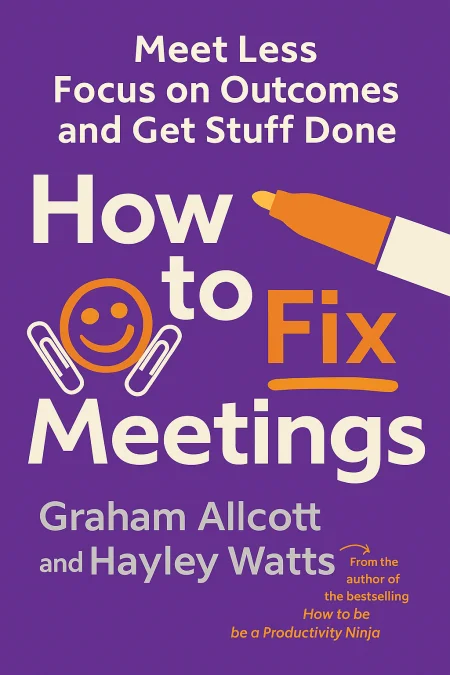
How to Fix Meetings
Meet Less, Focus on Outcomes and Get Stuff Done
byGraham Allcott, Hayley Watts
Book Edition Details
Summary
Tired of wasting hours in meetings that seem to drag on without purpose? Graham Allcott and Hayley Watts have crafted a master plan to reclaim your time with their enlightening guide, "How to Fix Meetings." This isn't just another book on productivity; it's a transformative approach to meetings that emphasizes preparation, purpose, and results. Learn to wield the power of the 40–20–40 Continuum, where preparation and follow-up are as crucial as the meeting itself. Discover the art of saying no to unnecessary gatherings and how to make every meeting a catalyst for action. This book turns meeting fatigue into focused, outcome-driven collaboration.
Introduction
Picture this: you're sitting in yet another meeting that could have been an email, watching precious hours of your life evaporate while nothing meaningful gets accomplished. You're not alone in this frustration. Research reveals that 65% of senior managers say meetings prevent them from completing their own work, while 71% describe meetings as unproductive and inefficient. But here's the revolutionary truth: meetings aren't inherently broken, we've just forgotten how to use them properly. The most satisfying, company-changing, pace-setting moments in your career likely happened in well-executed meetings where brilliant minds came together to solve problems, spark innovation, and create momentum that email chains simply cannot generate. The challenge isn't eliminating meetings entirely, it's learning to distinguish between meetings that matter and those that waste our most precious resource: attention. This transformation requires both the courage to ruthlessly cut unnecessary gatherings and the skill to design meetings that become powerful catalysts for change, connection, and breakthrough results.
Master the Yin and Yang of Meeting Culture
The ancient Chinese philosophy of yin and yang reveals a profound truth about productive meetings: they require balancing opposing but complementary energies. Yin represents the softer, receptive energy of deep listening, empathy, and creating space for all voices to be heard. Yang embodies the active, decisive energy of driving toward outcomes, making tough choices, and converting discussion into action. Most dysfunctional meetings suffer from an extreme imbalance of these forces. Consider Graham's experience working with a fast-growing startup where the passionate CEO attended every internal meeting to stay involved in all decisions. Her HiPPO effect (Highest Paid Person's Opinion) was overwhelming the yang energy while simultaneously stifling the yin energy of collaborative input. The meetings became lengthy rubber-stamp sessions where her presence dominated, preventing both meaningful discussion and efficient decision-making. The solution wasn't eliminating her involvement but restructuring her participation. The transformation came when they redesigned meetings so the CEO only attended the final ten minutes. Her team would spend the bulk of the meeting in yin mode, deeply exploring issues, hearing diverse perspectives, and collaboratively developing recommendations. Then, in pure yang fashion, they would present their conclusions to the CEO for rapid-fire questions and final approval. This balanced approach honored both the need for inclusive collaboration and decisive leadership. The CEO's time in meetings dropped dramatically while the quality of decisions actually improved because they were informed by richer discussion. To implement this balance, start by auditing your current meeting culture. Are you drowning in endless discussions that never reach conclusions? That's too much yin. Are decisions being made without proper input from key stakeholders? That's excessive yang. For each meeting, consciously design moments for both energies: create structured time for listening and exploring ideas, then shift decisively into action-planning and commitment. Remember that even the most collaborative discussion needs someone willing to say, "We've heard great input, now let's decide." The magic happens when you honor both the wisdom of the group and the necessity of moving forward.
Design Meetings That Actually Matter
Every meeting should begin with a crystal-clear purpose statement starting with "By the end of this meeting, we will have..." This isn't optional nicety, it's the foundation that determines whether your gathering creates value or wastes time. Without this clarity, you're essentially asking busy people to give you their attention without explaining why it matters. The most successful meeting designers think like User Experience professionals, considering every aspect of the participant's journey from invitation to follow-up. Martin Farrell, Think Productive's meetings magician, revolutionized how organizations approach gathering design through his 40-20-40 principle: spend 40% of your energy preparing for the meeting, 20% on the meeting itself, and 40% on productive follow-through. This ratio flies in the face of how most people approach meetings, where 100% of effort goes into showing up and hoping for the best. Martin's approach recognizes that the real magic happens in the preparation phase, where you understand participants' contexts, anticipate conflicts, and design experiences that honor people's time investment. When Martin worked with a struggling leadership team, he spent hours before their retreat interviewing each participant individually to understand their perspectives, concerns, and hopes. He discovered underlying tensions that had never been openly discussed and conflicting assumptions about the organization's direction. Rather than walking into a room hoping good things would happen, he designed specific activities to surface these issues constructively. The result was a breakthrough meeting where previously conflicted team members finally aligned around shared priorities. To design meetings that matter, start by asking yourself three essential questions: What decision needs to be made or what outcome must be achieved? Who are the minimum viable participants needed to reach that outcome? What preparation or information sharing can happen before we gather so we use our precious time together for creation rather than consumption? Then craft your purpose statement, design your agenda with specific time allocations, and establish clear protocols for how the meeting will run. Send this framework to participants in advance, not as an afterthought. Remember, if you can't clearly articulate why a meeting needs to happen and what success looks like, you probably shouldn't schedule it at all.
Lead and Participate Like a Productivity Ninja
The difference between mediocre and extraordinary meetings often comes down to how skillfully the chair manages both the task and relationship dimensions of group dynamics. Great chairs understand they're not just keeping time and following agendas, they're creating conditions where diverse minds can collaborate effectively while maintaining focus on outcomes. This requires what Think Productive calls "weapon-savvy" skills: knowing which tools and techniques to deploy when energy flags, conflicts arise, or discussions lose direction. The most powerful tool in any chair's arsenal is the strategic pause. When Jeff Bezos instituted his famous six-page memo reading at the start of Amazon meetings, he wasn't just sharing information, he was using reflective pause to ensure everyone started from the same knowledge base. During one particularly contentious board meeting, Hayley watched an experienced chair sense rising tension and call for a "five-minute leg stretch." This brief intermission allowed heated participants to cool down while giving quieter members time to organize their thoughts. When they reconvened, the discussion was more productive and solutions emerged that hadn't been visible in the heat of debate. The transformation happened because the chair recognized that conflict isn't inherently bad, it's energy that needs to be channeled constructively. Instead of avoiding disagreement or letting it derail the meeting, skilled facilitators create space for healthy debate while keeping everyone focused on shared outcomes. They use techniques like Edward de Bono's Six Thinking Hats to ensure all perspectives are heard systematically, or implement the "silent meeting" approach where participants contribute thoughts via shared documents before verbal discussion begins. To lead like a productivity ninja, master the art of generous attention giving. This means truly listening to understand, not just waiting for your turn to speak. Practice using phrases that move discussion forward: "My understanding is we've agreed on X and Y, which leaves us to figure out Z" or "We have two clear options here, should we take a vote?" As a participant, your role is equally vital. Come prepared with your own purpose for attending, capture your actions in real-time rather than waiting for someone else's notes, and don't hesitate to help steer discussions back on track when they drift. Remember, every person in the room shares responsibility for the meeting's success, regardless of their formal role.
Summary
The path from meeting-heavy frustration to productive collaboration isn't about eliminating all gatherings, it's about developing the wisdom to know when human connection and shared attention can create breakthrough results that individual work cannot achieve. As the authors remind us, "If your meetings don't change the world, or at least the world directly around you, something's not right." This isn't hyperbole, it's recognition that in our age of fragmented attention and digital distraction, the ability to bring minds together purposefully has become a rare and powerful competitive advantage. The future belongs to those who can balance the yin energy of deep listening and empathy with the yang energy of decisive action and relentless focus on outcomes. Start today by auditing just one recurring meeting in your calendar: define its true purpose, ruthlessly eliminate unnecessary attendees, and design an experience that honors everyone's time investment while driving meaningful results. Your colleagues will thank you, your productivity will soar, and you'll rediscover why great meetings remain humanity's most powerful tool for collaborative problem-solving.
Related Books
Download PDF & EPUB
To save this Black List summary for later, download the free PDF and EPUB. You can print it out, or read offline at your convenience.
By Graham Allcott
