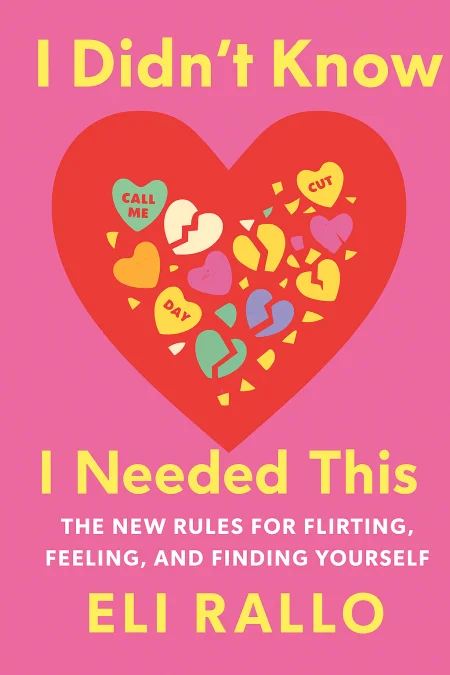
I Didn't Know I Needed This
The New Rules for Flirting, Feeling, and Finding Yourself
Book Edition Details
Summary
Picture this: a whirlwind of romance, reality, and riotous humor, all wrapped up in a guide that's as unpredictable as modern love itself. TikTok sensation Eli Rallo takes you on a vibrant ride through the chaos of contemporary dating, delivering wisdom with wit and warmth. In "I Didn't Know I Needed This," Eli becomes the confidante you never knew you were missing, offering a candid, comical roadmap through the ups and downs of being single, swiping right, and embracing heartache. Her stories brim with honesty and hilarity, capturing the essence of navigating love in a digital age. With her trademark authenticity, Eli transforms dating disasters into life lessons, making you laugh while reminding you to cherish every stumble and success along the way. Whether you're a seasoned romantic or a curious newcomer, this book promises to be your go-to companion, filled with advice that's as genuine as it is entertaining.
Introduction
Picture yourself at twenty-one, sitting in your dorm room at midnight, staring at your phone screen as you craft yet another carefully calculated text message. You delete it, rewrite it, delete it again. The person you went on a coffee date with earlier hasn't responded to your last message, and you're spiraling into familiar territory: analyzing every word exchanged, every glance shared, wondering if you said too much or not enough. Sound familiar? You're not alone in this digital dating maze where authentic connection feels increasingly elusive. In a world where swipe culture has replaced serendipitous encounters and social media creates highlight reels of everyone else's seemingly perfect relationships, finding genuine love has become both more accessible and more complicated than ever before. We have endless options at our fingertips, yet many of us feel lonelier than previous generations. We can connect with someone across the globe instantly, yet struggle to communicate our needs to someone sitting across the dinner table. The paradox of modern romance isn't just about technology—it's about the fundamental challenge of staying true to ourselves while navigating societal expectations of who we should be to be loveable. This exploration isn't another collection of dating rules or relationship hacks. It's a roadmap for the messy, beautiful, complicated journey of finding authentic connection in the digital age, starting with the most crucial relationship of all: the one you have with yourself. Whether you're navigating dating apps, decoding mixed signals, or learning to love your own company, these insights offer hope that meaningful love—romantic and otherwise—is not only possible but inevitable when we have the courage to show up as our authentic selves.
First Dates and Early Romance: Setting the Foundation
When Sarah matched with Jake on a dating app, their conversation flowed effortlessly for three days before he suggested meeting for coffee. She spent an hour getting ready, carefully curating an outfit that said "effortlessly attractive" while internally rehearsing conversation topics that would make her seem interesting but not overeager. The date itself exceeded her expectations—two hours flew by as they discovered shared passions for hiking and terrible reality TV shows. Jake walked her to her car, gave her a warm hug, and said he'd love to see her again soon. Sarah drove home feeling hopeful and genuinely excited about someone for the first time in months. Then came the aftermath. Jake texted that evening asking if she'd made it home safely, and Sarah stared at her phone for twenty minutes crafting the perfect response. Should she be flirty or casual? Express enthusiasm about seeing him again or play it cool? She settled on a simple "Yes, thanks for asking! Had a great time tonight" but then spent the next hour wondering if she should have added more. When Jake didn't respond immediately, her mind began its familiar spiral of doubt and overanalysis. What Sarah didn't know was that Jake was experiencing his own version of post-date anxiety. He'd genuinely enjoyed their time together and wanted to plan a second date, but worried that texting too soon would seem desperate. He'd been taught that showing too much interest too early was a turnoff, so he waited two days before reaching out again. By then, Sarah had convinced herself he wasn't interested, and their natural chemistry became clouded by unnecessary games and misunderstandings. The tragedy of early dating in the digital age isn't a lack of connection—it's how often genuine connections get sabotaged by artificial rules and fear-based strategies. When we're constantly calculating our responses and performing versions of ourselves we think others want to see, we rob both parties of the chance to discover real compatibility. The foundation of any relationship worth having starts with the radical act of being authentic from the very first encounter, even when vulnerability feels terrifying.
Navigating Relationships: Love, Sex, and Communication
Three months into dating Marcus, Elena found herself in a familiar pattern of sexual encounters that left her feeling disconnected and unsatisfied. Despite their emotional compatibility and genuine affection for each other, their physical intimacy felt one-sided and routine. Elena had never been comfortable discussing her needs in bed, carrying shame from a conservative upbringing that taught her good women didn't have strong sexual desires, let alone voice them. She'd learned to prioritize her partner's pleasure while treating her own as an afterthought, if she considered it at all. The turning point came during a quiet Sunday morning when Marcus, sensing her distance, gently asked if everything was okay between them. Instead of her usual deflection, Elena took a deep breath and admitted she'd been feeling disconnected during their intimate moments. To her surprise, Marcus didn't react with defensiveness or judgment. Instead, he expressed gratitude for her honesty and shared his own insecurities about whether he was meeting her needs. What followed was the most vulnerable conversation Elena had ever had about sex, desire, and pleasure. That conversation transformed not just their physical relationship, but their entire dynamic. Elena discovered that Marcus had been holding back his own desires, worried about being too aggressive or assuming what she wanted. As they began communicating openly about their needs, boundaries, and fantasies, their intimacy deepened in ways Elena had never experienced. She realized that the shame she'd carried around her sexuality had been robbing her of not just physical pleasure, but emotional connection and self-acceptance. The breakthrough extended beyond the bedroom into every aspect of their relationship. Elena found her voice in discussions about future plans, social activities, and even small daily decisions. She stopped automatically deferring to Marcus's preferences and started expressing her own opinions and desires. Rather than creating conflict, this honesty brought them closer together, creating a foundation of mutual respect and genuine understanding that made their love feel both passionate and sustainable.
Heartbreak and Moving Forward: Lessons in Resilience
When David ended their eighteen-month relationship over a Tuesday night dinner, Maya felt her carefully constructed world crumble in real time. They'd been discussing moving in together just weeks earlier, and she'd already started imagining their shared future—weekend farmers market trips, hosting dinner parties, maybe even adopting a dog together. The breakup wasn't dramatic or angry; David simply said he'd realized he wasn't ready for the level of commitment she wanted, and he cared about her too much to string her along. His kindness somehow made it hurt worse. The weeks that followed were a masterclass in the particular agony of modern heartbreak. Maya found herself obsessively checking David's social media, analyzing his posts for signs of regret or evidence that he was already moving on. She drafted countless texts she never sent, ranging from angry accusations to desperate pleas for reconciliation. Friends offered well-meaning advice about getting back out there and downloading dating apps, but the thought of starting over with someone new felt impossible when she could barely remember how to be alone. Slowly, though, something unexpected began emerging from the wreckage. Without David's schedule to consider, Maya rediscovered her love for early morning yoga classes. She started cooking elaborate meals just for herself, experimenting with recipes she'd always wanted to try. She called friends she'd neglected during the relationship and found herself laughing until her stomach hurt during long phone conversations. Most surprisingly, she began enjoying her own company in ways she'd forgotten were possible. The transformation wasn't linear or easy, but Maya gradually realized that her heartbreak had revealed something crucial: she'd been so focused on being the perfect girlfriend that she'd lost touch with who she was as an individual. The relationship hadn't failed because she wasn't worthy of love—it had ended because she'd been trying so hard to be what she thought David wanted that neither of them had gotten to know her authentic self. Heartbreak, for all its devastation, had forced her to come home to herself, and the woman she rediscovered was someone she genuinely liked spending time with.
Summary
The journey through modern dating and relationships ultimately reveals a profound truth that runs counter to everything we've been taught about finding love: the worthiness we seek from others can only be sustained when we've first recognized it within ourselves. Through the awkwardness of first dates, the vulnerability of deepening intimacy, and the devastation of heartbreak, we discover that our value was never in question—only our belief in it. The most transformative relationships aren't those that complete us, but those that celebrate the completeness we bring to them. Every swipe, every conversation, every moment of connection or rejection teaches us something essential about what we truly want and deserve. The talking stages that go nowhere, the relationships that end, the nights spent wondering if we'll ever find our person—they're all preparing us for the moment when everything finally aligns. But that alignment doesn't happen because we've finally found someone willing to love us despite our flaws; it happens because we've learned to love ourselves because of our wholeness, flaws included. Perhaps most importantly, this exploration reminds us that authenticity isn't just a dating strategy—it's a way of moving through the world that attracts what we need while repelling what doesn't serve us. When we stop shrinking ourselves to fit into someone else's vision of loveable and start expanding into our full, messy, beautiful selves, we create space for connections that nourish rather than diminish us. The goal isn't to avoid pain or guarantee outcomes, but to show up fully for our own lives, trusting that genuine love—romantic, platonic, and self-directed—will always find us when we're brave enough to be found.
Related Books
Download PDF & EPUB
To save this Black List summary for later, download the free PDF and EPUB. You can print it out, or read offline at your convenience.
By Eli Rallo
