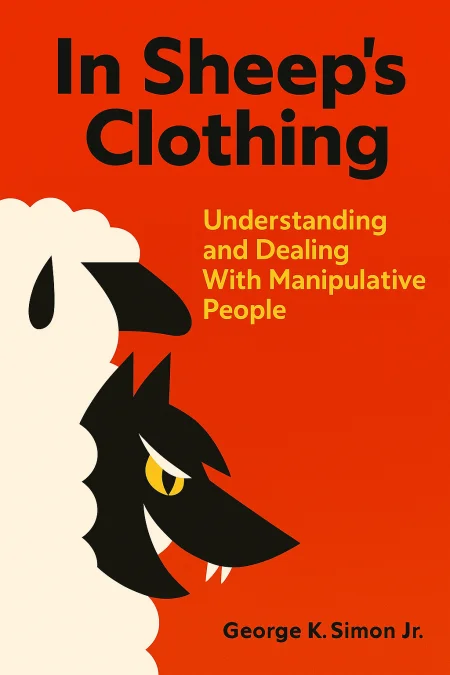
In Sheep’s Clothing
Understanding and Dealing with Manipulative People
Book Edition Details
Summary
Beware the artful deceiver cloaked in charm, for manipulation thrives in shadows where wolves masquerade as allies. In "In Sheep’s Clothing," Dr. Simon dismantles the cunning facades of those who prey on your goodwill, be it in the boardroom or at the dinner table. Through incisive case studies, he unveils the strategies used by these covert operators to outwit and outshine you at every turn. Arm yourself with the wisdom to detect their subtle schemes and the resilience to reclaim your narrative. This guide is not just about recognizing the game—it's about taking back control from those who would quietly orchestrate your downfall.
Introduction
Human relationships often involve subtle power struggles that remain hidden beneath surfaces of civility and charm. While traditional psychology has long focused on neurotic personalities driven by fear and insecurity, a fundamentally different character type operates among us—one that fights covertly for dominance while maintaining an appealing facade. These covert-aggressive personalities represent a significant departure from conventional understanding of human motivation and behavior. The phenomenon of covert aggression challenges deeply held assumptions about why people act as they do. Rather than being driven by underlying fears or emotional wounds, these individuals pursue power and control through calculated manipulation, using tactics that simultaneously conceal their aggressive intent while placing others on the defensive. This creates a particularly insidious form of interpersonal exploitation that leaves victims confused, drained, and questioning their own perceptions. Understanding this dynamic requires abandoning comfortable myths about human nature and confronting the reality that some individuals operate from entirely different moral frameworks. The analysis reveals how modern permissive society has inadvertently created fertile ground for such behavior to flourish, while traditional therapeutic approaches often fail because they misidentify the fundamental nature of the problem. Through systematic examination of manipulative tactics and their underlying psychology, a clearer picture emerges of how to recognize, understand, and effectively respond to these wolves in sheep's clothing.
The Nature of Covert-Aggressive Personalities
Covert-aggressive personalities represent a distinct category of human character that operates fundamentally differently from both healthy individuals and traditional neurotic types. Unlike neurotics who suffer from excessive guilt and anxiety, these personalities exhibit a profound lack of internal restraint when pursuing their goals. They possess well-developed skills in reading others while maintaining remarkable blindness to their own destructive impact on relationships. The core distinguishing feature of covert aggression lies in its strategic concealment. These individuals fight as intensely as any openly hostile person, but they do so through subtle manipulation that keeps their true intentions hidden. They have learned that direct confrontation invites resistance, so they have mastered the art of "going around" obstacles rather than through them. This approach allows them to maintain social respectability while systematically undermining those who stand in their way. Character formation in covert-aggressives typically involves specific learning failures during development. They never internalize appropriate limits on when fighting is necessary, never develop respect for others' vulnerabilities, and never submit to the civilizing influences that create genuine conscience. Instead, they perfect techniques for exploiting emotional weaknesses in others while convincing themselves and their targets that they are reasonable, caring individuals. The distinction between character-disordered and neurotic personalities becomes crucial when dealing with covert aggression. Where neurotics need insight and emotional healing, character-disordered individuals require confrontation, limits, and correction. This fundamental difference explains why traditional therapeutic approaches often fail with manipulative personalities and why victims find themselves repeatedly frustrated in their attempts to create positive change through understanding and accommodation.
Recognizing Manipulation Tactics and Control Strategies
Manipulative individuals employ a sophisticated arsenal of psychological tactics designed to maintain dominance while avoiding detection. These techniques serve multiple functions simultaneously: they conceal aggressive intent, place targets on the defensive, and create confusion that prevents effective resistance. Understanding these tactics as offensive weapons rather than defensive mechanisms represents a crucial shift in perspective. Denial, rationalization, and minimization form the foundation of manipulative strategy. When confronted about harmful behavior, covert-aggressives reflexively diminish the significance of their actions while offering seemingly reasonable explanations. These are not unconscious defense mechanisms but calculated responses designed to avoid accountability. The manipulator consciously employs these tactics to maintain their position and continue problematic behavior. Guilt-tripping and shaming constitute particularly powerful weapons in the manipulative arsenal. Covert-aggressives demonstrate remarkable skill in identifying the conscience-driven vulnerabilities of their targets. They understand that conscientious individuals can be controlled through their own sense of responsibility and desire to avoid causing harm. By positioning themselves as victims or martyrs, manipulators invert the moral dynamic and leave genuine victims feeling responsible for the manipulator's welfare. Diversionary tactics, selective attention, and playing various roles—victim, servant, innocent—allow manipulators to control the narrative of interactions. They avoid direct responses to legitimate concerns, redirect attention away from their behavior, and present themselves in whatever light serves their immediate purposes. Recognition of these patterns requires developing sensitivity to the underlying aggressive agenda that drives all manipulative behavior, regardless of its surface appearance.
Empowerment Tools for Effective Confrontation
Effective response to manipulation requires a fundamental shift from reactive to proactive engagement. Traditional approaches that focus on understanding the manipulator's motivations or attempting to heal their supposed emotional wounds consistently fail because they misidentify the core problem. Instead, success comes from establishing clear boundaries and refusing to engage with manipulative tactics on their own terms. The principle of accepting no excuses forms the cornerstone of empowered response. Regardless of how reasonable a manipulator's explanations might sound, the focus must remain on the behavior itself and its impact. Rationalizations serve only to maintain the manipulator's position and avoid necessary change. By dismissing these explanations as irrelevant, targets can maintain clarity about what constitutes acceptable behavior. Judging actions rather than intentions prevents the confusion that manipulators rely upon for their success. Speculation about motives provides endless opportunities for misdirection and self-doubt. Past behavior patterns offer the most reliable guide for future expectations, and character assessment based on consistent actions provides the foundation for appropriate protective measures. Setting personal limits and making direct requests creates structure that manipulators cannot easily circumvent. When boundaries are clear and consequences are predictable, manipulative tactics lose much of their effectiveness. The key lies in taking action quickly when boundaries are violated, staying focused on immediate issues, and maintaining the weight of responsibility on the aggressor. These tools shift the balance of power and create conditions under which genuine change becomes possible.
Character Disturbance in a Permissive Society
Modern society's increasing permissiveness has created environmental conditions that particularly favor the development and success of manipulative personalities. The cultural shift from disciplined character formation to therapeutic understanding of problematic behavior has inadvertently removed many traditional constraints on exploitative conduct. When society consistently explains away harmful behavior rather than confronting it directly, character-disordered individuals learn to manipulate these explanations for their own advantage. The decline of traditional institutions that once provided character formation—family, religious organizations, community structures—has left many individuals without adequate moral framework during crucial developmental periods. Simultaneously, the therapeutic culture's emphasis on understanding underlying causes rather than addressing behavioral consequences has made it easier for manipulative personalities to avoid accountability for their actions. Educational and therapeutic institutions often compound the problem by misapplying neurotic models to character-disordered individuals. When manipulators are treated as victims of their own psychological conflicts rather than as perpetrators of calculated harmful behavior, intervention efforts not only fail but often enable further manipulation. The assumption that insight leads to change proves particularly destructive when dealing with individuals who already possess considerable self-awareness but lack the will to modify their behavior. The proliferation of character disturbance creates a vicious cycle in which functional, conscientious individuals bear an increasingly heavy burden for maintaining social cohesion. As manipulative personalities become more prevalent and skilled, they exploit the goodwill and sense of responsibility of healthy individuals. This dynamic ultimately threatens the social contract that makes civilized society possible, requiring renewed attention to character formation and accountability rather than continued expansion of therapeutic excuses for harmful behavior.
Summary
The phenomenon of covert aggression reveals how traditional psychological understanding can become a liability when dealing with character-disordered individuals who exploit therapeutic concepts for manipulative purposes. Rather than being driven by fear or insecurity, these personalities pursue dominance through calculated deception, requiring responses based on boundary-setting and accountability rather than empathy and understanding. Recognition of this dynamic empowers individuals to protect themselves effectively while contributing to the broader social need for renewed emphasis on character development over therapeutic accommodation of harmful behavior.
Related Books
Download PDF & EPUB
To save this Black List summary for later, download the free PDF and EPUB. You can print it out, or read offline at your convenience.
By George K. Simon Jr.
