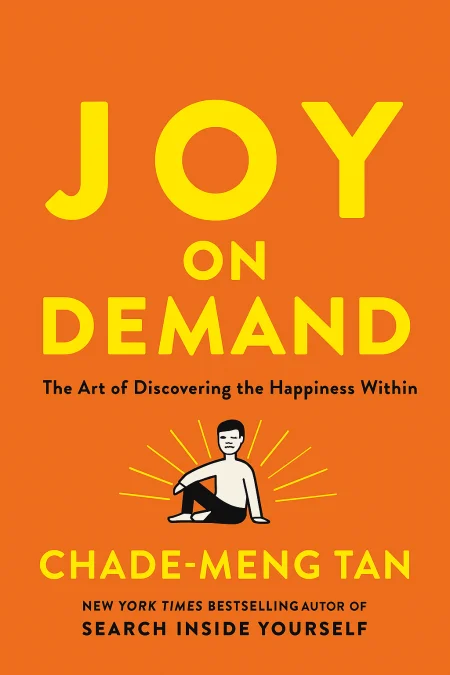
Joy on Demand
The Art of Discovering the Happiness Within
Book Edition Details
Summary
In the frenetic whirl of modern life, where time often feels like a luxury, Chade-Meng Tan offers a revolutionary blueprint for happiness with "Joy on Demand." Imagine unlocking joy in mere seconds, without the weight of prolonged meditation sessions. Tan, Google's renowned "Jolly Good Fellow," distills years of wisdom into a practical guide that redefines joy as an accessible, everyday experience. This book reveals a harmonious dance between joy and meditation, illustrating how they amplify each other to create a sustainable cycle of positivity. By embracing Tan's concept of "wise laziness," readers can cultivate inner peace, insight, and happiness, paving the way to unprecedented creativity and success. With engaging insights and practical tools, "Joy on Demand" promises a transformative journey towards enduring happiness, no matter how busy life gets.
Introduction
Imagine being able to access genuine happiness and inner peace in just a single breath, regardless of what chaos surrounds you. This might sound like wishful thinking, but modern neuroscience and ancient wisdom traditions are converging on a remarkable truth: joy isn't just an emotion that happens to us randomly, it's a trainable mental skill that can be developed systematically. Throughout human history, we've been conditioned to believe that happiness depends on external circumstances - getting the right job, finding the perfect relationship, accumulating enough wealth. Yet research shows that even lottery winners return to their baseline happiness levels within months, while some of the world's happiest people are those who have learned to cultivate contentment from within. The fascinating intersection of contemplative practices and brain science reveals that our minds possess an extraordinary capacity for transformation. When we understand how attention, emotional regulation, and compassion actually function in the brain, we can begin to work with these systems intentionally rather than being at their mercy. The practices explored here aren't mystical or esoteric - they're grounded in measurable changes to brain structure and function that can begin manifesting in as little as fifteen minutes of training. From the basic mechanics of breathing and attention to the sophisticated neural networks underlying empathy and emotional resilience, this journey reveals how simple, accessible techniques can unlock profound changes in how we experience each moment of our lives.
The Neuroscience of Happiness and Mental Training
The human brain possesses a remarkable feature that scientists call neuroplasticity - the ability to reorganize and form new neural connections throughout our lives. This discovery revolutionizes our understanding of happiness because it means the brain structures associated with joy, calm, and emotional resilience aren't fixed at birth but can be strengthened through training, much like building physical muscles through exercise. When researchers scan the brains of long-term meditators, they find measurably thicker regions in areas responsible for attention, sensory processing, and emotional regulation, while areas associated with fear and stress response show reduced activity. The mechanics of this transformation begin with attention itself. Every time we consciously direct our focus to a chosen object like the breath, we're exercising the prefrontal cortex while simultaneously calming the amygdala's stress response. This isn't just metaphorical - brain imaging shows actual changes in gray matter density within weeks of beginning practice. The vagus nerve, which connects the brain to the heart and digestive system, becomes more toned through practices involving loving-kindness and compassion, leading to better physical health, improved social connections, and greater emotional stability. What makes this particularly exciting is how quickly benefits can appear. While mastery takes years, meaningful changes in attention, stress response, and emotional regulation can be measured after as little as eight weeks of practice. Studies show improvements in working memory, reduced inflammation markers, and increased activity in brain regions associated with positive emotions. This suggests that training the mind for happiness isn't a lifelong project requiring monastic dedication, but rather a practical skill that modern people can develop alongside their daily responsibilities. The implications extend far beyond personal wellbeing. When individuals develop greater emotional regulation and attention skills, their relationships improve, their work performance increases, and they become more resilient in the face of life's inevitable challenges. Understanding that happiness is largely a learnable skill rather than a genetic lottery shifts our entire approach to mental health and human flourishing.
From One Breath to Sustained Joy Practice
The journey toward sustainable happiness begins with something so simple it seems almost trivial: paying attention to a single breath. Yet this basic act contains all the elements necessary for profound mental training. When we bring gentle but focused attention to the sensation of breathing, we're simultaneously calming the nervous system, anchoring awareness in the present moment, and beginning to experience the subtle but persistent joy that arises from mental stillness. This isn't the excitement of external stimulation but rather the deeper satisfaction that emerges when the mind settles into its natural state of peaceful alertness. The key insight here is that we don't need to create happiness so much as learn to access the contentment that's already present when mental agitation subsides. Think of it like a snow globe - when we stop shaking it, the water naturally becomes clear and the snowflakes settle by themselves. Similarly, when we provide the right conditions through gentle attention and relaxation, the mind naturally inclines toward states of ease and joy. This process requires understanding the delicate balance between effort and letting go, applying just enough focus to maintain attention while remaining relaxed enough for natural joy to emerge. Building from this foundation, we learn to extend these moments of peace from seconds to minutes to eventually sustained periods during formal practice. The progression follows predictable stages: first learning to relax without becoming drowsy, then developing stable attention that doesn't wander constantly, and finally reaching a state of effortless concentration where the mind remains naturally focused and joyful. Each stage requires specific skills, much like learning to play a musical instrument, but the underlying principle remains the same - creating optimal conditions and allowing natural processes to unfold. The most remarkable discovery is how this formal practice begins to influence daily life. As the mind becomes familiar with states of inner peace and joy during meditation, it starts to incline toward these qualities throughout the day. Moments of natural contentment become more frequent and noticeable. Stressful situations become more manageable as the nervous system learns to return to baseline more quickly. This isn't about becoming perpetually blissful but rather developing the mental fitness to navigate life's ups and downs with greater stability, clarity, and genuine happiness that doesn't depend on circumstances aligning perfectly.
Loving-Kindness and the Heart-Brain Connection
The practices of loving-kindness and compassion represent perhaps the most surprising discoveries in contemplative neuroscience. When researchers measure brain activity during compassion meditation, they find activation patterns unlike anything else - the intensity rivals the neural response to extreme physical pleasure, yet the underlying mechanisms are completely different. Rather than triggering the dopamine reward pathways associated with addiction and craving, compassion practices activate networks associated with nurturing, social bonding, and what can only be described as a profound sense of interconnection and wellbeing. The physiological effects are equally remarkable. The vagus nerve, which regulates heart rate, digestion, and immune function, becomes significantly more toned through regular loving-kindness practice. People with higher vagal tone show greater emotional resilience, better social relationships, and even live longer, healthier lives. This makes biological sense from an evolutionary perspective - humans survived as a species because of our capacity for cooperation and care, so it's logical that mental states aligned with these qualities would be inherently beneficial to our physical and mental health. The practice itself begins simply: bringing someone to mind and genuinely wishing for their happiness. This might sound trivial, but the effects are immediate and measurable. Within seconds, most people experience a warm sensation around the heart, a softening of facial muscles, and a distinct feeling of joy that arises from giving rather than receiving. The beauty of this practice is its accessibility - it requires no special circumstances, no equipment, and can be done anywhere in complete privacy. Yet regular engagement with these mental states gradually transforms how we relate to others and to ourselves. What emerges over time is a fundamental shift in perspective. Instead of viewing others primarily through the lens of how they affect us, we begin to recognize the universal human desires for happiness and freedom from suffering. This doesn't mean becoming naive about genuine harm or conflict, but rather approaching difficulties from a place of strength and clarity rather than reactive emotion. The confidence that arises from this practice is unique - it's not based on comparing ourselves to others or achieving external goals, but on the unshakeable recognition of our own capacity for kindness and the deep satisfaction that flows from that recognition.
Working with Pain and Achieving Emotional Resilience
The ultimate test of any mental training approach is how it handles life's inevitable difficulties - loss, illness, failure, and the countless smaller disappointments that make up ordinary human experience. Rather than promising to eliminate pain, genuine emotional resilience involves developing the capacity to experience difficulties without being overwhelmed by them, and to maintain access to inner resources even during challenging periods. This requires understanding the crucial distinction between pain and suffering - while pain is often unavoidable, much of our suffering comes from our resistance to pain and the stories we tell ourselves about what it means. The process begins with learning to calm the mind even when upset, using the same attention skills developed during peaceful practice but applying them in more challenging circumstances. This isn't about suppressing emotions but rather creating enough mental space to respond thoughtfully rather than react automatically. When we can bring even a few moments of calm awareness to emotional turmoil, we create the possibility of working with difficulties rather than being helplessly swept away by them. The next phase involves learning to stay present with uncomfortable feelings in the body while maintaining an attitude of kindness toward ourselves. Much of emotional suffering intensifies when we not only feel bad but also feel bad about feeling bad, creating layers of resistance and self-judgment that multiply the original pain. By learning to experience difficult emotions as temporary physical sensations rather than threats to our identity or indicators of permanent problems, we can remain stable even during intense periods of difficulty. Perhaps most surprisingly, practitioners often discover they can experience moments of genuine peace and even joy alongside emotional pain, without the joy diminishing the reality of the pain or the pain contaminating the joy. This isn't about forced positivity or denial but rather recognizing that consciousness is spacious enough to hold multiple experiences simultaneously. This realization fundamentally changes our relationship to difficulty - instead of seeing pain as evidence that something is wrong with us or our practice, we can understand it as part of the human condition that can be met with wisdom and compassion rather than resistance and despair.
Summary
The most profound insight revealed through training the mind for happiness is that joy is not a reward we earn through external achievements but rather our natural state when internal conditions align properly. This recognition shifts everything - instead of desperately chasing experiences and circumstances we think will make us happy, we can learn to access contentment, peace, and genuine joy as learnable skills that become increasingly available regardless of external conditions. The practices are surprisingly simple and accessible, yet their effects ripple through every aspect of life, improving relationships, work performance, physical health, and our capacity to contribute positively to the world around us. This approach raises fascinating questions about human potential and the future of wellbeing: If happiness is indeed a trainable skill, how might our educational systems, workplaces, and communities be transformed by integrating these insights? What would society look like if emotional regulation, compassion, and the ability to access inner peace were considered as important as literacy and numeracy? The convergence of ancient wisdom and modern neuroscience suggests we're only beginning to understand the mind's capacity for positive transformation and its implications for human flourishing in the twenty-first century.
Related Books
Download PDF & EPUB
To save this Black List summary for later, download the free PDF and EPUB. You can print it out, or read offline at your convenience.
By Chade-Meng Tan
