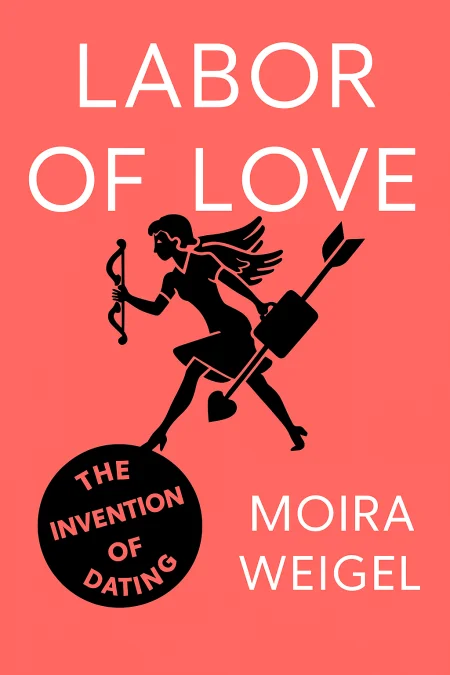
Labor of Love
The Invention of Dating
Book Edition Details
Summary
Dating isn't just a swipe right; it's a saga etched through time. Moira Weigel's "Labor of Love" unveils an unexpected tale, tracing the roots of modern romance back to its gritty origins in the 19th century, when dating itself was akin to a transaction. Through a kaleidoscope of social evolution, Weigel peels back layers of courtship to reveal a dance that has always been as much about societal shifts as it is about personal connection. This isn't a handbook to snagging a partner; it's an eye-opening narrative that dismantles the myths of modern love, urging readers to reconsider what dating really means. Prepare for a fresh, thought-provoking journey that promises no easy answers but offers a richer understanding of what love and effort truly entail.
Introduction
The year was 1896 when a young clerk named Artie first uttered the word "date" in print, complaining about his girlfriend seeing other boys and filling all his dates. Little did George Ade, the Chicago journalist who recorded this moment, realize he was documenting the birth of a social revolution that would transform how Americans pursued love and partnership. Before this moment, courtship followed rigid scripts overseen by families in parlors and drawing rooms. Young people met under watchful eyes, followed elaborate protocols, and married within their social circles. But as the twentieth century dawned, something unprecedented happened: millions of young women left their homes to work in cities, creating the first generation to seek romance independently in public spaces. This transformation reveals how our most intimate feelings reflect the broader forces shaping society. The evolution of American dating mirrors the rise of consumer capitalism, the struggle for women's equality, technological revolutions, and changing definitions of personal freedom. Each era's courtship rituals tell us as much about economics, politics, and social change as they do about romance itself. This journey through dating's hidden history speaks to anyone who has wondered why modern romance feels simultaneously more free and more confusing than ever before. Understanding how we arrived at today's dating culture illuminates not just our romantic lives, but the very nature of desire, work, and human connection in America.
The Birth of Dating: From Parlors to Public (1900-1920s)
The emergence of dating at the turn of the twentieth century represented nothing less than a seismic shift in American courtship. For the first time in human history, young people were seeking romantic partners independently, away from family supervision, in the anonymous spaces of rapidly growing cities. This revolution began with what sociologists called "women adrift"—the hundreds of thousands of young women who left farms and small towns to work in urban factories, department stores, and offices. Unlike the middle-class daughters who received gentleman callers in their family parlors, these working women had no drawing rooms to entertain suitors. They met potential partners at work, on streetcars, and in the new commercial entertainment venues springing up to serve the urban working class. The transformation was so shocking that early daters, especially women, were frequently arrested. Police viewed young women who accepted treats from men as indistinguishable from prostitutes. The "Charity Girls" who let men buy them dinners, theater tickets, and amusement park admissions were seen as selling their virtue, even when no money directly changed hands. Vice squads compiled reports on couples they observed "petting" in dance halls and nickelodeons, convinced they were witnessing the collapse of civilization. Yet these pioneers were creating something entirely new: a system where romantic attraction, rather than family arrangement or economic calculation, could guide partner selection. The shopgirl who caught the eye of a well-dressed customer, the factory worker who danced with a handsome stranger at a neighborhood social—these encounters opened possibilities that had never existed before. Dating had taken courtship out of the private sphere and into the marketplace, transforming it from a family matter into an individual adventure that would define American romance for generations to come.
Modern Romance Takes Shape: Depression to Sexual Revolution (1930s-1960s)
The economic devastation of the Great Depression fundamentally altered the landscape of American romance, even as dating evolved from a working-class phenomenon into a middle-class institution. With unemployment soaring and financial security scarce, young people could no longer afford the elaborate entertainment and gift-giving that had characterized 1920s courtship. Instead, they developed new patterns that would define mid-century romance. "Going steady" emerged during this period as both an economic adaptation and a cultural revolution. Rather than the competitive dating of the previous decade, where popular young people juggled multiple suitors, couples now paired off into exclusive relationships. High school students wore each other's class rings and varsity pins, creating a new form of teenage commitment that horrified adults who saw it as premature marriage. The practice spread rapidly because it made emotional and financial sense: going steady was cheaper than constant courtship competition and provided security during uncertain times. World War II accelerated these changes while introducing new complexities. With millions of young men overseas, gender ratios shifted dramatically on the home front. Women entered the workforce in unprecedented numbers, earning their own wages and experiencing new forms of independence. The war's aftermath brought both the suburban domesticity of the 1950s and the seeds of future rebellion, as a generation of young people who had witnessed global upheaval began questioning traditional authorities. By the 1960s, the foundations were cracking. The birth control pill, approved by the FDA in 1960, promised to separate sex from reproduction for the first time in human history. Young people who had grown up with the Cold War's existential anxieties embraced new forms of personal freedom. The sexual revolution that followed would shatter the careful compromises of steady dating, replacing them with a bewildering array of new possibilities that Americans are still learning to navigate.
Market Forces and Digital Love: Technology Transforms Dating (1980s-2000s)
The 1980s ushered in an era where dating became explicitly transactional, as economic inequality soared and romantic relationships increasingly reflected market logic. The emergence of the "yuppie"—young urban professionals with disposable income and demanding careers—created new patterns of courtship based on efficiency, compatibility metrics, and strategic partner selection. Professional dating services proliferated during this decade, from computer matching systems to video dating clubs that promised to streamline the search for compatible partners. These services marked a crucial shift: romance was no longer left to chance encounters but became a managed process involving databases, questionnaires, and calculated decisions. The language of business permeated relationships, with daters conducting "cost-benefit analyses" and seeking to "optimize" their romantic outcomes. Simultaneously, the AIDS crisis forced Americans to develop unprecedented frankness about sexual practices and desires. Public health campaigns required explicit discussions of previously taboo subjects, creating new vocabularies for describing intimate acts and relationship structures. The necessity of discussing sexual history and safety transformed how people approached new relationships, introducing elements of negotiation and disclosure that previous generations never faced. These trends accelerated with the rise of the Internet in the 1990s. Online chat rooms and early dating websites allowed people to connect across geographical boundaries while experimenting with digital personas. The proliferation of niche communities meant that individuals with specific interests or orientations could find like-minded partners more easily than ever before. However, the same technologies that expanded possibilities also created new anxieties about authenticity, compatibility, and the overwhelming burden of choice in an apparently infinite marketplace of potential partners.
Contemporary Challenges: Dating in the Age of Apps (2010s-Present)
The smartphone revolution has transformed dating into an always-available, gamified experience that promises infinite choice while often delivering profound isolation. Applications like Tinder and Bumble have reduced the complexity of human attraction to a series of binary decisions—swipe left or right—creating a system that prioritizes efficiency over depth and visual appeal over compatibility. This technological shift coincides with dramatic changes in American economic life that profoundly affect romantic relationships. The gig economy has replaced steady employment for millions of workers, making traditional relationship timelines—dating, engagement, marriage, home ownership, children—increasingly difficult to achieve. Young adults carry unprecedented levels of student debt, face soaring housing costs, and work jobs that offer neither security nor benefits, creating conditions where long-term commitment feels financially impossible for many. The result is a generation caught between expanded theoretical freedom and constrained practical options. Dating apps offer access to hundreds of potential partners while fostering a "grass is always greener" mentality that undermines relationship development. The same technologies that promise to solve the problems of modern romance often exacerbate them, creating addiction-like usage patterns while commodifying human connection in unprecedented ways. Perhaps most significantly, contemporary dating culture reflects broader societal anxieties about time, choice, and authenticity. In a world where everything can be customized and optimized, the messy, inefficient process of human bonding feels simultaneously more necessary and more elusive than ever. The challenge for modern daters is learning to form genuine connections within systems designed to maximize engagement rather than foster lasting relationships.
Summary
The history of American dating reveals a fundamental tension between individual freedom and social structure, between romantic idealism and economic reality. What began as a working-class adaptation to industrial urban life has evolved into a complex system that reflects and reinforces broader patterns of inequality, consumption, and technological mediation. Throughout each transformation—from parlor courtship to public dating, from going steady to sexual liberation, from personal ads to algorithmic matching—the same underlying contradictions persist. Americans celebrate romantic love while organizing courtship around market principles. They seek authentic connection while participating in increasingly commodified systems. They desire lasting relationships while living in an economy that prioritizes flexibility and impermanence over stability and commitment. Understanding this history offers hope for creating better alternatives. Rather than accepting that dating difficulties are personal failings requiring individual solutions, we can recognize them as social challenges demanding collective responses. This might involve supporting policies that provide economic security, creating community spaces that foster genuine connection, or developing technologies that prioritize human wellbeing over corporate engagement metrics. The future of American romance depends not on perfecting individual dating strategies, but on building social conditions that make love both possible and sustainable for everyone.
Related Books
Download PDF & EPUB
To save this Black List summary for later, download the free PDF and EPUB. You can print it out, or read offline at your convenience.
By Moira Weigel
