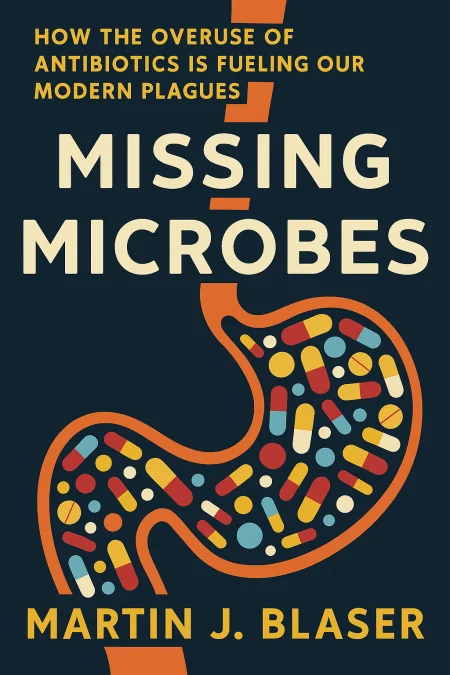
Missing Microbes
How the Overuse of Antibiotics is Fueling Our Modern Plagues
Book Edition Details
Summary
In a world teetering on the edge of microbial oblivion, Dr. Martin Blaser unravels the delicate tapestry of life within us in "Missing Microbes." This groundbreaking exposé ventures into the hidden realms of our own bodies, where microscopic allies have safeguarded human health for millennia. Yet, these essential guardians face annihilation at the hands of overzealous antibiotic use. With a compelling blend of cutting-edge research and vivid storytelling, Blaser lays bare the insidious link between antibiotic misuse and modern health epidemics—from obesity to cancer. As the narrative winds through laboratories and field studies, the urgent call to action becomes clear: preserve our microbial partners or face dire consequences. This book is not just an exploration; it’s a battle cry for the survival of our inner universe.
Introduction
In the grand tapestry of medical history, few stories are as paradoxical as the rise and consequences of antibiotics. What began as humanity's greatest triumph over infectious disease has evolved into one of our most pressing modern challenges. This tale spans nearly a century, from the accidental discovery of penicillin in a London laboratory to today's epidemic of childhood obesity, asthma, and autoimmune disorders that plague developed nations. The story reveals how our war against harmful bacteria inadvertently decimated the beneficial microbes that have coevolved with humans for millennia. These microscopic allies, once taken for granted, served as invisible guardians of our metabolism, immunity, and development. Their disappearance has left us vulnerable in ways we're only beginning to understand, creating a cascade of modern health crises that appear unrelated but share a common thread. This historical journey illuminates three critical questions that define our current predicament: How did life-saving medicines become double-edged swords? Why are diseases virtually unknown to our grandparents now commonplace in our children? And what can we do to restore the delicate microbial balance that sustained human health for thousands of years? These questions matter not only to medical professionals and scientists, but to every parent watching their child struggle with allergies, every individual grappling with metabolic disorders, and every society confronting the mounting costs of chronic disease.
The Golden Age of Antibiotics: Wonder Drugs Transform Medicine (1940s-1970s)
The antibiotic revolution began with a stroke of scientific serendipity that would reshape human civilization. In September 1928, Alexander Fleming returned from vacation to find his London laboratory cluttered with neglected petri dishes. One plate caught his attention—a blue-green mold had contaminated his bacterial culture, creating a clear halo where the deadly Staphylococcus bacteria had simply vanished. This accidental discovery of penicillin would eventually save more lives than any medical intervention in human history. The transformation was nothing short of miraculous. Before antibiotics, a simple scratch could lead to death, childbirth was a deadly gamble, and pneumonia was called "the captain of the men of death." Entire families were wiped out by scarlet fever, diphtheria, and tuberculosis. When Anne Miller became one of the first Americans to receive penicillin in 1942, she was dying from childbed fever with temperatures reaching 107 degrees. Within hours of receiving the precious drug, her fever broke and she recovered completely, living another fifty years. The wonder drugs seemed to have no limits. Streptomycin conquered tuberculosis, the ancient scourge that had claimed countless lives. Chloramphenicol subdued typhoid fever. Each new antibiotic expanded medicine's reach, making complex surgeries possible and allowing doctors to perform miracles that previous generations could only dream of. Heart transplants, cancer chemotherapy, and organ replacements all became viable because antibiotics could prevent the deadly infections that would otherwise claim patients' lives. By the 1950s, the medical establishment had embraced what seemed like an unshakeable truth: antibiotics were pure medicine, weapons of healing with virtually no downside. The transformation of human health was so dramatic that it fostered an almost religious faith in these chemical saviors, setting the stage for their widespread adoption across all aspects of life.
The Unintended Consequences: Overuse and Modern Plagues (1980s-2000s)
As antibiotics became routine prescriptions for every sniffle and scrape, the first cracks in the miracle began to show. Doctors discovered that bacteria could fight back, developing resistance to drugs that had once vanquished them effortlessly. MRSA emerged from hospitals, and tuberculosis strains arose that laughed at the medicines designed to destroy them. Yet this biological arms race was only the beginning of a far more complex story. During these decades, physicians and parents embraced a philosophy of pharmaceutical prevention. Children received course after course of antibiotics for ear infections, sore throats, and respiratory ailments—most of which were viral and unaffected by antibacterial drugs. The average American child consumed seventeen courses of antibiotics before reaching adulthood, each one delivered with the best of intentions but without understanding of the broader consequences. Simultaneously, cesarean sections became increasingly common, rising from less than 5 percent of births to over 30 percent. Modern obstetrics prioritized convenience and perceived safety over the ancient biological processes that had governed human reproduction for millennia. Hospital protocols mandated antibiotics for surgical procedures and potential infections, creating an environment where newborns encountered antimicrobial drugs before they had fully acquired their essential microbes. The medical community failed to recognize that these interventions were fundamentally altering human development. Each antibiotic course was seen as an isolated event, each cesarean section as a modern improvement over natural birth. No one connected the dots between these medical advances and the strange epidemic of new diseases beginning to appear in children: asthma rates doubling, food allergies exploding, childhood diabetes increasing relentlessly. The stage was set for a revelation that would challenge everything medicine thought it knew about health and disease.
The Missing Microbes Crisis: From Farm to Human Health (2000s-Present)
The breakthrough came through an unlikely parallel: the agricultural industry had been using antibiotics to fatten livestock for decades, but no one had considered what this meant for human children. Research revealed that the same subtherapeutic doses making farm animals grow larger and fatter were fundamentally altering their microbial ecosystems and metabolic programming. The implications for pediatric medicine were staggering. Scientists began mapping the human microbiome and discovered a shocking truth: the 100 trillion microbes living in and on our bodies weren't just passengers, but essential partners in human development. These ancient allies regulated everything from immune system training to metabolic function, hormone production to neurological development. Children born via cesarean section lacked the crucial first inoculation of bacteria from their mother's birth canal, while repeated antibiotic exposure eliminated entire species that had coevolved with humans for millennia. The evidence mounted with disturbing clarity. Studies across multiple populations showed that children who received antibiotics in their first year of life faced significantly higher risks of asthma, obesity, and autoimmune disorders. Those born by cesarean section demonstrated increased rates of allergies, diabetes, and metabolic dysfunction. The very interventions designed to protect children's health were inadvertently sabotaging their biological development. Most troubling was the discovery of "missing microbes"—beneficial bacteria that had disappeared entirely from modern populations. Helicobacter pylori, once present in nearly every human stomach, had vanished from most children in developed countries. While its absence reduced stomach cancer and ulcers in adults, it left children vulnerable to asthma, allergies, and esophageal disorders. The delicate balance between harm and protection, maintained over thousands of years of coevolution, was crumbling within a single generation.
Solutions and Restoration: Rebuilding Our Microbial Heritage
The path forward requires both immediate action and long-term transformation of medical practice. Healthcare systems must urgently reduce unnecessary antibiotic prescribing, particularly in young children during critical developmental windows. This means better diagnostic tools to distinguish viral from bacterial infections, improved training for physicians to resist prescriptive reflexes, and public education to help parents understand that not every childhood illness requires pharmaceutical intervention. Cesarean sections need careful evaluation, reserving surgical delivery for genuinely life-threatening situations rather than convenience or minor complications. For unavoidable cesarean births, innovative techniques like microbial transfer from mother to infant show promise in restoring some of the beneficial bacteria that surgical delivery eliminates. These approaches acknowledge that birth is not just about safely extracting a baby, but about initiating crucial biological relationships that will influence lifelong health. The most exciting frontier lies in microbial restoration and personalized medicine. Scientists are developing methods to identify which beneficial bacteria individual children have lost and how to safely return them. Fecal microbiota transplantation, while still experimental, has shown remarkable success in treating certain conditions. Future medicine may include routine microbiome assessment for infants, with targeted probiotic interventions to restore missing species before developmental damage occurs. Perhaps most importantly, this crisis demands a fundamental shift in medical philosophy—from viewing bacteria as enemies to recognizing our dependence on microbial partners. The solution isn't to abandon antibiotics or modern obstetrics, but to use them wisely while actively protecting and restoring the microbial heritage that evolution has bequeathed to every human being.
Summary
The antibiotic revolution represents one of history's most profound paradoxes: humanity's greatest medical triumph has inadvertently created some of our most pressing health challenges. The central thread running through this story is the disruption of ancient symbiotic relationships between humans and beneficial microbes, partnerships that took millennia to establish but mere decades to destroy. This historical arc offers three crucial insights for contemporary society. First, medical interventions always carry hidden costs that may not manifest for generations, demanding much greater caution in how we deploy powerful technologies. Second, the human body exists not as an isolated organism but as a complex ecosystem whose health depends on maintaining delicate microbial relationships. Third, true medical progress requires understanding these ecological principles rather than simply developing more potent ways to kill microscopic life. The path forward demands both individual responsibility and systemic change. Parents must question unnecessary antibiotic prescriptions and cesarean sections, while medical systems must prioritize long-term human development over short-term convenience. Most importantly, we must invest in research and therapies focused on restoration rather than destruction, learning to work with our microbial partners rather than against them. The future of human health may well depend on our ability to rebuild what we have thoughtlessly torn down, restoring the invisible alliances that have sustained our species throughout its evolutionary journey.
Related Books
Download PDF & EPUB
To save this Black List summary for later, download the free PDF and EPUB. You can print it out, or read offline at your convenience.
By Martin J. Blaser
