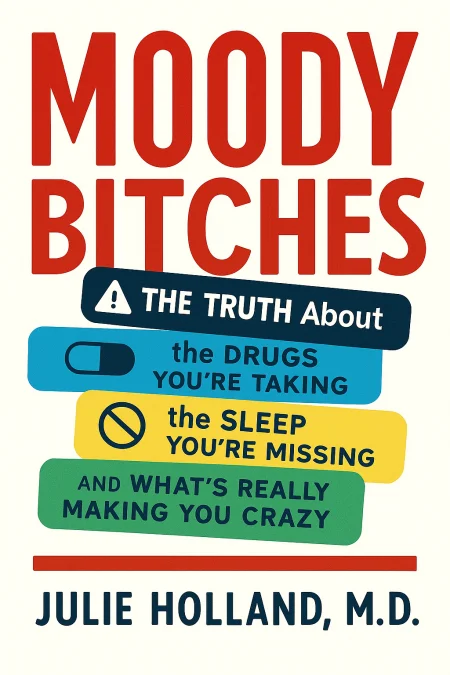
Moody Bitches
The Truth About the Drugs You’re Taking, the Sleep You’re Missing, the Sex You’re Not Having, and What’s Really Making You Crazy
Book Edition Details
Summary
In a world where emotional ebbs and flows are often dismissed or medicated away, "Moody Bitches" stands as a beacon of empowerment for women of all ages. Dr. Julie Holland invites us to embrace the full spectrum of our feelings as a source of strength and wisdom. Rather than viewing moodiness as a flaw, she reveals it as an intricate, natural feedback mechanism that guides us through life’s myriad challenges. This engaging guide dismantles cultural myths, offering insight into how our emotions can enhance our personal and professional lives. With a blend of humor and expertise, Dr. Holland navigates topics ranging from the impacts of medication and diet to the subtleties of sex and sleep, providing practical strategies and surprising natural therapies. "Moody Bitches" is more than a book—it's a manifesto for living authentically and vibrantly, transforming how we perceive and harness our moods.
Introduction
At three in the morning, Sarah found herself standing in her kitchen, tears streaming down her face as she stared at the empty ice cream container in her hands. The successful marketing executive who commanded boardrooms with confidence had become a stranger to herself—crying at commercials, snapping at her partner over minor inconveniences, and experiencing energy crashes that left her questioning her sanity. Her doctor had suggested antidepressants, her mother recommended prayer, and her friends insisted she just needed more sleep. But what if Sarah wasn't broken at all? What if her emotional intensity, her cyclical energy patterns, and her deep sensitivity weren't flaws to be medicated away but rather sophisticated biological systems designed by millions of years of evolution? This revolutionary perspective challenges everything we've been taught about women's emotional lives. For generations, we've been conditioned to apologize for our tears, suppress our intuitive insights, and fear the label of being "too emotional." Yet cutting-edge research reveals a startling truth: our hormonal fluctuations aren't chaos—they're communication. Our sensitivity isn't weakness—it's our evolutionary advantage. Our monthly cycles aren't inconveniences—they're invitations to tap into different aspects of our power throughout each month. Through compelling stories of real women and groundbreaking scientific discoveries, we'll explore how understanding your body's natural rhythms can transform your relationship with yourself from one of frustration to one of profound appreciation and strategic advantage.
The Monthly Revolution: Embracing Your Cyclical Superpowers
Maria first noticed the pattern during her final year of law school. Every month, like clockwork, she experienced what felt like three different versions of herself. During the first two weeks of her cycle, she was unstoppable—tackling complex legal briefs with laser focus, charming professors during office hours, and feeling magnetically confident in social situations. But as the third week arrived, something shifted. The same tasks that had energized her now felt overwhelming, and she found herself craving solitude and becoming hypersensitive to criticism. For years, she fought against this pattern, pushing herself to maintain peak performance throughout the month and feeling like a failure when her energy naturally waned. Everything changed when Maria learned about the intricate hormonal symphony orchestrating these changes. During the first half of her cycle, rising estrogen was enhancing her verbal abilities, sharpening her memory, and boosting her confidence—essentially giving her brain a monthly upgrade. The magnetic energy she felt around ovulation wasn't imagination; it was testosterone surging alongside estrogen, creating what researchers call the "confidence cocktail." Her brain was literally rewiring itself to be more socially attuned and cognitively sharp during her fertile window. The sensitivity that emerged in her cycle's second half wasn't weakness—it was wisdom. As progesterone rose, it was stripping away the rose-colored glasses that estrogen provides, allowing her to see situations with startling clarity. The irritability she felt wasn't random; it was pointing toward genuine imbalances in her life that she'd been too accommodating to address during her estrogen-dominant weeks. Her premenstrual phase became her monthly truth serum, revealing exactly what needed changing in her relationships, work habits, and self-care routines. When Maria began scheduling her most important presentations during her estrogen-dominant weeks and using her progesterone phase for detailed analysis and strategic planning, her career transformed. She wasn't fighting her biology anymore—she was partnering with it, recognizing that her cyclical nature wasn't a limitation but a sophisticated guidance system that gave her access to different cognitive and emotional superpowers throughout each month.
Chemical Hijacking: How Modern Life Disrupts Ancient Rhythms
Jennifer's story began with what seemed like a simple solution to heavy periods. At nineteen, her doctor prescribed birth control pills, assuring her they were perfectly safe and would regulate her cycles. What no one explained was that these synthetic hormones would fundamentally rewire her brain chemistry, shutting down her natural hormonal fluctuations and replacing them with artificial alternatives. For the next fifteen years, Jennifer lived in what she now calls "emotional flatland"—functional but never fully alive, sexually disconnected, and creatively blocked in ways she couldn't understand. The birth control pill works by convincing a woman's body that it's perpetually pregnant, halting ovulation and the natural rise and fall of hormones that drive not just fertility, but creativity, libido, and emotional range. The synthetic progestins in most pills bind up free testosterone, the hormone responsible for sexual desire, assertiveness, and that spark of aliveness that makes life feel worth living. Many women never realize what they've lost because they begin hormonal contraception during their formative years, never knowing what their natural emotional and sexual rhythms actually feel like. When Jennifer finally discontinued the pill at thirty-four, hoping to conceive, she experienced what felt like an emotional awakening. Colors seemed brighter, music moved her to tears, and she felt sexual desire for the first time in over a decade. But she also experienced the full intensity of natural hormonal fluctuations, including premenstrual emotional intensity that felt overwhelming after years of artificial stability. Her journey back to her natural self required patience and self-compassion as her body remembered how to produce its own hormones and her brain relearned how to navigate authentic emotional experiences. Modern life presents countless other disruptions to our ancient hormonal wisdom. Artificial light exposure suppresses melatonin production, disrupting the sleep cycles that regulate our stress hormones. Processed foods create inflammatory responses that interfere with hormone production. Chronic stress floods our systems with cortisol, suppressing the very hormones that make us feel vibrant and alive. Understanding these modern hijackers of our natural rhythms empowers us to make conscious choices that support rather than sabotage our biological design.
The Inflammation Connection: Food, Gut Health, and Emotional Balance
Rachel's depression had been treatment-resistant for years. She'd tried multiple antidepressants, therapy approaches, and lifestyle changes, but the crushing fatigue and emotional numbness persisted. It wasn't until a functional medicine practitioner suggested she eliminate gluten and dairy from her diet that her mental fog began to lift. Within three weeks, the woman who had struggled to get out of bed was waking up naturally with energy she hadn't felt in years. Her story illuminates a crucial connection between inflammation, gut health, and emotional well-being that traditional psychiatry often overlooks. The gut houses nearly 80 percent of our immune system and produces more serotonin than the brain itself. When we consume foods that trigger inflammatory responses—processed foods, sugar, gluten for sensitive individuals—our intestinal lining becomes permeable, allowing toxins and undigested particles to enter our bloodstream. This "leaky gut" syndrome triggers a cascade of inflammatory reactions that directly impact brain function, creating symptoms indistinguishable from clinical depression and anxiety. Women are particularly vulnerable to this inflammatory cascade because our hormones are intimately connected to our immune system. Estrogen has natural anti-inflammatory properties, which explains why autoimmune conditions often flare during hormonal transitions like perimenopause when estrogen levels decline. The foods that our great-grandmothers would recognize—fermented vegetables, bone broths, colorful plant foods—have been replaced by laboratory-created substances that our bodies struggle to process, creating chronic inflammation that disrupts both our physical and mental health. The revolutionary understanding emerging from nutritional psychiatry is that our food choices represent some of our most powerful tools for mental health. When we eat to reduce inflammation and support our gut microbiome with diverse, whole foods, we're not just nourishing our bodies—we're feeding the bacterial communities that produce our neurotransmitters and regulate our mood. This represents a fundamental shift from treating symptoms to addressing root causes, empowering us to heal from the inside out through conscious choices about what we put on our plates.
Reclaiming Your Nature: From Shame to Strength in Hormonal Transitions
At forty-seven, Lisa felt like she was losing her mind. The competent executive who had successfully navigated corporate challenges for decades suddenly found herself crying in bathroom stalls, forgetting important details, and experiencing rage so intense it frightened her. Her doctor dismissed her concerns, suggesting she was simply stressed, but Lisa knew something profound was happening in her body. When she finally found a physician who understood perimenopause, everything clicked into place. Her symptoms weren't signs of mental illness—they were her body's way of navigating one of life's most significant transitions. Perimenopause represents a neurological transformation as significant as adolescence, with hormone levels fluctuating wildly as ovarian function becomes increasingly erratic. The hypothalamus, our body's master control center, struggles to maintain its delicate balance, creating a cascade of effects that impact everything from sleep patterns to emotional regulation. Hot flashes aren't just uncomfortable—they're visible signs of a nervous system recalibrating itself for a new phase of life. Yet this challenging transition also brings unexpected gifts. As estrogen's people-pleasing effects diminish, many women discover a newfound clarity about their priorities and a decreased tolerance for superficial relationships. The same hormonal changes that create emotional turbulence also strip away the accommodating tendencies that can keep us trapped in unfulfilling situations. Lisa found herself speaking truths she'd been too polite to voice for decades, ending toxic friendships, and pursuing creative projects she'd abandoned years earlier. The key to navigating hormonal transitions lies not in fighting the changes but in understanding them as natural progressions that offer opportunities for growth and authenticity. When we stop viewing our emotional intensity as pathology and start seeing it as information, we can use these transitions as catalysts for creating lives that truly align with our deepest values and desires. Our hormonal wisdom doesn't diminish with age—it evolves, offering us new forms of power and insight at every stage of life.
Summary
The revolution begins with a simple but radical act: trusting your body's wisdom over society's expectations. Every mood swing, every energy shift, every moment of emotional intensity is your body's attempt to communicate vital information about what you need to thrive. When we stop viewing our natural cycles as inconveniences to be medicated away and start seeing them as sophisticated guidance systems, we unlock our full potential as cyclical, intuitive, magnificently complex beings. This journey requires courage because it means feeling everything more deeply in a world that profits from our numbness. It means honoring our need for rest when our bodies crave restoration, nourishing ourselves with real food when processed options beckon, and speaking our truth when our hormonal clarity reveals what needs to change. Most importantly, it means recognizing that our sensitivity isn't a liability but our greatest asset, allowing us to navigate relationships, create meaningful work, and contribute to our communities with unmatched emotional intelligence and authentic power. The path forward isn't about perfection—it's about partnership with our own biology. When we learn to work with our hormonal rhythms rather than against them, we discover that our so-called weaknesses are actually sophisticated adaptations that have served women for millennia. Our tears, our intuition, our cyclical nature, and our capacity for deep feeling aren't problems to be solved—they're the very qualities that make us powerful agents of healing and transformation in a world that desperately needs our unique gifts.
Related Books
Download PDF & EPUB
To save this Black List summary for later, download the free PDF and EPUB. You can print it out, or read offline at your convenience.
By Julie Holland
