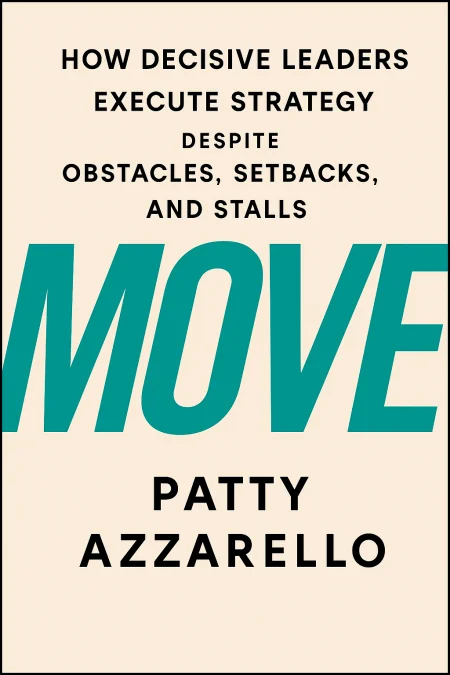
Move
How Decisive Leaders Execute Strategy Despite Obstacles, Setbacks, and Stalls
Book Edition Details
Summary
Amidst the clamor of daily operations, where inertia often reigns supreme, Patty Azzarello's "Move" offers a beacon for business leaders seeking transformative change. With a sharp focus on organizational dynamics, this guide dismantles the myth of unyielding status quo by revealing a practical path to engage every team member in new strategic endeavors. Drawing from her rich tapestry of international experience, Azzarello pinpoints the common pitfalls that thwart execution, turning them into opportunities for decisive action. Whether it's launching an innovative product or navigating a new market, this book arms you with the tools to convert resistance into momentum and commitment. Embrace the proactive shift, leaving behind the echoes of "business as usual," and pave the way for sustained progress and fulfillment in your organization's journey.
Introduction
Every leader knows the frustration of watching a brilliant strategy gather dust on the shelf while the organization continues operating exactly as it did before. You've seen it happen countless times: the enthusiastic kickoff meeting, the ambitious goals, the nodding heads around the conference table, and then... nothing changes. The harsh reality is that most transformations fail not because of poor planning, but because of poor execution. The space between announcing a new direction and actually getting there is where dreams die and careers stall. But what if there was a way to bridge that gap? What if you could create the conditions where your entire organization not only understands the change but becomes personally invested in making it happen? The answer lies in understanding that transformation isn't a destination you announce, it's a journey you must carefully orchestrate through what we call the Middle, where all the real work happens.
The Middle: Where Transformations Happen or Get Stuck
The Middle represents the vast expanse of time and effort between launching your strategy and achieving your vision. This is where most transformations either take root or quietly fade away. Unlike the exciting beginning or the celebrated end goal, the Middle is messy, uncertain, and requires sustained focus when everyone would rather return to familiar routines. Consider the software development team that was struggling with a two-year product cycle and consistently missing deadlines. When new leadership introduced the SEI process improvement framework, the engineers resisted fiercely. They argued it would slow them down and stifle their creativity. The temptation was enormous to abandon the new approach when faced with their daily complaints and the pressure to deliver features quickly. But the leaders understood that transformation happens in the Middle, not in the announcement. Rather than retreating, they maintained unwavering consistency. Every time an engineer requested to skip the process documentation or bypass the review checkpoints, the response was the same: "Process, schedule, features." The process came first, even when it felt uncomfortable. This persistence through the Middle paid off dramatically. Within nine months, they reduced their development cycle from two years to six months while improving quality significantly. The engineers who initially resisted became advocates, realizing that disciplined processes actually enhanced their creativity by providing predictable frameworks. To navigate your own Middle successfully, start by mapping out concrete milestones every three months. Define what success will look like at each checkpoint, not just at the final destination. Create visual timelines that show progress and keep the entire organization oriented toward the next achievable goal. Most importantly, prepare yourself and your team for the inevitable moments of doubt and resistance. Remember that momentum in the Middle comes from accumulating small wins, not waiting for dramatic breakthroughs. Every time you choose the new way over the old way, you're building the foundation for lasting change. The Middle tests your resolve, but it's also where transformation becomes real.
Organization: Building the Team You Need to Succeed
Having the right organizational structure and personnel isn't just helpful for transformation, it's absolutely essential. You cannot accomplish fundamentally different objectives with the exact same team that got you to where you are today. This doesn't necessarily mean replacing everyone, but it does mean honestly assessing whether each person can grow into what the new strategy requires. The most powerful metaphor for organizational readiness comes from dogsledding. When seventeen sled-dog teams lined up in the Canadian wilderness, something remarkable happened as the briefing ended. Without any command from their handlers, all the dogs simultaneously stood up, faced forward, and created tension in their harnesses. Every rope was tight, every dog was pulling in the same direction, and all that remained was to release the brake. This is the standard your organization should meet: everyone aligned, everyone ready, everyone pulling their weight toward the same destination. One general manager discovered this principle when inheriting a business unit that had been structured as eight separate entities going to market in parallel. Customer events became disasters because different teams would make contradictory presentations. Partners complained about conflicting messages. Nobody owned the biggest cross-functional problems. The solution required creating a blank-sheet organizational chart focused purely on business outcomes rather than trying to accommodate existing personnel preferences. To build your ideal organization, start by defining what needs to get done, not who currently does what. Draw your perfect organizational structure on a blank page, then determine which current team members fit those roles and which new capabilities you need to acquire. Be prepared to have difficult conversations with good people who simply aren't the right fit for the new direction. Remember that keeping someone in the wrong role is ultimately unfair to them and damaging to the organization. The goal isn't to have a perfect team, but to have the right team for the transformation you're undertaking. When all the ropes are tight, remarkable things become possible.
Valor: Facing Hard Challenges with Courage and Persistence
Leadership requires valor because transformation inevitably encounters resistance, setbacks, and moments when retreating to the familiar seems like the sensible choice. The courage to persist through these challenges separates successful transformations from abandoned initiatives. Valor isn't about being fearless; it's about moving forward despite your fears. The concept of "burning the ships at the beach" captures this essential leadership quality. When Hernán Cortés arrived in Mexico in 1519, he ordered his ships destroyed so his men would have no choice but to move forward or perish. In business transformation, you must create similar conditions by making the old way of operating impossible to return to. This requires absolute consistency in your decisions and messaging, even when facing intense pressure to compromise. A manufacturing leader demonstrated this valor when implementing a major process change. Despite daily complaints from the team that the new procedures were slowing them down, despite urgent requests to make exceptions for important customers, and despite peers suggesting the transformation was damaging the business, the leader maintained the same response every time: the new process was non-negotiable. This consistency sent a clear message that there truly was no going back. The transformation succeeded not because it was easy, but because the leader had the valor to endure the discomfort of the Middle. Within months, the team achieved dramatically improved performance and higher morale. Those who initially resisted became advocates because they experienced the benefits of the disciplined approach. To develop your own valor, start by accepting that fear is normal and doesn't disqualify you from leadership. Everyone feels scared when facing big challenges; successful leaders simply act despite their fear. Build your support network of mentors and experts who can provide guidance when you're feeling overwhelmed. Most importantly, commit publicly to your transformation and then defend that commitment through every daily decision. Valor grows through practice. Each time you choose the difficult right thing over the easy wrong thing, you build the strength to face the next challenge with greater confidence.
Everyone: Creating Conversations That Drive Real Change
The final element of successful transformation recognizes that while you can lead change from the top, you cannot execute change from the top. Real transformation happens when everyone in the organization becomes personally invested in making the new strategy succeed. This requires shifting from one-way communication to genuine conversation that engages people at all levels. The most powerful example of this principle comes from a resort in Honduras called Utopia Village. The owners faced the challenge of training local staff with no previous service experience to deliver world-class hospitality. Rather than relying solely on top-down training, they created a WhatsApp group called "Utopia Stars" where any staff member could share photos and celebrate colleagues who were exemplifying excellent service. This simple tool transformed the entire culture because the staff began reinforcing the values among themselves. The conversation became self-sustaining. New employees learned the service standards not just from management but from their peers who had internalized the mission. When guests left positive reviews, the entire team celebrated together. The transformation succeeded because everyone became an advocate for the change, not just a recipient of instructions about change. Creating this level of engagement requires intentional effort to foster conversation rather than just deliver messages. Start by asking people throughout your organization what they really think about the changes you're proposing. Listen carefully to their concerns, suggestions, and ideas. Make space for genuine dialogue rather than just polite agreement. Most importantly, create visible symbols and rituals that reinforce the new direction so people can see evidence of change in their daily environment. Transform your communication approach by measuring success not by how clearly you think you've explained something, but by how actively people are discussing it among themselves. When you overhear employees explaining your strategy to new team members in their own words, you'll know the transformation is taking hold. Remember that people need to feel safe to embrace change, and safety comes from seeing that their peers are also committed to the new direction. Foster the conversations that create this shared commitment and watch your transformation come alive.
Summary
True transformation happens not in the boardroom where strategies are conceived, but in the countless daily decisions made by every person in your organization. As this journey has shown us, "You can lead a transformation from the top, but you can't do a transformation from the top." The MOVE model provides the framework for engaging everyone in making change real: mastering the Middle where the hard work happens, organizing the right team for the challenges ahead, demonstrating valor when obstacles arise, and engaging everyone through genuine conversation rather than one-way communication. Success requires understanding that strategy without execution is merely talking, but execution with the right approach becomes unstoppable momentum. Start today by identifying one concrete outcome you can achieve in the next ninety days, assemble the team that can make it happen, commit to seeing it through despite inevitable challenges, and most importantly, begin the conversations that will transform your entire organization from observers of change into active creators of your shared future.
Related Books
Download PDF & EPUB
To save this Black List summary for later, download the free PDF and EPUB. You can print it out, or read offline at your convenience.
By Patty Azzarello
