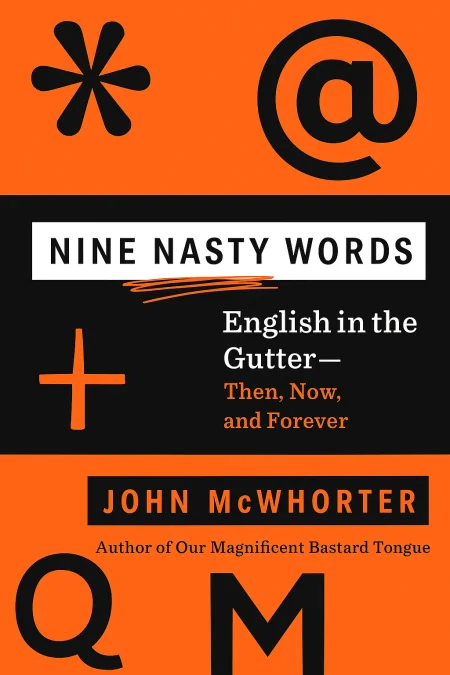
Nine Nasty Words
English in the Gutter: Then, Now, and Forever
Book Edition Details
Summary
Words with an edge have a story to tell, and Nine Nasty Words peels back the layers on our most electrifying linguistic taboos. Venture into the wild world of profanity, where words become rebels, defying norms and sparking the deepest of human instincts. With a wit as sharp as the words it dissects, this book unravels the power of curse words and their evolution through time. Why do these naughty syllables make our hearts race and our cheeks flush? A renowned linguist takes you on a riotous journey through the social, political, and neurological battlegrounds of vulgarity. In an era where public discourse dances with the once-unspeakable, this is a timely and thrilling exploration of why we curse—and why we love it.
Introduction
Picture this: you stub your toe on the coffee table and immediately let out a string of colorful language that would make your grandmother blush. But have you ever wondered why certain combinations of sounds carry such explosive power? Why does "damn" feel mild compared to the F-word, and why do some words make us cringe while others merely raise an eyebrow? The English language harbors a fascinating collection of taboo words that have evolved over centuries, each carrying its own unique history and social significance. These so-called "bad words" aren't just random sounds we've decided to be offended by. They follow predictable patterns, undergo systematic changes, and reveal profound truths about how our minds process language and social boundaries. From medieval religious oaths to modern slurs, profanity has served as a linguistic laboratory where we can observe language change in fast-forward. You'll discover how curse words actually light up different parts of our brains than regular vocabulary, why certain four-letter combinations feel more satisfying to shout than others, and how words that once meant simply "bundle of sticks" or "female dog" became weapons of social control and rebellion. The journey through English profanity is really a journey through the hidden mechanics of how language shapes our deepest emotions and social relationships.
From Sacred to Secular: Evolution of Taboo Language
English profanity hasn't always focused on the same targets. What shocks us today would have seemed tame to medieval speakers, while words that made our ancestors gasp now barely register as impolite. This dramatic shift reveals one of the most fascinating patterns in language evolution: the migration of taboo from the sacred to the secular. In medieval England, the most offensive words weren't about bodies or sex, but about taking God's name in vain. Expressions like "God's wounds" or "by his blood" were considered far more scandalous than what we'd now consider anatomical references. Medieval people lived in a world where swearing literally meant swearing oaths to God, and casual religious profanity threatened the very foundations of society. The word "damn" carried real weight because damnation was a terrifying spiritual reality, not just a mild expression of frustration. The Renaissance and Reformation marked a turning point. As religious authority became more personal and less communal, and as people began living in more private spaces, attention shifted from heavenly matters to earthly ones. The rise of Protestant emphasis on personal morality, combined with new architectural privacy that made bodily functions more hidden, created perfect conditions for a new kind of taboo. Words referring to sex and excretion gradually became the new frontier of the forbidden. This transformation explains why we now have elaborate euphemisms for religious terms that once packed serious punch. "Gosh," "golly," and "gee whiz" all originated as ways to avoid saying "God," while "zounds" masked "his wounds." These linguistic fossils preserve evidence of an era when religious profanity was genuinely shocking. Today's casual use of "oh my God" in everything from text messages to television shows would have horrified previous generations, while our squeamishness about bodily functions would have puzzled medieval farmers who dealt with such matters as routine parts of daily life.
The Linguistics of Curse Words and Grammar
Curse words aren't just vulgar vocabulary, they're linguistic marvels that demonstrate some of the most creative and systematic aspects of language change. When we examine profanity through a scientific lens, we discover that these supposedly "crude" words follow sophisticated grammatical rules and undergo predictable evolutionary patterns that reveal deep truths about how human language works. Consider the word "fuck" and its remarkable versatility. It can function as a noun, verb, adjective, adverb, or intensifier, often within the same sentence. More fascinatingly, it can be inserted into other words through a process called expletive infixation, as in "abso-fucking-lutely" or "Minne-fucking-sota." But this isn't random, it follows precise rules. You can say "fan-fucking-tastic" because the insertion point falls between two stressed syllables, but you'd never hear "Mar-fucking-yland" because it violates the stress pattern requirements that native speakers unconsciously understand. Even more surprising is how profanity creates entirely new grammatical categories. Words like "shit" and "ass" have evolved into alternate pronoun systems that express attitudes and relationships impossible to convey with standard pronouns. "Get your shit together" doesn't refer to feces, it means "organize yourself," while "my ass" substitutes for "me" when expressing dismissive humility. These aren't sloppy substitutions, they're systematic expansions of the pronoun system that allow speakers to encode complex social and emotional information. The sounds of curse words matter too. English profanity tends toward short, punchy syllables ending in hard consonants, the better to provide satisfying vocal release when you're frustrated or angry. This isn't coincidence, it's the result of centuries of linguistic selection pressure that favored words matching their emotional function. Brain imaging reveals why this matters: curse words activate different neural pathways than regular vocabulary, lighting up emotional centers rather than logical language areas. They're not just words, they're primal vocalizations dressed up in linguistic clothing.
Slurs as Modern Profanity: Social Power and Language
The most recent evolution in English profanity represents a fundamental shift from individual expression to social weapon. While traditional curse words like "damn" and "shit" have become increasingly mainstream, a new category of profanity has emerged that carries unprecedented taboo power: words that target entire groups of people based on identity characteristics they cannot change. This transformation reflects broader social awakening about the relationship between language and systemic oppression. Words like the N-word and anti-gay slurs don't just insult individuals, they invoke and perpetuate centuries of discrimination, violence, and dehumanization. The social energy that once made religious oaths scandalous and bodily references shocking has now focused on language that reinforces hierarchy and exclusion. This isn't arbitrary political correctness, it's recognition that these words carry the accumulated weight of historical trauma and ongoing inequality. What makes this category particularly complex is the phenomenon of reclamation, where targeted groups adopt slurs as terms of affection and identity. The same word that functions as a weapon when used by outsiders becomes a tool of solidarity and resistance when used within the community. This isn't simply "appropriation," it's sophisticated linguistic negotiation of power relationships. When marginalized groups reclaim slurs, they're not just changing word meanings, they're asserting control over how they're defined and discussed. The grammatical sophistication of reclaimed slurs mirrors that of traditional profanity. In African American English, variations of the N-word have evolved into complex pronoun systems that encode not just reference but attitude, intimacy, and social positioning. These aren't degraded versions of "proper" English, they're innovative extensions of the language's expressive capacity. The fact that such creativity emerges from words originally designed to diminish and control speaks to the irrepressible human capacity to transform linguistic oppression into artistic and social resource.
Summary
The hidden story of English profanity reveals that language is never just about communication, it's about power, identity, and the eternal human struggle to push boundaries while maintaining social cohesion. Our "bad words" serve as a linguistic laboratory where we can observe in fast-forward how language responds to changing social values, technological innovations, and shifting power structures. From medieval religious oaths to modern identity-based slurs, each era's taboos reflect its deepest anxieties and most sacred beliefs. Perhaps most remarkably, this journey through society's linguistic underground demonstrates that there's no such thing as "just words." Every curse carries the accumulated weight of historical usage, social context, and neural processing patterns that make them fundamentally different from ordinary vocabulary. As our social consciousness evolves and new forms of communication emerge, we can expect English profanity to continue its restless evolution, creating new ways to shock, bond, rebel, and ultimately express the full spectrum of human experience. The question isn't whether future generations will have their own "bad words," but what new linguistic boundaries they'll create and cross in their ongoing negotiation between individual expression and social harmony.
Related Books
Download PDF & EPUB
To save this Black List summary for later, download the free PDF and EPUB. You can print it out, or read offline at your convenience.
By John McWhorter
