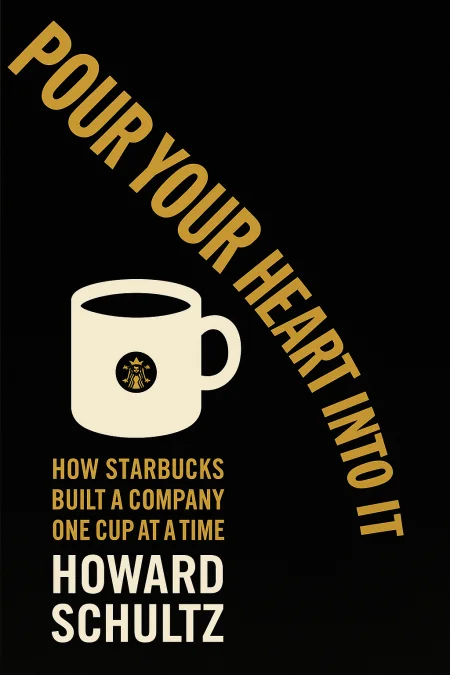
Pour Your Heart Into It
How Starbucks Built a Company One Cup at a Time
Book Edition Details
Summary
In the bustling heart of Seattle, a humble coffee shop began a journey that would redefine the cultural landscape of caffeine appreciation. In "Pour Your Heart Into It," Howard Schultz, the visionary behind Starbucks' meteoric rise, opens a window into the relentless passion and pioneering spirit that fueled a global coffee revolution. This is not just a business manual; it's an inspiring tale of turning dreams into reality, where passion intersects with commerce, and every cup of coffee tells a story of aspiration and excellence. Aspiring entrepreneurs, seasoned marketers, and business dreamers alike will discover transformative insights into building a brand that stays true to its core values while achieving unparalleled success. A definitive guide to the art of infusing heart into enterprise, Schultz's narrative reveals the secrets to creating an enduring legacy through innovation and dedication.
Introduction
In the early morning hours of a Seattle coffee shop in 1983, a young marketing executive from New York stood transfixed as he watched a barista craft the perfect espresso. The rich aroma, the theatrical precision, the sense of community—it was a moment that would transform not just one man's life, but an entire industry. Howard Schultz had discovered something extraordinary in that simple cup of coffee, a vision that would eventually revolutionize how Americans think about their daily brew and workplace culture. Born in the housing projects of Brooklyn, Schultz embodied the classic American dream of rising from humble beginnings to extraordinary success. Yet his story transcends the typical rags-to-riches narrative. Through his journey from a struggling salesman to the architect of a global coffee empire, we witness the power of authentic leadership, the courage to challenge conventional wisdom, and the profound impact of treating people with dignity and respect. His transformation of Starbucks from a small Seattle coffee bean retailer into a worldwide phenomenon offers invaluable insights into entrepreneurship, corporate culture, and the delicate balance between rapid growth and staying true to one's values. From his early struggles with poverty and his father's unfulfilled dreams, to his revolutionary approach to employee benefits and his relentless pursuit of the perfect customer experience, Schultz's story illuminates the essential qualities of visionary leadership and the transformative power of believing in something greater than profit alone.
From Housing Projects to Corporate Dreams
Howard Schultz's earliest memories were shaped by the harsh realities of economic insecurity and his father's quiet desperation. Growing up in the Bayview Projects in Canarsie, Brooklyn, during the 1950s and 1960s, young Howard witnessed firsthand the devastating effects of a system that seemed designed to crush the dreams of working-class families. The defining moment came when he was just seven years old, watching his father sit helplessly on the family couch with his leg in a cast, unable to work and with no safety net to catch his fall. Fred Schultz was an honest man who worked multiple jobs—truck driver, factory worker, cab driver—yet never earned more than $20,000 a year and never owned his own home. The family lived without health insurance, without worker's compensation, without any of the basic protections that middle-class families took for granted. When Fred broke his ankle at work, the Schultz family faced a crisis that would leave lasting scars on young Howard's psyche. He watched his parents argue about borrowing money, saw his mother's tears, and felt the weight of poverty pressing down on their small apartment. These early experiences of financial instability and his father's sense of defeat became the driving force behind Howard's later success. The image of his father, beaten down by circumstances beyond his control, would haunt Howard throughout his life and ultimately inspire his revolutionary approach to employee benefits at Starbucks. He made a silent promise to himself that if he ever had the power to make a difference, he would ensure that no employee under his leadership would face the same indignities his father had endured. Despite the challenges, Howard found escape and purpose through athletics, particularly baseball and football. Sports became his ticket out of Brooklyn, earning him a scholarship to Northern Michigan University and opening doors to a world beyond the projects. His mother's unwavering belief in education and her constant encouragement to dream big provided the emotional foundation that would sustain him through future challenges. She instilled in him the conviction that he could achieve anything he set his heart on, a belief that would prove prophetic in the decades to come.
Building the Third Place Revolution
Howard's first encounter with Starbucks in 1981 was nothing short of transformational. As a successful salesman for a Swedish housewares company, he had noticed that a small Seattle retailer was placing unusually large orders for a simple drip coffeemaker. Curious about this anomaly, he flew to Seattle to investigate and walked into what he would later describe as a temple for the worship of coffee. The Pike Place Market store, with its bins of exotic coffee beans from around the world and the intoxicating aroma that seemed to envelope visitors, represented everything that mass-market coffee was not. The true epiphany came during a business trip to Milan in 1983, where Howard discovered the Italian espresso bar culture. Walking the streets of Milan, he was struck by the theater and artistry of the baristas, the sense of community that surrounded each coffee bar, and the daily ritual that brought people together over perfectly crafted espresso drinks. He realized that Starbucks was missing a crucial element—they were selling the beans but not the experience. The Italian coffee bars weren't just places to buy coffee; they were extensions of home and work, gathering places that provided romance, community, and a brief escape from daily routines. When Howard returned to Seattle with his vision of bringing the Italian espresso bar experience to America, he faced skepticism from Starbucks' founders. They feared that serving beverages would dilute their identity as coffee purists and transform them into a restaurant rather than a coffee retailer. After months of persuasion, they agreed to test the concept in one corner of a new downtown store. The response was immediate and overwhelming—within two months, they were serving 800 customers a day, and lines stretched out the door. This third place concept became Starbucks' most profound contribution to American culture, addressing a deep hunger for community and connection in an increasingly fragmented society. By creating spaces that honored the human need for gathering and ritual, Schultz had tapped into something far more powerful than a market opportunity—he had identified a fundamental aspect of what makes life meaningful and built a business model around nurturing it. The careful attention to every sensory detail created environments that felt both sophisticated and welcoming, where customers could pause, reflect, and connect with others without pressure.
Scaling Values in a Growing Empire
The greatest test of any values-driven organization comes when rapid growth threatens to dilute the very principles that made it special. As Starbucks expanded from a handful of Seattle stores to a national phenomenon, Schultz faced the seemingly impossible challenge of maintaining intimate, caring relationships with thousands of employees while opening new stores at breakneck pace. The conventional wisdom suggested that such growth required sacrificing the personal touch, standardizing operations, and treating employees as replaceable resources. Schultz refused to accept this trade-off, believing that the company's soul resided in its people. The death of Howard's father in January 1988 crystallized his determination to create a different kind of company. Within months of this personal tragedy, Howard made a decision that would define Starbucks' corporate culture for decades: he extended full health benefits to all employees, including part-timers working as little as twenty hours a week. This move was virtually unprecedented in the retail industry and was met with skepticism from board members who questioned the financial wisdom of such generosity. His rationale went beyond mere compassion—he understood that in a service business, employee satisfaction directly translated to customer satisfaction. The introduction of Bean Stock, Starbucks' revolutionary stock option program, represented another radical departure from conventional retail practices. In 1991, Howard granted stock options to every employee, from senior executives to part-time baristas, making them literal partners in the company's success. This decision required special exemption from the Securities and Exchange Commission and was met with resistance from some investors who feared dilution of their holdings. However, Howard argued that by aligning every employee's interests with those of shareholders, the company would achieve superior performance. Maintaining quality and culture across hundreds of locations required unprecedented attention to training and communication. Every new hire received extensive education not just in coffee preparation, but in the company's values and mission. The Mission Review process allowed any employee to challenge management decisions that seemed inconsistent with the company's stated values, creating unprecedented accountability and transparency. The result was a corporate culture that attracted exceptional talent and inspired extraordinary commitment, creating a sustainable competitive advantage that competitors found impossible to replicate.
Leading with Heart and Authenticity
The leadership philosophy that emerged from Schultz's experiences represented a radical departure from the command-and-control models that dominated corporate America. His approach was deeply personal, rooted in the belief that authentic leadership required vulnerability, empathy, and a willingness to serve others rather than simply directing them. This wasn't weakness disguised as strength; it was a recognition that in an increasingly complex business environment, the old models of authoritarian leadership were not only morally questionable but practically ineffective. Schultz's leadership style was perhaps most evident during times of crisis, when he chose transparency over spin and shared responsibility over scapegoating. When coffee prices spiked dramatically due to Brazilian frosts, threatening the company's profitability, he could have hidden the severity of the situation from employees while cutting costs behind the scenes. Instead, he chose to communicate openly about the challenges, explaining not just what was happening but why certain decisions were necessary. This approach built trust and resilience within the organization, as employees understood they were facing difficulties together. The concept of leading with heart extended beyond crisis management to everyday operations. Schultz insisted on knowing employees' names, understanding their personal challenges, and celebrating their successes. He instituted practices like sending personal birthday cards to every employee and maintaining an open-door policy that allowed anyone in the company to bring concerns directly to his attention. These weren't mere gestures; they reflected a fundamental belief that business success was meaningless without human connection and that leaders had a responsibility to nurture the whole person, not just the worker. This authentic approach to leadership created a ripple effect throughout the organization, as managers at every level began to model similar behaviors. The result was a corporate culture that felt more like an extended family than a traditional hierarchy, where people were motivated not just by paychecks but by a sense of belonging and purpose. Schultz proved that leading with heart wasn't just morally superior to traditional approaches—it was also more effective at building sustainable, profitable businesses that could weather storms and adapt to changing circumstances while maintaining their essential character.
Summary
Howard Schultz's remarkable journey from the housing projects of Brooklyn to the pinnacle of global business success offers a powerful testament to the transformative potential of values-driven leadership. His story demonstrates that the most enduring business achievements emerge not from the pursuit of profit alone, but from a deep commitment to human dignity and authentic relationships. By refusing to accept the conventional wisdom that growth requires sacrificing soul, Schultz created a new model for corporate success—one that proves companies can simultaneously serve employees, customers, and shareholders while contributing positively to society. The lessons embedded in his experience extend far beyond the coffee industry, offering guidance for anyone seeking to build something meaningful in their professional or personal life. His emphasis on treating people with respect, maintaining authenticity in the face of pressure to conform, and leading with empathy rather than authority provides a roadmap for creating organizations that truly make a difference. For entrepreneurs, business leaders, and anyone interested in the intersection of commerce and social responsibility, Schultz's story offers both inspiration and practical wisdom about the power of staying true to one's values while pursuing ambitious goals. His legacy reminds us that the greatest business achievements are ultimately measured not just in financial returns, but in the positive impact on human lives and communities, proving that success with purpose is not only possible but essential for creating lasting change in the world.
Related Books
Download PDF & EPUB
To save this Black List summary for later, download the free PDF and EPUB. You can print it out, or read offline at your convenience.
By Howard Schultz
