
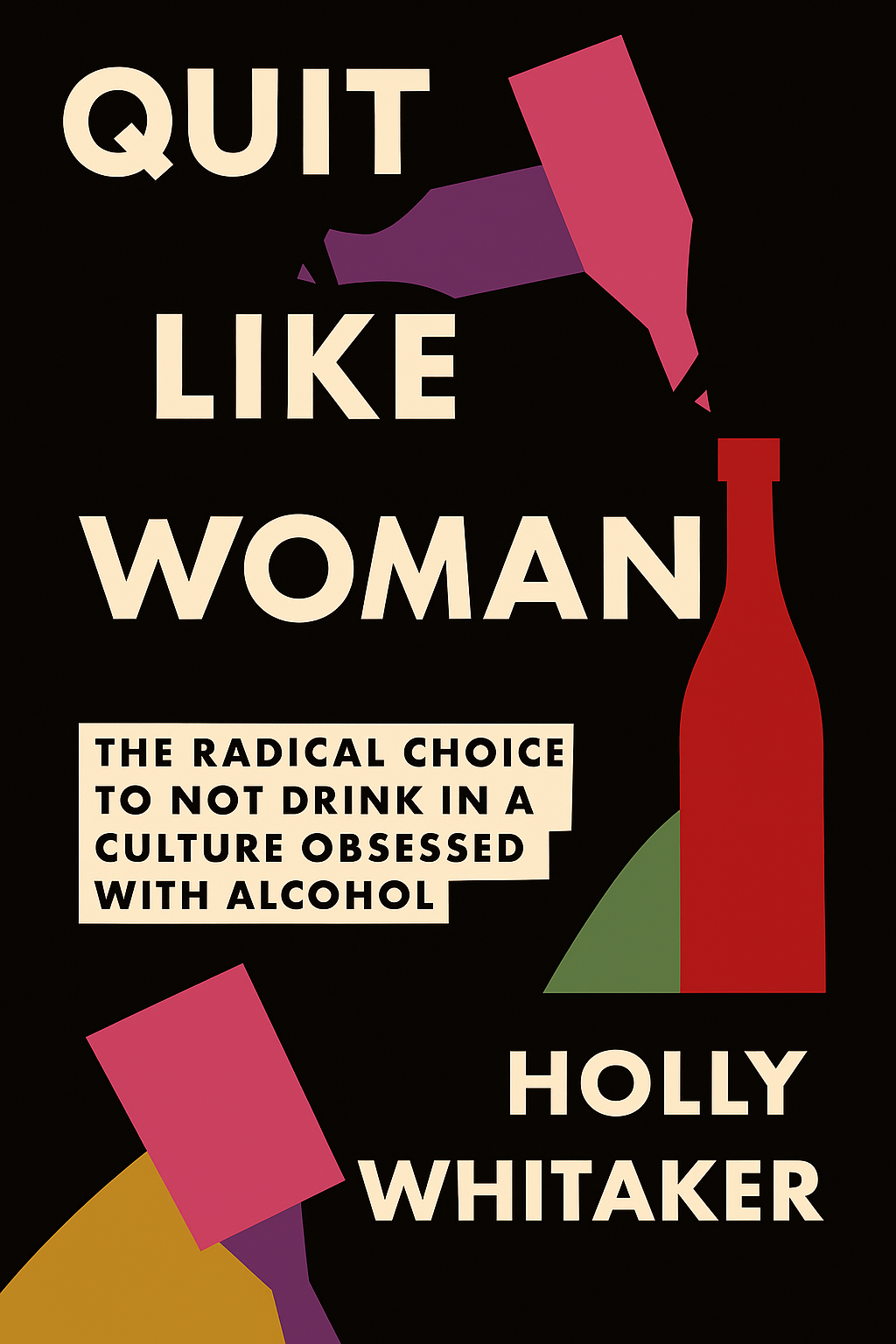
Quit Like a Woman
The Radical Choice to Not Drink in a Culture Obsessed with Alcohol
Book Edition Details
Summary
In a society where clinking glasses echo across every milestone, Holly Whitaker emerges as a voice of dissent, challenging the norms that bind us to the bottle. "Quit Like a Woman" isn't just a memoir—it's a clarion call for women to reclaim their narratives from the grip of alcohol culture. Whitaker exposes the sexist undercurrents that have long dictated our drinking habits, unveiling a feminist framework for sobriety that defies the dated doctrines of traditional recovery programs. With sharp wit and disarming candor, she invites readers to question the so-called magic of alcohol and to embrace a life unshackled from its grasp. This book is a rallying cry for self-discovery and empowerment, offering a new perspective on what it truly means to be free.
Introduction
Contemporary society presents women with a profound contradiction: while achieving unprecedented awareness of systemic oppression and dismantling patriarchal structures across multiple domains, alcohol-related deaths among women have surged by 67 percent in the past decade. This paradox reveals a critical blind spot in feminist consciousness—the failure to recognize alcohol as another tool of subjugation disguised as liberation. The beverage industry has masterfully co-opted feminist imagery and language, transforming what should be understood as a neurotoxic substance into a symbol of empowerment and rebellion. The conventional approach to alcohol problems relies heavily on frameworks developed by and for men in the 1930s, particularly emphasizing powerlessness, humility, and ego dissolution. These concepts may serve those who have historically wielded excessive power, but they prove counterproductive for individuals who have been systematically denied agency and voice. Traditional recovery models essentially prescribe more of what made women sick in the first place: self-silencing, self-negation, and submission to external authority. A comprehensive examination requires dismantling deeply embedded cultural myths about alcohol while simultaneously challenging the patriarchal assumptions underlying mainstream recovery approaches. This analysis traces how marketing strategies borrowed from tobacco companies have normalized consumption, explores why binary thinking about drinking fails to serve most people, and ultimately proposes recovery frameworks that build up rather than break down those seeking freedom from alcohol dependence.
The Alcohol Industry's Gendered Marketing Deception and Corporate Manipulation
The alcohol industry's transformation from local producers into a global oligopoly mirrors Big Tobacco's consolidation and manipulation tactics with remarkable precision. Following Prohibition's repeal, alcohol companies adopted three key strategies proven devastatingly effective for tobacco: market consolidation, engineered consent, and manufactured controversy. Today, sixteen multinational conglomerates control virtually every recognizable alcohol brand, wielding concentrated power necessary to shape public perception and policy globally. Edward Bernays, architect of modern public relations, demonstrated how to make consumers believe their choices reflect personal autonomy rather than corporate manipulation. His 1929 "Torches of Freedom" campaign transformed cigarette smoking from a male-dominated habit into a symbol of women's liberation by staging a feminist protest where women publicly smoked during New York's Easter Parade. This manufactured rebellion created the template for associating consumption of harmful substances with progressive values and personal empowerment. Big Alcohol has refined these techniques particularly in targeting women through imagery of independence, sophistication, and feminist rebellion. The industry no longer needs elaborate publicity stunts because social media has transformed every consumer into a potential brand ambassador. Women now voluntarily promote alcohol consumption through social posts, wine-themed merchandise, and "mommy juice" culture, believing they express authentic preferences rather than amplifying corporate messaging designed to normalize substance abuse. The parallels extend to the industry's approach to scientific evidence and public health concerns. Just as tobacco companies spent decades funding research designed to create doubt about smoking's dangers, alcohol companies promote the fiction of "responsible drinking" while simultaneously targeting vulnerable populations including children, women, and citizens of developing nations. The death toll—3.3 million annually worldwide—exceeds tobacco's impact in many regions, yet alcohol maintains its status as socially acceptable through carefully orchestrated campaigns of disinformation and cultural manipulation.
Dismantling Binary Addiction Models and the Alcoholic Label Mythology
The classification of drinkers into two distinct categories—"normal" drinkers and "alcoholics"—represents one of the most destructive oversimplifications in modern health discourse. This binary framework, popularized by Alcoholics Anonymous and embedded in medical understanding, creates a false dichotomy that prevents millions from honestly assessing their relationship with alcohol. The system argues that alcohol is harmless for the majority while uniquely dangerous for a genetically predisposed minority, despite overwhelming evidence that ethanol is toxic to all human bodies regardless of individual tolerance levels. The arbitrary nature of alcoholism diagnosis becomes apparent when examining assessment tools used to determine who qualifies for help. Self-tests include criteria so broad that virtually anyone who drinks regularly could qualify: increased tolerance, memory lapses during drinking, using alcohol to cope with stress, feeling uncomfortable when alcohol is unavailable, or experiencing guilt about drinking. Applied consistently, these standards would classify the majority of social drinkers as having alcohol use disorder, revealing the fundamental absurdity of the diagnostic framework. This binary thinking creates a dangerous permission structure for problematic drinking. As long as individuals can distinguish their behavior from stereotypical "alcoholic" presentations—they haven't lost jobs, been arrested, or experienced dramatic public failures—they receive implicit permission to continue drinking regardless of negative consequences. The system effectively tells people that unless they qualify for the most severe diagnostic category, their concerns about alcohol are invalid and require no intervention. The reality of alcohol's impact exists on a spectrum rather than in discrete categories. Ninety percent of heavy drinkers do not meet clinical criteria for addiction, yet they experience significant negative consequences from their consumption. The current framework abandons this vast population, offering no support until problems become severe enough to warrant the "alcoholic" label. A more rational approach would acknowledge that alcohol is inherently problematic for human health and that any level of concern deserves attention and support, regardless of whether it meets arbitrary diagnostic thresholds.
AA's Patriarchal Framework and Its Failure to Serve Women
Alcoholics Anonymous emerged from the specific cultural context of 1930s America, created by and for upper-middle-class white Protestant men who suffered from an excess of social power and privilege. The program's foundational principles—admitting powerlessness, embracing humility, cataloging character defects, and surrendering to external authority—were designed as antidotes to the particular form of ego inflation experienced by men taught to see themselves as masters of their universe. For this demographic, practicing behaviors traditionally associated with femininity represented a radical departure from socialized patterns and offered genuine therapeutic value. The Twelve Steps essentially prescribe systematic self-diminishment: acknowledging powerlessness, admitting wrongness, surrendering will, inventorying defects, and seeking removal of shortcomings. These practices directly contradict the developmental needs of individuals who have been systematically marginalized and taught to minimize themselves throughout their lives. Women, people of color, LGBTQ individuals, and others who have never possessed the privilege of believing themselves godlike do not need additional lessons in powerlessness and humility—they need to develop agency, voice, and a sense of their own worth. The program's emphasis on ego deflation proves particularly problematic for women, who typically enter recovery with already-compromised self-esteem rather than pathological grandiosity. The concept of ego in AA literature describes a specifically masculine form of self-aggrandizement that assumes dominance and entitlement. Women's "egos," by contrast, are more accurately understood as their basic sense of self, their right to exist and have needs. Attacking this foundation in the name of spiritual growth often retraumatizes individuals whose original wounds stemmed from being told they were too much, too loud, too demanding, or simply wrong. The organizational structure compounds these problems through its emphasis on anonymity and decentralized authority. While these principles prevent the emergence of central hierarchy, they also eliminate accountability when local groups become hostile to women, minorities, or anyone who challenges traditional interpretations. The Traditions explicitly prioritize "principles before personalities," effectively silencing individual voices and experiences in favor of maintaining group cohesion. This structure replicates the very dynamics of oppression that contribute to addiction in marginalized populations, making recovery through AA a continuation of original trauma rather than its resolution.
Building Feminine-Centric Recovery Through Empowerment and Holistic Healing
Recovery frameworks designed for women and other historically marginalized groups must begin with the assumption that participants are already whole and perfect rather than fundamentally broken and defective. This represents a complete reversal of traditional approaches, which typically start by cataloging everything wrong with the individual and prescribing systematic self-demolition. A feminine-centric model recognizes that addiction often stems from too little self-regard rather than too much, and that healing requires building up rather than breaking down the individual's sense of worth and agency. The process begins with radical self-advocacy, treating oneself with the same care and protection typically reserved for beloved children or vulnerable family members. This means prioritizing personal needs without apology, establishing firm boundaries around time and energy, and refusing to accept treatment from others that diminishes dignity or well-being. For individuals conditioned to put everyone else's needs first, this level of self-prioritization can feel selfish or wrong, but it represents the foundation upon which sustainable recovery must be built. Rather than following a predetermined sequence of steps, feminine-centric recovery embraces the cyclical, intuitive nature of healing that honors individual timing and needs. The approach incorporates six key elements: working with core beliefs about alcohol and recovery, weakening the addiction cycle through new habits and rituals, developing healthy coping mechanisms, addressing root causes of suffering, practicing sobriety as a skill rather than demanding immediate perfection, and creating a recovery framework that evolves with the individual's growth and changing needs. The ultimate goal transcends simple abstinence from alcohol to encompass the creation of a life so fulfilling that escape becomes unnecessary. This means addressing not just the symptoms of addiction but the underlying conditions that made numbing and avoidance seem necessary in the first place. The work involves healing trauma, developing emotional regulation skills, building meaningful relationships, finding purpose and meaning, and creating an existence that feels worth showing up for fully conscious and present. Recovery becomes not a lifelong sentence of deprivation but an ongoing adventure in becoming the most authentic and empowered version of oneself.
Summary
The intersection of alcohol culture and patriarchal oppression reveals how substances marketed as tools of liberation can actually reinforce the very systems they claim to challenge. Recognition of this dynamic opens the possibility for recovery approaches that truly serve those who have been marginalized rather than simply replicating existing power structures under the guise of healing. The path forward requires both individual transformation and collective awakening to the ways addiction and recovery have been weaponized against those seeking genuine freedom and empowerment, ultimately demonstrating that personal liberation and systematic change are inextricably linked in the journey toward authentic sobriety and self-determination.
Related Books
Download PDF & EPUB
To save this Black List summary for later, download the free PDF and EPUB. You can print it out, or read offline at your convenience.
By Holly Whitaker
