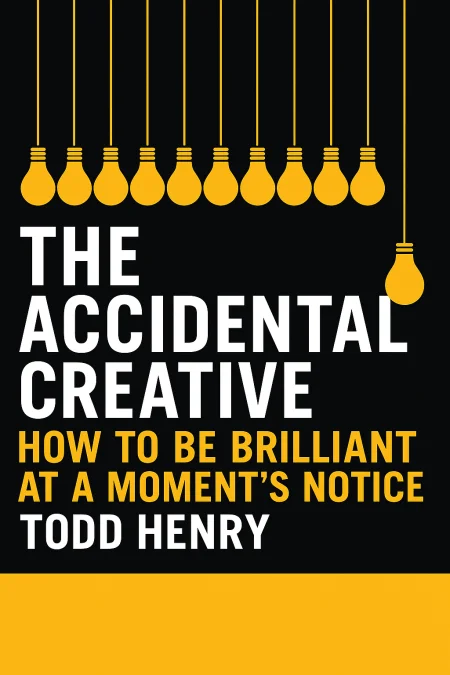
The Accidental Creative
How to Be Brilliant at a Moment’s Notice
Book Edition Details
Summary
Every day you clock in, the race begins—a whirlwind of deadlines, targets, and the relentless demand for ingenuity. Your creative spark isn't just a perk; it's your lifeline. "The Accidental Creative" is your indispensable ally in this high-stakes game, offering a treasure trove of strategies to harness and refine your creative prowess. This guide doesn't just promise productivity; it reimagines it, teaching you to sharpen your focus, forge inspiring connections, and maintain your creative energy. Say goodbye to the drain of distraction and hello to a world where your ideas flow as effortlessly as your morning coffee. Here lies the secret to making brilliance a habit, not a fluke, ensuring your best work emerges when it matters most.
Introduction
Every day, millions of creative professionals face an invisible pressure that quietly undermines their best work. Whether you're a designer staring at a blank canvas, a manager wrestling with strategic challenges, or a writer searching for the perfect phrase, you're expected to produce brilliant ideas on demand. The moment you exchange your creative efforts for money, you enter a world where inspiration can't wait for the right mood or perfect conditions. This reality creates a unique tension between the natural rhythms of creativity and the relentless pace of modern work. The good news is that brilliance isn't random or mystical. By understanding how creativity actually works and building purposeful practices into your daily routine, you can position yourself to have breakthrough insights when you need them most. The path to consistent creative excellence isn't about working harder or waiting for lightning to strike. It's about creating the right conditions for your mind to make unexpected connections and generate the solutions that matter.
Understanding Creative Dynamics and Breaking Free from Limitations
The creative process isn't a mysterious force that strikes randomly. It operates according to predictable patterns and rhythms that you can learn to work with rather than against. Most creative professionals approach their work like they're playing a slot machine, hoping that if they just put in enough hours and effort, eventually they'll hit the jackpot of a great idea. This approach leads to frustration and burnout because it ignores how creativity actually functions. Consider Amos, a Fortune 100 manager juggling five major projects while trying to generate strategic insights on demand. He finds himself drowning in meetings, emails, and constant interruptions, yet his real value lies in his ability to produce breakthrough ideas at critical moments. Amos represents millions of "accidental creatives" who never planned to work in idea-generation roles but find their success depends entirely on their creative output. He struggles with scattered focus, energy depletion, and the constant pressure to be brilliant while managing everyday responsibilities. The breakthrough came when Amos learned to recognize creativity as a rhythmic process rather than an always-on demand. Like a musician who can't play beautifully without understanding rhythm and timing, creative professionals need structure to support their natural creative cycles. This doesn't mean rigid schedules or stifling rules, but rather creating supportive frameworks that channel creative energy effectively. To break free from creative limitations, start by acknowledging that your mind works best with intentional rhythms rather than constant pressure. Identify the times when you naturally feel most creative and protect those periods from interruptions. Establish clear objectives for your projects using specific questions rather than vague goals. For example, instead of "improve marketing strategy," ask "How can we reach more twenty-somethings authentically?" The key insight is that creativity craves structure, not chaos. When you provide the right framework, your mind can focus on making connections and generating insights instead of struggling to organize scattered thoughts and competing priorities.
Building Your Creative Rhythm Through Focus and Relationships
Focus in the creative world isn't about concentration alone. It's about directing your mental energy toward the problems that matter most while building relationships that expand your perspective and possibilities. The modern creative faces two primary obstacles to sustained focus: false assumptions that limit options and the constant "ping" of digital distractions that fragment attention. Take the story of a designer who developed elaborate morning rituals because he once had a creative breakthrough during an early work session. Over time, his productivity during these sessions declined, but instead of questioning the ritual, he simply got up earlier and arrived at work sooner. The breakthrough came when he realized that his initial success had nothing to do with the timing, but rather with the focused attention he brought to important work during those interruption-free hours. When he shifted his approach from mindlessly following routines to purposefully structuring focus time around his most critical creative challenges, his productivity soared again. He learned to identify his "Big 3" creative priorities and actively looked for connections throughout his day. This simple shift transformed random stimuli into potential solutions because he knew what problems he was trying to solve. Begin by listing all your current projects and identifying which ones require genuine creative breakthroughs versus routine execution. Choose three that represent your most important creative challenges and phrase them as specific questions. Keep these questions visible and review them daily, allowing your subconscious mind to work on solutions continuously. Additionally, be intentional about the relationships that feed your creativity. Seek out people who challenge your thinking, expose you to new perspectives, and hold you accountable for pursuing meaningful work. Schedule regular conversations with individuals who inspire you rather than leaving these connections to chance. Remember that breakthrough ideas rarely emerge in isolation. They come from the collision of different perspectives, experiences, and insights that relationships naturally provide.
Managing Energy and Optimizing Your Creative Input
Energy, not time, is your most precious creative resource. Your brain consumes about twenty percent of your body's available energy despite being only two percent of your body weight. When you're mentally exhausted, your capacity for making novel connections and generating insights diminishes dramatically, regardless of how much time you have available. Robert, a creative director at a major design firm, exemplified this challenge perfectly. Despite his senior position and years of experience, he felt creatively depleted and disconnected from his work. When asked about his personal creative pursuits, he admitted it had been years since he'd painted with watercolors, a hobby that once brought him tremendous joy. The conversation rekindled his excitement, and he immediately went out to buy art supplies. Within weeks of reestablishing his painting practice, Robert's entire demeanor shifted. He approached work with renewed enthusiasm and began generating ideas that surprised even him. The key insight was that creative energy is renewable, but only when you actively invest in activities that feed your creative spirit rather than constantly drain it. The solution lies in what we call "whole-life planning," recognizing that every commitment in your life draws from the same energy reservoir. When you're entering a particularly demanding work period, you must consciously scale back personal commitments to preserve creative capacity. Conversely, during lighter work seasons, you can pursue more ambitious personal projects. Start by conducting an energy audit of your typical week. Identify which activities energize you versus those that drain you, and look for opportunities to cluster draining tasks together with recovery periods built in between. Establish "unnecessary creating" time for personal projects that have no external deadlines or expectations, simply for the joy of making something. Most importantly, learn to recognize the signs of creative exhaustion before you hit the wall. Protect your energy as fiercely as you protect your time, because without adequate creative energy, even the most perfectly scheduled day becomes unproductive.
Mastering Time and Sustaining Long-Term Creative Excellence
The relationship between time and creativity is counterintuitive. More time doesn't automatically lead to better ideas, and efficiency doesn't guarantee effectiveness. The most successful creatives learn to view their time as a portfolio of investments rather than a slot machine where more hours eventually pay off. Consider the simple practice of "Idea Time," dedicating one hour per week exclusively to generating new solutions for important challenges. Most creative professionals resist this suggestion, arguing they barely have time for required work, much less speculative thinking. Yet this resistance reveals the exact mindset that keeps them perpetually reactive instead of proactive. One manager who initially balked at the concept decided to try it for a month. She chose one persistent organizational challenge and spent her weekly Idea Time exploring solutions without the pressure of immediate implementation. By the fourth session, she had generated three actionable approaches that ultimately saved her team countless hours and improved their entire workflow. The investment of four hours yielded benefits that continued for months. The key principle is treating idea generation as a skill that requires regular practice, not a magical process that happens spontaneously. Just as musicians practice scales to perform beautifully when it matters, creative professionals need dedicated time to explore possibilities without the pressure of perfect solutions. Establish a weekly Idea Time session at a consistent time when you're least likely to be interrupted. Choose one specific challenge and spend the full hour exploring solutions using structured questions: What would success look like? What assumptions might we challenge? How have similar problems been solved? What would happen if we tried the opposite approach? Additionally, build "unnecessary creating" into your routine, working on personal projects that have no external deadlines or stakeholders. This might be writing, cooking, gardening, or any activity that exercises your creative muscles without performance pressure. These pursuits often generate insights that unexpectedly apply to professional challenges. Remember that creative excellence is a long-term practice, not a short-term hack. The professionals who consistently deliver brilliant work are those who invest in their creative capacity rather than simply trying to extract more output from existing resources.
Summary
The path to creative brilliance isn't about finding the perfect system or waiting for inspiration to strike. It's about understanding that creativity operates according to natural rhythms and building supportive practices that align with these patterns rather than fighting against them. As the research shows, we can unquestionably increase our capacity to experience regular flashes of creative insight by building purposeful practices into our lives that provide stability, challenge our thinking, and preserve our creative energy. The most profound shift happens when you stop viewing creativity as something that happens to you and start recognizing it as something you can actively cultivate through intentional daily choices. Take action today by identifying your three most important creative challenges, scheduling your first hour of dedicated Idea Time, and committing to one small change that will better support your creative energy throughout the week.
Related Books
Download PDF & EPUB
To save this Black List summary for later, download the free PDF and EPUB. You can print it out, or read offline at your convenience.
By Todd Henry
