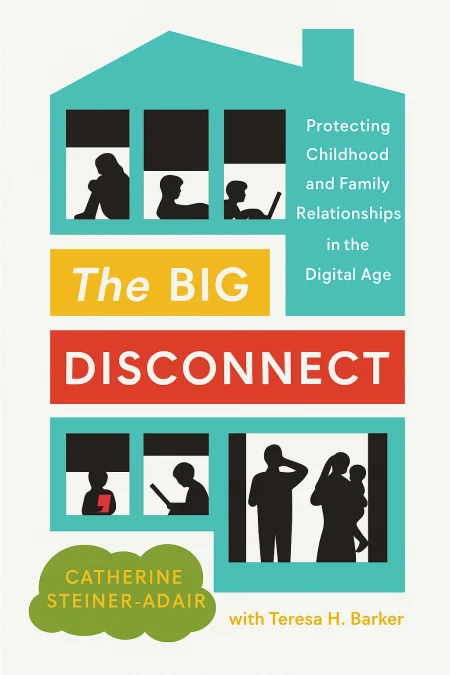
The Big Disconnect
Protecting Childhood and Family Relationships in the Digital Age
Book Edition Details
Summary
In the glow of screens, the threads of family life are quietly unraveling. Renowned clinical psychologist Catherine Steiner-Adair confronts this modern dilemma head-on, revealing how the digital age is reshaping childhood and parenthood in profound ways. As children become digital natives, absorbing more from pixels than parents, families find themselves adrift in a sea of perpetual connectivity that paradoxically breeds disconnection. Steiner-Adair’s insightful exploration delves into the heart of this paradox, offering poignant real-life anecdotes and actionable advice for parents longing to reclaim their role as the primary influencers in their children's lives. In a world where clicks often replace conversations, "The Big Disconnect" emerges as a beacon, guiding families toward the oasis of meaningful, face-to-face connection. Discover the power of intentional presence and the art of guiding the next generation through a digital wilderness, ensuring that in the race to stay connected, we don’t lose what truly connects us.
Introduction
Contemporary families navigate an unprecedented technological landscape where digital devices have become integral to daily life, fundamentally altering the nature of childhood and family relationships. The widespread adoption of screens, social media platforms, and constant connectivity presents a complex web of challenges that extend far beyond simple concerns about entertainment consumption. This transformation raises critical questions about how immersive digital environments affect developing minds and the quality of human bonds that form the foundation of healthy family life. The evidence emerging from neuroscience, developmental psychology, and clinical observation reveals a troubling pattern of disruption to essential childhood experiences. While technology offers remarkable educational opportunities and new forms of connection, it simultaneously threatens to undermine the slow, patient work of human development that has shaped healthy growth for millennia. The stakes are particularly high because the effects of early digital exposure appear to influence fundamental capacities for attention, empathy, creativity, and authentic relationship formation. Through systematic examination of research findings, developmental theory, and real-world family experiences, a clearer understanding emerges of why thoughtful, informed decision-making about technology use has become one of the most crucial challenges facing modern parents and educators.
Digital Disruption: Evidence of Developmental Harm Across Childhood Stages
The fundamental architecture of human development relies on specific types of experiences that digital technology systematically disrupts or replaces. During infancy and early childhood, the developing brain requires consistent, responsive human interaction to establish secure attachment patterns and build neural pathways for emotional regulation, language acquisition, and social understanding. When caregivers are distracted by devices or when screens substitute for human faces, infants miss critical opportunities for the kind of attuned interaction that supports healthy brain development. Research demonstrates that excessive early screen exposure correlates with measurable delays in language development, increased aggression, attention difficulties, and sleep disturbances. The rapid pace and artificial stimulation characteristic of digital media overwhelm developing neural systems, creating preferences for high-intensity input that make slower-paced activities like reading or imaginative play seem inadequate by comparison. Children accustomed to instant digital feedback often struggle with the ambiguous outcomes and delayed gratification inherent in real-world learning and social interaction. School-age children show declining empathy levels correlated with increased screen time, as digital communication lacks the facial expressions, body language, and emotional nuance necessary for developing social intelligence. The multitasking demanded by digital environments fragments attention spans, making sustained focus on single tasks increasingly difficult. Academic performance suffers not only from distraction but from fundamental changes in how the brain processes information, favoring rapid scanning over deep comprehension and critical thinking. Adolescents face unique vulnerabilities as social media platforms exploit developmental needs around identity formation and peer acceptance. The constant comparison facilitated by digital platforms correlates with increased rates of anxiety, depression, and body image disorders. The permanence of digital communications creates new forms of social cruelty, where momentary lapses in judgment become permanent records. Perhaps most concerning is how digital mediation of romantic and sexual experiences during this critical developmental period can distort understanding of intimacy, consent, and authentic human connection.
The Erosion of Family Connection in the Age of Constant Connectivity
The quality of parent-child relationships forms the foundation for all subsequent development, yet digital technology consistently intrudes upon the intimate moments that build these crucial bonds. Parents report feeling torn between professional demands requiring constant connectivity and their children's need for undivided attention. The result is a pattern of continuous partial attention, where physical proximity masks emotional unavailability as family members toggle between screens and each other. Children demonstrate acute awareness of this divided attention, often acting out or withdrawing when parents engage with devices during caregiving moments. The phenomenon creates chronic low-level stress for both parents and children, as neither receives the full engagement necessary for secure attachment formation. Even brief interruptions by digital devices can disrupt the emotional attunement that builds trust and teaches children how to regulate their emotions through relationship. Family rituals and traditions, historically the cornerstone of cultural transmission and emotional bonding, suffer under the pressure of constant connectivity. Mealtimes interrupted by notifications, bedtime stories replaced by educational apps, and car rides filled with individual screen time rather than conversation all represent missed opportunities for the kind of rich, unstructured interaction that builds family cohesion and emotional intelligence. The cumulative effect is families that are physically present but emotionally fragmented. The modeling effect proves equally significant, as children learn relationship patterns by observing parental behavior. When parents prioritize digital communications over face-to-face interaction, children internalize the message that virtual connections hold greater value than physical presence. This learned pattern carries forward into peer relationships, where children struggle to maintain sustained, meaningful connections without digital mediation. The result is often a generation highly skilled at managing digital personas but struggling with the vulnerability and authenticity required for genuine intimate relationships.
Beyond Screen Time Rules: Building Sustainable Tech-Balanced Family Practices
Effective responses to digital challenges require moving beyond simplistic screen time limits toward comprehensive approaches that address the underlying relational and developmental needs that technology often fails to meet. Sustainable family practices recognize that children's attraction to screens frequently reflects unmet needs for stimulation, connection, or autonomy that can be addressed through more developmentally appropriate means. The goal is not to eliminate technology but to ensure it serves human flourishing rather than replacing essential human experiences. The concept of sacred spaces proves particularly valuable, designating specific times and locations as technology-free zones where family members can engage in unmediated connection. These protected periods allow for the slow, patient work of relationship building that cannot be rushed or digitized. Research consistently shows that families maintaining regular tech-free meals, bedtime routines, and recreational activities report higher levels of satisfaction and stronger emotional bonds. Successful approaches combine clear boundaries with ongoing education about technology's effects on developing minds and family relationships. Rather than relying solely on external controls, effective strategies teach children to recognize their own responses to digital stimulation and develop self-regulation skills. This includes understanding the neurochemical effects of screen time, recognizing signs of overuse, and developing alternative coping strategies for boredom, anxiety, or social pressure. The most sustainable practices involve creating positive alternatives to screen-based activities rather than simply restricting digital access. Families that successfully navigate technology challenges typically invest significant energy in cultivating rich offline experiences, meaningful traditions, and engaging conversation practices that naturally compete with the appeal of digital entertainment. They understand that protecting childhood requires active resistance to cultural pressures that prioritize efficiency and constant connectivity over the slower, more complex work of building lasting human connections.
Reclaiming Authentic Human Development in a Digital World
The path forward requires cultivating what researchers term digital wisdom, an approach that harnesses technology's benefits while protecting the irreplaceable elements of human development that no digital innovation can replicate. This involves fostering children's internal capacities for sustained attention, creative thinking, empathy, and the ability to find meaning in quiet moments of reflection. These skills, developed through patient practice in real-world relationships, provide the foundation for thriving in an increasingly digital world while maintaining essential human connections. Authentic development requires regular access to unstructured time, physical movement, creative expression, and face-to-face social interaction. Children need opportunities to experience boredom and learn to generate their own entertainment, to work through conflicts without digital mediation, and to develop tolerance for the slower pace and ambiguous outcomes of real-world problem-solving. These experiences cannot be efficiently packaged or digitally delivered but must be lived through direct engagement with the physical and social world. The cultivation of deep conversation skills emerges as particularly crucial for families navigating digital challenges. Many children growing up in heavily mediated environments struggle with the patience and vulnerability required for meaningful dialogue. Families that prioritize conversation create regular opportunities for sharing stories, exploring ideas, working through conflicts, and simply enjoying each other's company without digital distraction. These conversations become laboratories for developing empathy, critical thinking, and emotional intelligence. The ultimate goal extends beyond managing technology to fostering resilience and wisdom that will serve children throughout their lives. This requires helping young people understand that their capacity for happiness, creativity, and meaningful relationships depends not on digital sophistication but on fundamental human skills that have remained constant across cultures and centuries. By protecting space for these essential experiences, families can raise children who are both technologically literate and deeply human, capable of using digital tools wisely while maintaining the capacity for authentic connection and sustained reflection that forms the foundation of a fulfilling life.
Summary
The evidence reveals a profound tension between the rapid pace of technological adoption and the slower rhythms of healthy human development, with children paying the price through disrupted attention spans, weakened empathy, and fragmented family relationships. While technology offers genuine benefits, its uncritical integration into family life poses serious risks to the fundamental experiences children need to develop into emotionally healthy, socially competent, and intellectually capable individuals. The solution lies not in wholesale rejection of digital tools but in developing what might be called relational intentionality, the conscious choice to prioritize direct human interaction and embodied experiences even within a culture that increasingly values digital engagement over face-to-face connection. This approach offers hope for raising children who can harness technology's power while maintaining the essential human capacities for sustained attention, genuine empathy, creative thinking, and meaningful relationships that no digital innovation can replace.
Related Books
Download PDF & EPUB
To save this Black List summary for later, download the free PDF and EPUB. You can print it out, or read offline at your convenience.
By Catherine Steiner-Adair
